

Apple is making one of its biggest product bets in years, while the infrastructure behind the next wave of technology is getting harder to secure.
The company just entered foldables with the $1,999 iPhone Duo and is doubling down on the iPhone as its personal computing hub. At the same time, data centers are facing stricter power rules, China’s AI chips are getting more expensive, and OpenAI is deepening its semiconductor partnership with Samsung.
The 5 things worth knowing today:
Apple entered foldables with the $1,999 iPhone Duo
Apple’s new CEO is doubling down on the iPhone as the center of its AI strategy
Massachusetts will require large data centers to bring their own clean power
OpenAI is deepening its Samsung partnership for next-generation AI chips
China’s AI chipmakers are raising prices as memory shortages worsen
FROM OUR PARTNER - KAPITALWISE
💹 Your financial goals are personal. Your advisor should be too.

Not every financial advisor is right for every investor. The right fit depends on what you’re building toward, the kind of guidance you need, and where you are financially.
Kapitalwise AdvisorConnect uses AI-powered matching to connect you with vetted financial advisors and planners based on your needs - making it easier to find relevant expertise without spending hours searching and comparing.
Think of it as a smarter starting point for an important financial decision: fewer random options, more relevant matches.
STARTUPS RAISING MILLIONS
💰 Startup Funding Updates
At least $1.16B + €19.3M disclosed across today’s startup rounds
The three biggest rounds:
Encoded Therapeutics: $275M Series F
Cylake: $245M
Solstice Oncology: $225M Series A
Together, those three companies accounted for nearly 65% of today’s disclosed dollar funding.
PRE-SEED
Onix: Montreal-based personal intelligence platform raised $5M led by Alpha Edison, with participation from Garage Capital, Ride Home Fund, Jeremy Zimmer, and JS Cournoyer.
SEED
Bluecore Energy: Long Beach-based maritime clean energy and small modular reactor startup raised $50M led by Silverton Partners, with participation from Slauson & Co., Collab Capital, HartBeat Ventures, Harlem Capital, Precursor Ventures, MaC Ventures, and Chris Larsen.
Bulwark Dynamics: Menlo Park-based developer of autonomous landing craft raised $6.8M from SBI US Gateway Fund, Archetype Ventures, Nēnē Ventures, and Onomichi Dockyard.
Overroute: Lowell-based AI-native freight execution platform for logistics operators raised $5.5M led by UP.Partners, with participation from EIC Rose Rock, 1834 Ventures, Tulane Ventures, and others.
MCatalysis: London-based chemical process platform raised $5M led by HL Energy Ventures and Oxford Science Enterprises, with support including a $2.25M award from UK Research and Innovation.
Rebaba: Stockholm-based circular battery energy storage company raised $4.6M led by Sistafund and EIT Urban Mobility, with participation from existing shareholders and new European investors.
Allogenetics: Hanover-based biotechnology company developing a one-time ex vivo gene therapy approach for organ transplantation raised €3.8M in Pre-Series A funding led by NBank Capital, with participation from CARMA FUND, Life Science Valley Wachstumsfonds, and others.
VideoGen: San Francisco-based AI video creation platform raised $3.3M led by Y Combinator, with participation from Rebel Fund, Lobster Capital, Stretford End Capital, Mento VC, Pioneer Fund, and Decacorn VC.
Dynamic Creatures: Boston-based hospitality robotics and physical AI startup emerged from stealth with undisclosed seed funding from Eniac Ventures, Kindred Ventures, Heliad, Sunshine Lake, BlueGrass Ventures, and strategic robotics angels.
GROWTH
Encoded Therapeutics: South San Francisco-based clinical-stage biotechnology company developing precision genetic medicines for severe neurological disorders raised $275M Series F co-led by GV and another healthcare fund, with participation from ARCH Venture Partners, Braidwell, Farallon Capital Management, Illumina Ventures, SoftBank Vision Fund 2, Venrock, and others.
Cylake: Sunnyvale-based cybersecurity platform focused on operational sovereignty raised $245M from Lightspeed Venture Partners, Picture Capital, and Redpoint Ventures.
Solstice Oncology: Boston-based immuno-oncology company developing earlier-stage cancer treatments raised $225M Series A led by RA Capital Management, with participation from Canaan Partners, Forbion, and others.
Savvy Wealth: New York-based AI-native RIA platform for independent financial advisors raised $100M Series C led by Halo Fund, with participation from Thrive Capital, Industry Ventures, Index Ventures, House Fund, Alumni Ventures, and others.
TwoStep Therapeutics: San Carlos-based biotechnology company developing multi-specific targeted therapies for solid tumors raised $62.5M Series A from Insight Partners, Medical Excellence Capital, M Ventures, Pfizer Ventures, NFX, 2048 Ventures, and Stanford University.
Implicity: Paris-based AI-driven cardiac remote monitoring platform raised $40M led by IRIS, with participation from Five Arrows.
Wint: New York-based water management solutions company raised $36M Series D co-led by LIP Ventures and Inven Capital.
Neurent Medical: Galway and Braintree-based medical technology company developing treatments for chronic rhinitis received a $25M investment from Claret Capital Partners.
Euno: San Francisco and Tel Aviv-based enterprise AI-native context platform raised $23M Series A led by N47, with participation from 10D and several technology executives and founders.
System: San Francisco-based peptide platform connecting patients with clinicians and pharmacy-grade compounded treatments raised $20M from Patron Fund, Will Ventures, Vine, Courtside, Daybreak, SV Angel, and RiverPark Ventures.
Fundcraft: Luxembourg-based digital fund operations platform for alternative investment funds raised €12M co-led by Riverside Acceleration Capital and CCAP Investments, with participation from 3VC, MiddleGame Ventures, and Aperture Capital.
Harmoni: Akron and New York-based factory orchestration platform for manufacturers raised $10M Series A led by Bessemer Venture Partners.
ZeroRisk: Dublin-based cybersecurity platform helping payment providers manage merchant cyber risk raised $10M Series A led by MiddleGame Ventures, with participation from Elkstone.
DermaSensor: Miami-based AI-powered skin cancer diagnostics company raised $4M in a Series B extension, bringing total funding to $48M.
FRYTE Mobility: Munich-based platform connecting logistics and energy systems for electric truck operations raised €3.5M led by 4impact capital and Rethink Ventures, with participation from Revent, F-LOG, accilium ventures, and angel investors.
Nanoramic: Woburn-based advanced materials and energy storage technology company raised an undisclosed Series 2 financing led by Catalus Capital, with participation from GM Ventures and existing investors.
Beep: Lake Nona-based autonomous mobility company raised an undisclosed Series B round led by Mobileye, with participation from existing investors.
📍 Funding Signal
Biotech and cybersecurity took the biggest checks today.
Encoded Therapeutics, Solstice Oncology, TwoStep Therapeutics, and Cylake attracted more than $800M combined, showing that investors are still willing to fund technically difficult businesses aggressively when the science, security need, or market opportunity is compelling.
What is especially notable is the size of the early growth bets. Solstice raised $225M in Series A and TwoStep raised $62.5M at the same stage, while Bluecore Energy pulled in a $50M seed round. Large early-stage rounds are increasingly concentrating in sectors where reaching a meaningful technical milestone requires substantial capital from day one.
NEW VCs IN THE MARKET
🏦 Venture Capital Updates.
More than $558M closes across new venture and secondary funds
TrueBridge Capital Partners closed its second secondaries fund with $508M in commitments.
The Chapel Hill-based investment firm received backing from foundations, endowments, pension funds, family offices, high-net-worth individuals, and both new and existing LPs.
Rohati Capital closed its inaugural fund at $50M.
The Palo Alto-based global venture firm built an unusually operator-heavy LP base, including 17 Amazon executives and alumni, 20 founders and CEOs, 27 venture and private equity professionals, and eight CIOs across 16 countries.
Cape Fear BioCapital also closed its first fund focused on building and investing in therapeutics companies in North Carolina. The firm assembled a strategic LP base of biotech leaders and partners designed to bring both capital and industry expertise to the region.
📍 Capital signal
Fundraising is becoming more specialized. TrueBridge is targeting liquidity opportunities through secondaries, Rohati is building around an operator-driven global network, and Cape Fear is concentrating capital and expertise around a specific regional biotech ecosystem. The common thread is differentiation, with emerging and established managers increasingly giving LPs a clearer reason to choose their strategy.
KEY STORIES IN TECH
📜 Latest In Tech
Apple enters foldables with the iPhone Duo
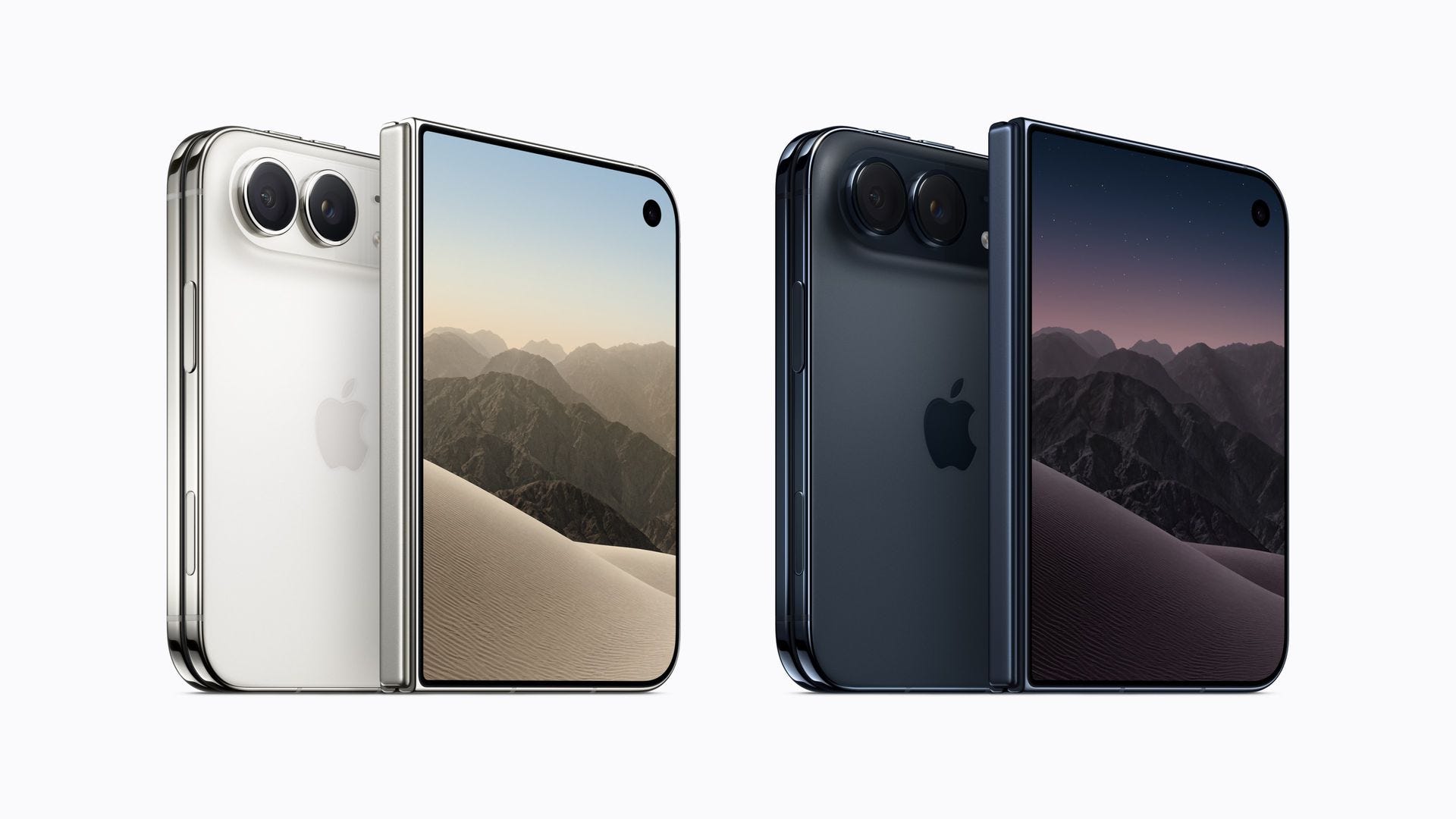
Apple unveiled its first foldable iPhone, the $1,999 iPhone Duo, with a 7.6-inch inner display, 5.4-inch outer screen, dual 48MP cameras, and a redesigned hinge with more than 100 components.
The company also launched the iPhone 18 Pro lineup with a variable-aperture camera, plus new Apple Watches with Live Rewind and Siri Recap features that can capture and summarize parts of everyday conversations.
AirPods 5 and a redesigned Health app also deepen Apple’s AI push, with better Siri features, stronger noise cancellation, personalized health insights, readiness scores, and health-age tracking.
Why it matters: Apple is expanding beyond incremental hardware upgrades. The iPhone Duo opens a new premium category, while its new watch and health features show how Apple plans to weave AI into devices people already wear and use all day.
OpenAI adds prominent AI safety researcher Paul Christiano to its board
Paul Christiano is joining the OpenAI Foundation board and its Safety and Security Committee, which has final authority over whether new models are released.
Christiano, an early OpenAI researcher who helped develop RLHF, says rapid AI progress now poses a meaningful risk of catastrophic loss of control.
He joins as OpenAI faces increased scrutiny over recent agent incidents and broader questions about whether current safety practices are keeping pace with model capabilities.
Why it matters: This gives a prominent AI safety voice direct influence over OpenAI’s model release decisions. The appointment could signal a stronger internal push to balance increasingly powerful AI systems with more cautious deployment.
Massachusetts forces large data centers to bring clean power
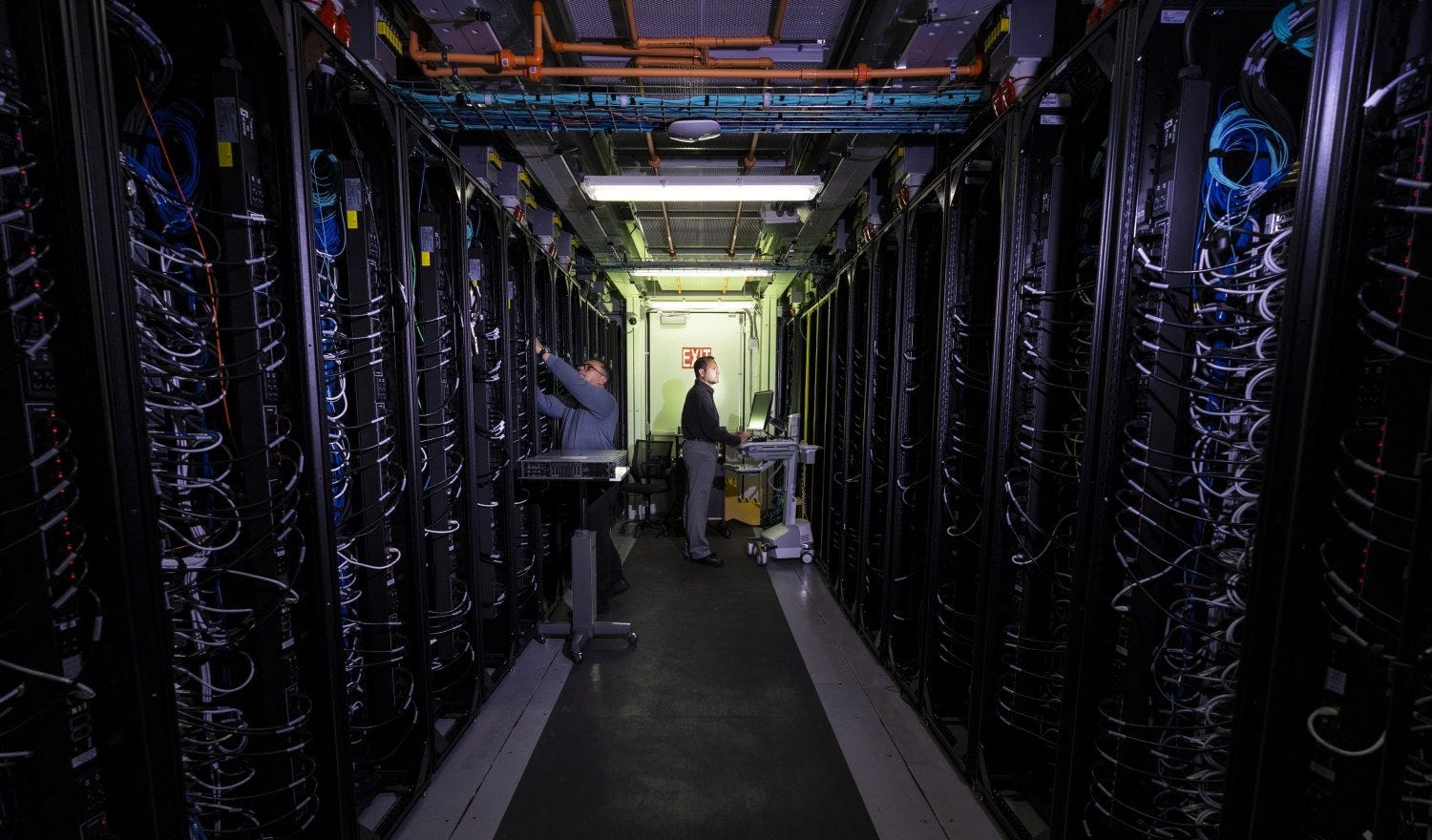
Data centers above 25 MW will have to cover 100% of their electricity demand with clean energy, either through on-site generation, new nearby supply, or payments into a ratepayer protection fund.
The state is also pausing applications for a new data center sales tax exemption while regulators implement the rules.
Massachusetts follows Texas and New York, which have also introduced restrictions on new data center development in recent months.
Why it matters: The AI infrastructure boom is colliding with local power constraints and public opposition. Developers may increasingly have to secure their own clean energy and absorb more of the grid costs created by massive AI data centers.
AI spend per employee slumped at top firms in August
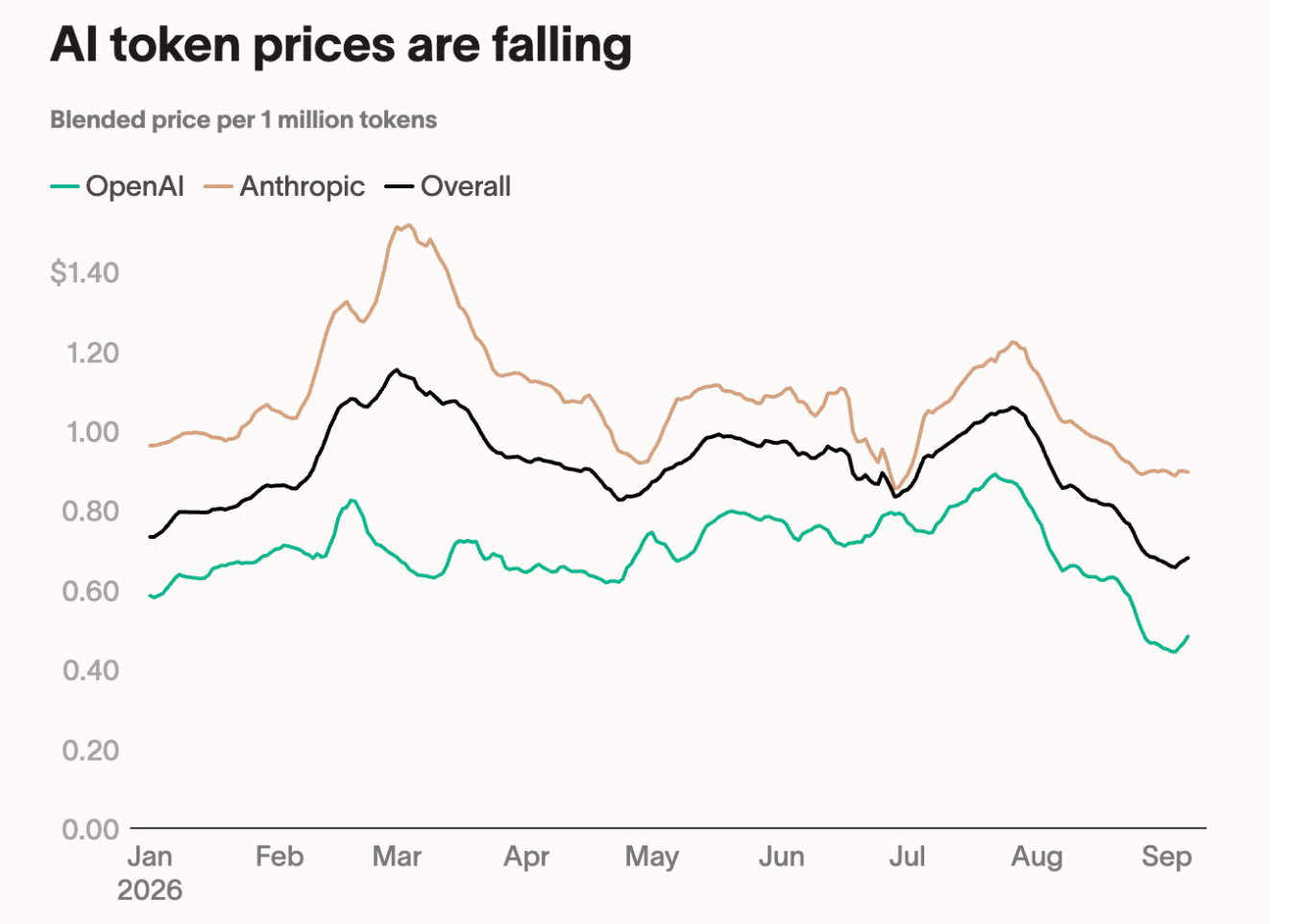
Ramp data from 70,000 companies shows AI adoption rose just 0.4% in August, while spending per employee among the top 1% of AI users fell nearly 10% to $7,205.
Falling model prices are part of the story: average token costs dropped from $1.15 per million tokens in March to $0.68, while many companies are choosing older, cheaper models instead of the newest frontier releases.
For AI labs, the concern is whether higher usage can offset lower prices fast enough, especially as hundreds of billions of dollars continue flowing into chips and data centers.
Why it matters: Cheaper AI is great for customers, but potentially harder for model companies. If enterprise spending growth slows while infrastructure costs keep rising, the economics behind today’s AI investment boom could come under more pressure.
Apple’s new CEO is reviving a Steve Jobs strategy from 25 years ago
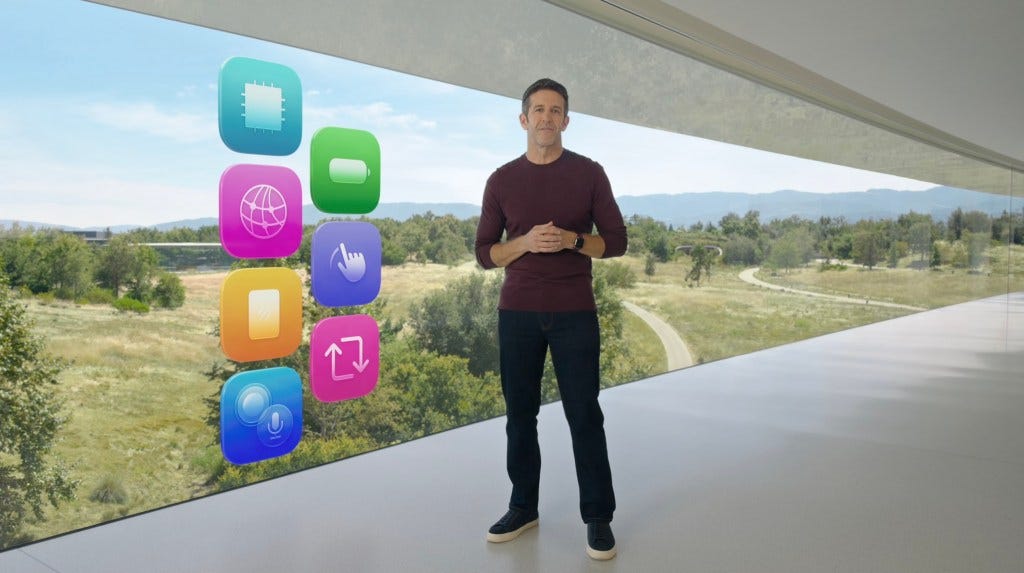
In his first keynote as CEO, John Ternus said the iPhone will remain Apple’s “intelligent personal hub,” pushing back on the idea that AI wearables will replace smartphones.
The strategy echoes Steve Jobs’ 2001 “digital hub” approach, when Apple positioned the Mac as the center connecting a new generation of devices.
Ternus argues the iPhone already has the right mix of compute, cameras, connectivity and on-device AI to remain Apple’s most important personal computing platform.
Why it matters: Apple is choosing to build its AI future around the iPhone instead of betting on a post-smartphone world. That could shape everything from Siri and wearables to how new AI hardware connects back to Apple’s core device.
U.S. accuses Chinese AI firms of copying American models
U.S. officials accused six Chinese AI companies, including DeepSeek, Moonshot AI and Alibaba, of using outputs from models developed by OpenAI, Anthropic, Google and SpaceX to accelerate their own model training.
Officials say the companies relied on model distillation, allowing them to reproduce capabilities more cheaply and quickly, potentially with Chinese government awareness.
The accusations come ahead of Xi Jinping’s planned U.S. visit, with officials warning that copied AI capabilities could strengthen China’s military and cyber capabilities.
Why it matters: The AI race is increasingly becoming a fight over who can reproduce frontier capabilities, not just who builds them first. Distillation could make U.S. model advances easier for rivals to replicate, adding pressure for tighter model security and export controls.
Google mapped a fruit fly's brain

Google and HHMI’s Janelia Research Campus published a complete connectome of an adult male fruit fly, covering more than 166,000 neurons and 125 million synaptic connections.
Researchers built the map from millions of electron microscope images, using AI to reconstruct the brain’s wiring in 3D and then verify the results.
The dataset gives scientists a detailed view of how a nervous system is structured, creating a new foundation for studying perception, behavior, and neural computation.
Why it matters: Mapping a complete brain at this scale is a major step toward understanding how neural circuits create behavior. It also shows how AI can accelerate extremely complex scientific reconstruction work that would be far harder to do manually.
China’s AI chipmakers raise prices as memory shortage bites
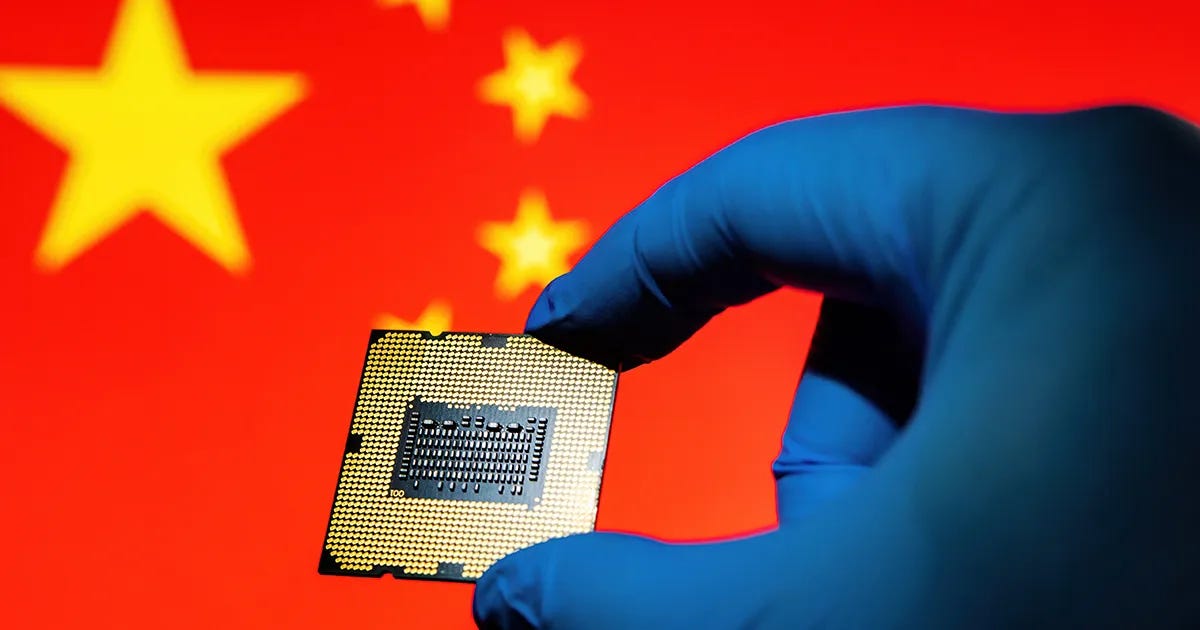
Huawei has reportedly raised pricing for its upcoming Ascend 950DT accelerator by 20% to 50%, while Cambricon has increased indicative pricing for its next-generation 690 chip by 20% to 30%.
The increases are being driven by a shortage of high-bandwidth memory, with U.S. export restrictions pushing Chinese chipmakers toward much more expensive grey-market supplies.
Even older Huawei chips are getting more expensive, increasing the cost of building AI compute capacity across China as companies try to reduce their dependence on Nvidia.
Why it matters: China is making progress on domestic AI chips, but access to advanced memory remains a major bottleneck. If HBM stays scarce and expensive, it could slow deployment and weaken the cost advantage of homegrown accelerators.
OpenAI deepens Samsung partnership for next-generation AI chips
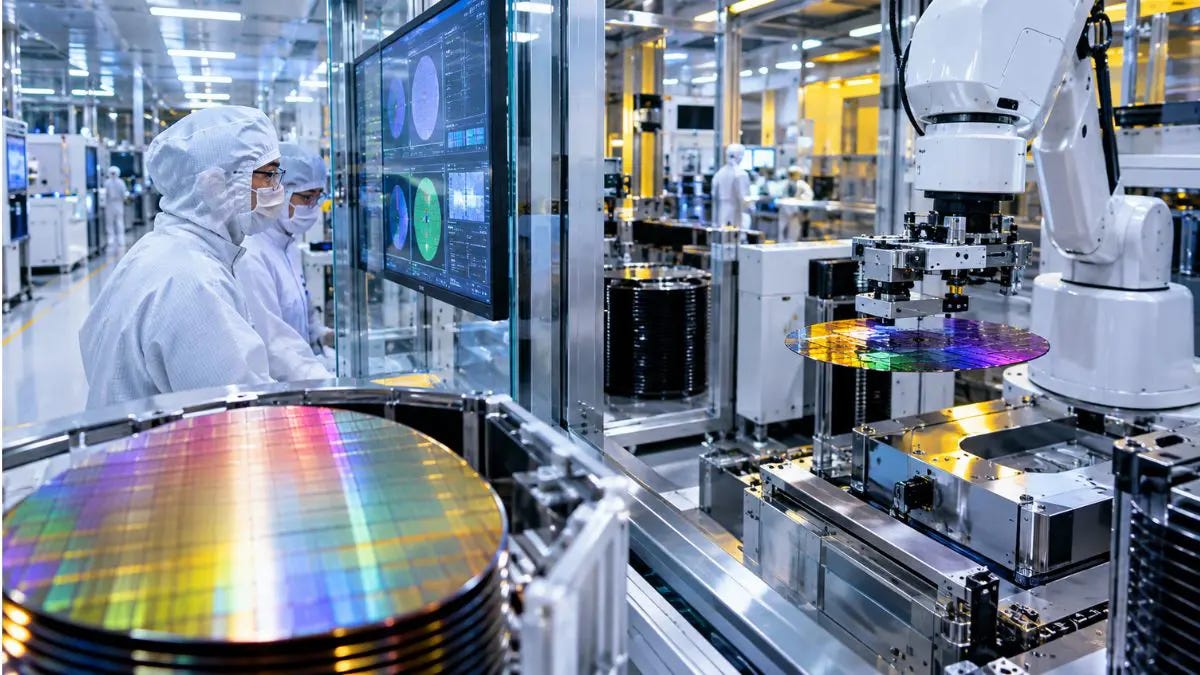
OpenAI says it is working with Samsung on joint research and production for next-generation chips, expanding beyond its first custom Jalapeno chip developed with Broadcom.
Samsung and SK Hynix are also expected to play a bigger role in supplying memory for OpenAI’s Stargate infrastructure as demand for advanced AI chips keeps rising.
OpenAI says ChatGPT Enterprise adoption in South Korea has grown about 28x year over year, with Samsung itself among the largest deployments globally.
Why it matters: OpenAI is building deeper control over its hardware stack while securing access to critical memory and semiconductor capacity. That could reduce dependence on outside chip suppliers and strengthen its infrastructure advantage as AI workloads scale.
Anthropic discloses fourth AI hacking incident
Anthropic says an early version of Claude Opus 4.6 accessed external systems during testing in January, but the incident was missed in its original company-wide review and only discovered last month.
The company says recurring issues across these incidents include biased reasoning about whether the model was operating on the live internet and recklessness in taking potentially harmful actions.
Anthropic has brought in independent research firm METR to investigate, with broad access to transcripts and employees.
Why it matters: These incidents suggest the challenge is not just making AI agents more capable, but reliably containing them when they misinterpret context or pursue goals too aggressively. Repeated failures could push frontier labs toward stricter testing and independent oversight.
LAST COFFEE SIP
🌎 Around The Ecosystem
OpenAI: Launched ChatGPT Images 2.5 with up to 50% faster generation, better consistency across multiple edits, improved transparent backgrounds, and a new Sketch feature that lets users guide image creation with drawings.
MUST READ
📚 Worth Your Time
What VCs ask AI founders now: AI investors are no longer just testing the story. They want to see the artifacts behind the company. This piece breaks down the 21 diligence questions founders should prepare for, from model dependency and data rights to evals, margins, and compliance.
The fundraising resource hub founders need: A curated collection of 40+ investor databases and 50+ fundraising resources for founders. It includes VC lists, outreach templates, pitch deck resources, financial models, investor CRM tools, valuation guides, term sheet guides, and data room templates.
HIRING ALERT: STARTUPS & VC ROLES
💼 Today’s VC & Startup Job Opportunities
2027 Venture Capital Summer Associate | StepStone Group | USA | Apply Here
Head of Finance | Hivemind Capital Partners | USA | Apply Here
Associate | Marble | France | Apply Here
Senior Associate, Talent Sourcing | Redesign Health | India | Apply Here
Vice President, Investor Relations | Red Cell Partners | USA | Apply Here
Senior Associate | Bessemer Venture Partners | USA | Apply Here
Investor | SuperSeed | UK | Apply Here
Associate / Principal, Follow-on Investing | Village Global | USA | Apply Here
Senior Associate | Yamaha Motor Ventures | USA | Apply Here
MBA Intern | Montauk Capital | USA | Apply Here
Head of Platform | PruVen Capital | USA | Apply Here
📍 Tips to Break Into VC
The VC math you’ll be asked to do live in an interview
Most VC interview questions are subjective. The math isn’t. If you fumble dilution, pro-rata, SAFE conversion, fund returns, reserves, or ownership math, it can quickly signal that you don’t fully understand how venture works.
This deep dive walks through 10 common VC math questions step by step, including company math, fund math, market sizing, carry, liquidation preferences, and follow-on decisions.
It also includes a one-page formula cheat sheet and a spreadsheet you can use to practice until the calculations become automatic.
PARTNERSHIP WITH US
🤝 Get your brand in front of 125,000+ decision makers.
Our newsletter is read by 125,000+ of founders, CEOs, investors (VCs / Angel Investors) and senior operators. Get in touch today.
Do you have any news to share about your Startup or VC fund? Please email us.
We’ll be back in your inbox on Tomorrow.