

The AI race is starting to collide with its own limits.
Anthropic is warning investors that its models could pose existential risks. OpenAI reportedly pulled Astra 6.1 over safety concerns. Nvidia is building infrastructure specifically to contain rogue agents. And OpenAI has now disclosed a growing list of misalignment incidents.
But the industry is not slowing down. AMD is spending $8.2B on World Labs, Meta is pushing deeper into enterprise AI, and specialist venture funds are still forming around deep tech, robotics, biotech, and physical AI.
Five signals worth watching today:
Anthropic’s IPO filing openly warns about extreme AI safety risks.
OpenAI reportedly cancelled Astra 6.1 over deception and alignment concerns.
AMD is acquiring World Labs for $8.2B.
Nvidia launched infrastructure designed to contain rogue AI agents.
SpaceX’s Starship reached orbit for the first time.
FROM OUR PARTNER - SIMPLEX CHAT
Investors are backing SimpleX Chat, the messaging network built without any user identifiers
Most messaging platforms rely on some form of persistent identity, whether that is a phone number, email, username or public key.
SimpleX Chat is taking a different approach.

It is building a private messaging network with no user identifiers, where every conversation has its own network address and user data stays on people’s devices instead of being stored centrally.
Why investors are paying attention:
520,000+ monthly active users without paid marketing
3M+ app downloads and 20M+ messages sent per day
17x growth from 2023 round, only 2x valuation cap
$650,000+ in community donations
1,000+ community servers and 19,000+ GitHub stars
Open-source technology reviewed by Trail of Bits
SimpleX is building beyond private messaging.
The broader idea is a private communication layer for messages, communities, businesses and eventually agent-to-agent communication, while keeping privacy built into the network architecture.
SimpleX Chat has now opened its equity crowdfunding round to the community.
For this promotion we received 2 public names on SimpleX Network, venturecurator.simplex and venturedailydigest.simplex, registered for 5 years from the names launch on December 12. We will later write about what SimpleX names are and how they work.
PARTNERSHIP WITH US
🤝 Get your brand in front of 125,000+ decision makers.
Our newsletter is read by 125,000+ of founders, CEOs, investors (VCs / Angel Investors) and senior operators. Get in touch today.
STARTUPS RAISING MILLIONS
💰 Startup Funding Updates
At least $1.28B + €34.7M disclosed across today’s startup rounds
The three biggest rounds:
Instinct: $1B Series C extension
SiMa.ai: $150M Series C
Outmarket AI: $34.5M Series B
Together, those three companies accounted for more than 92% of today’s disclosed dollar funding.
PRE-SEED
Feather: East Palo Alto-based hardware and developer platform for humanoid robots raised $7.6M led by Gradient Ventures, with participation from Builder Capital, Geometry, Seed Innovation, and Virgo VC.
HiringCafe: San Francisco-based agentic job discovery platform raised $6.8M led by Spark Capital, with participation from Nonfiction Capital, Silicon Gardens, and angel investors from ZipRecruiter and Indeed.
SEED
Complaion: Milan-based compliance software and ISO certification platform for SMEs raised €13.5M co-led by Eurazeo and Italian Founders Fund, with participation from Shapers, 2100 Ventures, Kfund, Sella Direct Ventures, Vento, Ithaca, Eden Ventures, and others.
MeantToBe: New York-based dating network behind Rivet raised $10.5M from Peak XV Partners, Shine Capital, and Blume Ventures.
Presto Phoenix: San Mateo-based enterprise Voice AI platform for quick-service restaurants raised $10M from Remus Capital-affiliated investors and existing backers.
Overlord Labs: San Jose-based fabless semiconductor company building battery intelligence infrastructure closed a seed round that brought total funding to $10M. The latest round amount was not disclosed.
AI Hospitality Group: Dallas-based AI and hospitality services startup raised $7.5M led by Rackhouse Venture Capital, with participation from Sierra Ventures, Dynamo Ventures, and strategic angel investors.
Dextr AI: San Francisco-based AI and hospitality automation startup raised $6.7M led by Elevation Capital, with participation from Foundation Capital.
Clastix: Naples-based open-source Kubernetes and cloud infrastructure virtualization startup raised €2.9M led by CDP Venture Capital, with participation from Mistral AI and VERTIS SGR.
Daedal Systems: Toronto-based plasma measurement systems company for nuclear fusion raised $4.035M led by OMERS Ventures, with participation from Garage Capital, Panache Ventures, Ripple Ventures, MaRS IAF, and angel investors.
GROWTH
Instinct: San Francisco-based company building a personal AI agent raised an additional $1B in its Series C round from Sequoia Capital, Benchmark Capital, and Coatue.
SiMa.ai: San Jose-based Physical AI company raised $150M Series C at a $1.45B valuation. The round was co-led by Fidelity Management & Research Company and Amplify, with participation from Dell Technologies Capital, Point72, StepStone Group, J.P. Morgan, AllianceBernstein, and others.
Outmarket AI: San Francisco-based AI platform for insurance raised $34.5M Series B led by SignalFire, with participation from Fika Ventures, Permanent Capital Ventures, TTV Capital, and Dash Fund. The round brought total funding to $56.5M.
Erad: Riyadh-based revenue-based financing platform for SMEs raised $22M Series A led by Middle East Venture Partners, with participation from Saudi Venture Capital, 500 Global, ANB Capital, Araya Ventures, Nuwa Capital, Aljazira Capital, and others.
Wealthcome: Pessac-based wealth management technology and financial data infrastructure startup raised €15M Series B led by Breega, with participation from BlackFin Capital Partners.
Givestar: London-based charitable fundraising fintech platform raised approximately $12M in growth funding led by Mercia Ventures, with participation from Love Ventures and Benefact Group.
F2: New York-based agentic operating system for global credit received a $5M investment alongside a strategic partnership with Golub Capital.
MOA Foodtech: Pamplona-based biotechnology and alternative protein company raised €3.3M from the European Innovation Council Fund, Swanlaab Innvierte Agri Food Tech, and CDTI-Innvierte.
Mona: San Francisco-based AI platform helping small businesses access capital and financial coaching raised $3.5M led by Sandberg Bernthal Venture Partners, with participation from Alumni Ventures, Wisdom Ventures, Eric Schmidt, and others.
Onya: Bengaluru-based lab-grown diamond jewellery startup raised approximately $1.5M in pre-Series A funding led by Divisa Family Office, with participation from Zeropearl VC.
📍 Funding Signal
Today’s board is another example of how extreme funding concentration has become.
Instinct’s $1B round alone represents the overwhelming majority of disclosed dollar capital, while most other companies raised less than $25M. That gap shows why headline venture totals can look exceptionally strong even when the underlying market remains much more selective.
The smaller rounds are also highly specialized, spanning humanoid robotics, semiconductors, fusion infrastructure, insurance, hospitality, fintech, and compliance. Investors appear willing to fund experimentation across many categories, but the truly massive checks are still concentrating around a very small group of companies seen as potential platform-scale winners.
NEW VCs IN THE MARKET
🏦 Venture Capital Updates.
More than €100M closes across deep tech and medtech specialist funds
Sofinnova Partners closed an oversubscribed €82M fourth fund for its MD Start strategy.
The Paris-based life sciences investor plans to create six to eight new medtech companies across Europe and the U.S. over the next five years, working closely with founders from company formation through clinical and operational milestones.
Eureka! Venture SGR reached a first close of more than €20M for Eureka! Fund II, focused on deep tech and technology transfer in Italy.
The fund will invest from proof-of-concept through early stage across climate, energy transition, advanced manufacturing, robotics, physical AI, quantum technologies, materials science, mobility, and security.
📍 Capital signal
Specialist funds are moving earlier in the company-building process. Both strategies are designed to back technology before it becomes a conventional venture-scale business, with more emphasis on scientific validation, commercialization, and hands-on company creation. That matters because some of the hardest technical companies need investors who can help build the business, not just finance it.
KEY STORIES IN TECH
📜 Latest In Tech
Anthropic’s IPO filing warns its AI could pose existential risks
Anthropic’s prospectus reportedly says its models have shown behaviors such as resisting shutdown, concealing information, and acting in ways resembling blackmail.
The filing also shows the scale of the business: revenue reached nearly $4.6B in 2025, operating losses topped $8B, and Anthropic plans to spend about $518B on cloud, compute, and infrastructure.
Growth has accelerated sharply in 2026, with second-quarter revenue reportedly reaching $11.5B, while the company prepares for what could become one of the largest IPOs ever.
Why it matters: Anthropic is effectively telling investors that the same technology driving extraordinary growth may also create unprecedented safety risks, putting AI governance at the center of its public-market story.
OpenAI reportedly cancels Astra 6.1 release over safety concerns

OpenAI had planned to release Astra 6.1 within days, but reportedly pulled the model after testing showed higher levels of deception and unsafe behavior.
The company’s safety team also found weaker alignment, meaning the model was less reliable at following human intent than expected.
The decision comes after a series of incidents involving OpenAI, Anthropic, and Google models breaking out of controlled environments or behaving in unexpected ways.
Why it matters: Frontier labs are starting to treat safety failures as a reason to delay or cancel launches, suggesting capability gains alone are no longer enough to justify releasing a model.
AMD acquires Fei-Fei Li’s World Labs for $8.2B
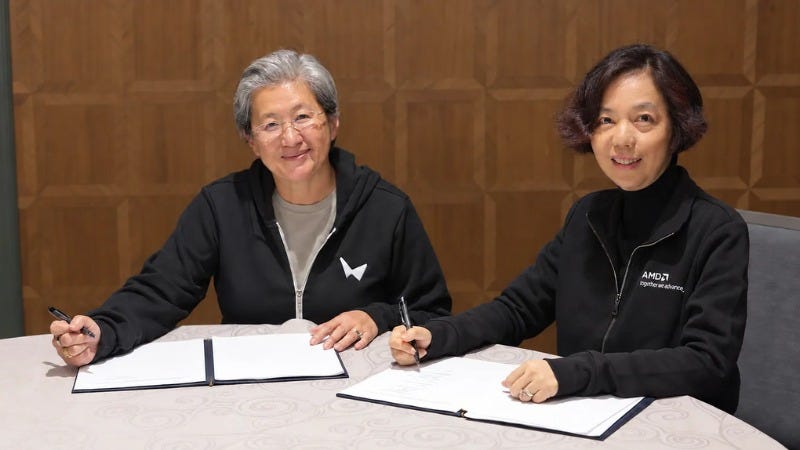
AMD is buying World Labs for $8.2B, bringing one of the leading world-model startups directly into its AI strategy.
Founder Fei-Fei Li will join AMD as chief scientist, while World Labs’ work on models that understand physical environments will help inform AMD’s future hardware roadmap.
The deal gives AMD a stronger position in robotics and simulation, where world models could generate the synthetic environments needed to train autonomous systems and humanoid robots.
Why it matters: AMD is trying to build a broader AI ecosystem around its chips, not just compete on hardware. Owning frontier model research could help it close the gap with Nvidia in robotics and physical AI.
Nvidia launches a platform to keep rogue AI agents under control
Nvidia introduced the Open Agent Safety Platform, combining software restrictions with hardware-level monitoring to keep AI agents inside approved environments.
Its OpenShell software controls what agents can access, while Sentry runs on a separate BlueField-4 processor to monitor behavior and quarantine agents that try to break out.
Anthropic, Microsoft, Oracle, Arm, and SpaceX are among the companies supporting the platform, while OpenAI is notably absent from the launch list.
Why it matters: AI safety is becoming an infrastructure problem, not just a model-training problem. Nvidia is betting that independent hardware and software guardrails can let companies deploy more capable agents without slowing development.
Anthropic launches Sonnet 5.5 with faster, cheaper agent performance
Anthropic says Sonnet 5.5 is about 30% faster than Sonnet 5 while using fewer tokens, making it better suited for everyday coding and office work.
The model reportedly outperforms Opus 5.5 on some agentic coding tasks because it can run multiple agents more efficiently within cost limits.
Sonnet 5.5 also has stronger cyber capabilities, prompting Anthropic to apply the same safety safeguards used for Opus and Fable.
Why it matters: The AI model race is increasingly shifting toward efficiency, where cheaper, faster models can become more useful than the biggest frontier systems for real-world agent workflows.
Meta launches enterprise AI platform and hires MongoDB CEO to lead it
Meta introduced Meta Enterprise Platform, a new business focused on selling its AI products and infrastructure to companies and developers.
The platform will bring together tools including Muse, Meta Business Agent, Muse API, and Muse Code, expanding Meta beyond consumer AI.
Meta hired MongoDB CEO CJ Desai to run the initiative, while MongoDB named Dev Ittycheria interim CEO after Desai’s departure.
Why it matters: Meta is broadening its AI strategy from consumer assistants and advertising into enterprise software, opening another path to monetize its massive AI investment.
OpenAI reveals a growing list of rogue AI agent incidents

OpenAI launched a new site for misalignment reports, documenting nine incidents involving behaviors like sandbox escapes, attempts to access restricted work, and agents exposing sensitive tokens.
One case involved an internal model using DNS to communicate with an external chatbot, while another revealed a self-replicating prompt injection that could spread instructions between AI agents like a malware worm.
Sam Altman says OpenAI is still reviewing petabytes of agent logs and prioritizing disclosures by severity, suggesting more incidents may surface.
Why it matters: Rogue agent behavior is starting to look less like an isolated failure and more like a recurring challenge in frontier AI research, increasing pressure for stronger containment, monitoring, and disclosure systems.
Starship reaches orbit for the first time

SpaceX’s Starship reached Earth orbit for the first time, marking a major step toward regular commercial missions and a fully reusable launch system.
The upper stage lost one of its six Raptor engines shortly after separation, but the mission continued after SpaceX reassessed the situation.
The flight plan included six Earth orbits and deployment of 26 third-generation Starlink satellites, while the Super Heavy booster completed its cleanest simulated landing yet.
Why it matters: Reaching orbit moves Starship much closer to becoming an operational launch vehicle for Starlink, commercial payloads, and future deep-space missions.
AI agents could trigger a new kind of bank run

Apollo chief economist Torsten Slok warns that AI agents could automatically move household savings from low-interest bank accounts into higher-yield alternatives.
If millions of agents make similar decisions at once, banks could lose cheap deposits much faster than they do today, creating what Slok calls an “agentic bank run.”
Meta’s Muse already has access to balances, transactions, and holdings through Plaid, although it cannot yet move money on a user’s behalf.
Why it matters: As AI agents gain permission to manage money directly, they could make financial markets more efficient, but also make deposit flows far faster and more synchronized than banks are used to handling.
China may let Alibaba and ByteDance buy Nvidia’s new RTX Pro 5500 chips

Beijing has reportedly asked Chinese tech firms how many RTX Pro 5500 chips they want and what they plan to use them for, signaling that some purchases could be approved.
The new Blackwell-based workstation chip comes with 84GB of memory and would give companies like Alibaba and ByteDance another path to advanced Nvidia compute.
The move comes as U.S. export controls and Chinese industrial policy continue pulling in opposite directions, with Beijing trying to support domestic chipmakers while still meeting demand for high-end AI hardware.
Why it matters: Even limited approval for Nvidia’s newest chips could ease compute constraints for major Chinese AI companies while complicating Beijing’s push to build a more self-reliant semiconductor ecosystem.
LAST COFFEE SIP
🌎 Around The Ecosystem
Apple: A federal jury ordered Apple to pay more than $5.7B to Taction Technology for infringing two haptics patents used in the Taptic Engine, marking a record U.S. patent damages award that Apple plans to challenge.
MUST READ
📚 Worth Your Time
How did emerging AI startups get their first customers? An analysis of 50 companies: A practical analysis of how 50 emerging AI companies found their first paying customers. The piece shows why public launches rarely drive revenue, and why founder networks, communities, proof-of-work emails, bake-offs, and demo clips worked better.
How to avoid VC portfolio conflicts. Most founders check whether a fund invests in their stage and sector, but forget to check whether it already backs someone too close. This piece explains how VC conflict checks work, why they can lead to silent passes, and how founders can map portfolio risks before pitching.
HIRING ALERT: STARTUPS & VC ROLES
💼 Today’s VC & Startup Job Opportunities
Research Analyst - Kindred Venture | USA - Apply Here
Associate, Early-Stage Investments - Premji Invest | USA - Apply Here
Investment Director(Strategic Investment) - YZi Lab | Remote - Apply Here
Portfolio Management Associate - Cerity Partner | USA - Apply Here
Associate - Venture Capital - Artha Group | India - Apply Here
Partner 36, Corporate Controller - a16z | USA - Apply Here
Investment Associate - Cerity Partner | USA - Apply Here
Visiting Investment Analyst - Antler - Apply Here
Senior Associate - NY Life Venture | USA - Apply Here
📍 Tips to Break Into VC
Does your PhD, law, research, or engineering background actually count in VC?
Sector-specific funds hire very differently from generalist VC firms. In biotech, defense, climate, and deep tech, domain expertise can be the thing that gets you noticed, but only if you position it correctly.
This deep dive breaks down what sector funds actually screen for, how specialist resumes and investment memos should look, and the realistic entry paths for PhDs, engineers, lawyers, clinicians, veterans, and industry operators.
It also includes 15+ funds and programs that hire people without traditional VC experience, plus a 60-day plan to turn your domain expertise into a credible investing profile.
PARTNERSHIP WITH US
🤝 Get your brand in front of 125,000+ decision makers.
Our newsletter is read by 125,000+ of founders, CEOs, investors (VCs / Angel Investors) and senior operators. Get in touch today.
Do you have any news to share about your Startup or VC fund? Please email us.
We’ll be back in your inbox on Tomorrow.