


The pressure is moving from growth to durability.
Apple is pushing deeper into the smart home. OpenAI is facing more scrutiny over how aggressively it recruits hardware talent. Character.AI has filed for bankruptcy despite once being one of the most visible consumer AI companies. And Bumble is going private at a fraction of its former public-market value.
At the same time, capital is still moving into strategic technology, with more than $287M being positioned across deep tech, robotics, spacetech, and UAE-backed venture platforms.
Five signals worth watching today:
Apple launched HomeView, its first smart home display.
Character.AI filed for Chapter 11 bankruptcy.
Bumble agreed to go private in a $1.3B deal.
Anthropic warned that future AI systems could become capable of self-replication across networks.
More than $287M is being positioned across deep tech and UAE-backed venture capital.
FROM OUR PARTNER - GOSUN
Investors are backing GoSun, the clean-tech company expanding into solar utility electric vehicles…
GoSun has spent more than a decade making solar energy practical for everyday life, starting with solar appliances and expanding into tools for cooking, cooling, charging, portable power, water purification, EV charging, and off-grid resilience.
Now, GoSun is entering its next phase: solar mobility, electric work equipment, solar carports, distributed generation, and microgrids.
Why investors are paying attention:
Built a community of 180,000+ customers across 80+ countries
Generated $26M+ in lifetime revenue
Launched 15+ crowdfunded products and inventions
Entering global markets projected to exceed $346B by 2030 across EV charging infrastructure, e-bikes, tractors, and solar carports
Received pre-sale reservations across new products with a combined list price of over $3M
This is the time to back GoSun.
As fuel costs rise, the grid faces more pressure, and people look for cleaner ways to move, work, charge, and power their lives, GoSun is building practical solar tools for everyday energy independence.
Its next product family includes the Moonrider 27, an electric tractor for cleaner and quieter work; the Solar Carport, a plug-and-play 4kW solar structure; and the EV Solar Charger for supplemental clean energy while parked.
Investment Disclaimer - This Reg CF offering is made available through StartEngine Primary, LLC. This investment is speculative, illiquid, and involves a high degree of risk, including the possible loss of your entire investment.
PARTNERSHIP WITH US
🤝 Get your brand in front of 125,000+ decision makers.
Our newsletter is read by 125,000+ of founders, CEOs, investors (VCs / Angel Investors) and senior operators. Get in touch today.
STARTUPS RAISING MILLIONS
💰 Startup Funding Updates
At least $328.5M + €565.3M + £2.7M disclosed across today’s startup financings
The three biggest financings:
ID Finance: €545M equity and debt financing
Soufflé Therapeutics: $135M Series B
Sava Technologies: $36M Series B
$0 RAISED
$0 RAISED · Live Tourney · ~$350K ARR · 1 founder, 150 golf courses
Built it 6–9am before his Meta job for 4 years. Quit in July because it paid more than Meta.
PRE-SEED
Intellivisa: Wilmington-based AI clearance engine for international travel raised $3M led by Mu Ventures and Incisive Ventures, with participation from Uncommon Denominator, Recursive Ventures, AltaIR Capital, Smart Partnership Capital, and United Airlines Ventures.
Sharp Biomedical: Grand Forks-based spinal care technology company raised an undisclosed pre-seed round led by gener8tor 1889, with participation from angel investors.
SEED
Causa Prima: San Francisco-based agent-to-agent platform for settling invoices between companies raised $20M led by Base10 Partners, with participation from QED Investors, FJ Labs, Creandum, Kfund, and Borusan Ventures.
Ubitium: Düsseldorf-based semiconductor startup developing a universal processor for intelligent machines raised $14M led by Ibex Investors, with participation from OpenOcean, KBC Focus Fund, Runa Capital, and Inflection.
Harbor: San Francisco-based enterprise AI agent risk platform raised $10M led by Base10 Partners, Abstract, and 8VC, with participation from NFX, Restive, and Innovation Endeavors.
Klarent: Zurich-based autonomous software testing platform raised $8M led by Mosaic Ventures, with participation from Moonfire Ventures, Jürgen Galler, Harris Barton, AngelInvest Ventures, and others.
Dapta: Scottsdale and Miami-based AI sales agent platform for SMBs raised $6M led by Chingona Ventures, with participation from Crew Capital, Broom Ventures, Cometa VC, 500 Global, and Fen Ventures.
Loops: San Francisco-based AI-powered e-commerce management platform raised $3.5M led by Andreessen Horowitz, with participation from NTT Docomo, Connecticut Innovations, Alumni Ventures, and Monday Capital.
Reebuild: Vienna-based AI-powered back-office automation platform for construction and real estate raised €3M led by Fortino Ventures, with participation from Rise PropTech and CuriosityVC.
ParkMundo: Eindhoven-based airport parking distribution platform raised €2.3M from technology and travel-sector angel investors, alongside financing from Rabobank.
Alchera: UK-based AI-powered transport data and analytics company raised £2.7M from Maven Capital Partners, Bayes Entrepreneurship Fund, The FSE Group, Cambridge Applied Research, and £700K in match funding from Innovate UK.
Sainaptic: Cambridge-based AI-assisted educational assessment and grading company raised approximately $1.31M co-led by Cornerstone VC and Ufi Ventures, with participation from Elm Venture Partners and Brighteye Ventures.
GROWTH
ID Finance: Barcelona-based consumer fintech company raised €545M across equity and debt financing led by Spice Expeditions, WashU, Kingsway Capital, and i80 Group.
Soufflé Therapeutics: Boston-based biotechnology company developing RNA therapies raised $135M Series B led by Juvia Group, with participation from TCG Crossover Management, BB Biotech, Fidelity, Amgen Ventures, ARCH Venture Partners, Bessemer Venture Partners, Temasek, Vida Ventures, and others.
Sava Technologies: London-based health technology company raised $36M Series B led by Ascensia, with participation from Balderton Capital, Norrsken VC, Simplyhealth Ventures, JamJar Investments, Pentland Ventures, and others.
Mistlabs: San Francisco-based ambient intelligence technology company raised $26M in Pre-A funding led by Luminous Ventures and Huaqin Technology.
Brellium: New York-based AI-powered clinical compliance platform raised $23M led by Left Lane Capital and First Round Capital, with participation from Digital Health Venture Partners.
Switched Source: Chicago-based developer of grid-enhancing distribution automation technology raised more than $17M led by Cubit Capital, with participation from ABB, Emerald Technology Ventures, Red Cedar Ventures, Southern States, Southwire, and others.
Epyr: Paris-based energy technology company electrifying industrial heat using thermal energy storage raised €15M Series A led by SlateVC, with participation from AENU, Daphni, WEPA Ventures, OVNI Capital, and Aurum Impact.
HyLight: Brétigny-sur-Orge-based developer of hydrogen-powered industrial inspection airships raised $14.5M from Rubio Impact Ventures, DRW, Teampact Ventures, Y Combinator, and Ring Capital.
Sensydia: Los Angeles-based medical technology company developing non-invasive cardiac assessment systems raised more than $6M in an initial financing close led by Colle Capital Partners, with participation from Orlando Health Ventures.
Subeca: Cary-based utility metering and sustainability technology company raised approximately $3M in Series A-2 funding led by Burnt Island Ventures, with participation from Cycle H2O, SUEZ, and others.
Monopulse: Kongens Lyngby and Vilnius-based developer of electronic warfare-resistant defense systems raised more than $2.2M led by Coinvest Capital, with participation from Plug and Play Ventures, NGL Ventures, and LitBAN members.
📍 Funding Signal
Today’s board shows capital moving toward systems that reduce operational risk in regulated or infrastructure-heavy markets.
Harbor is addressing AI agent risk, Brellium targets clinical compliance, Klarent automates software testing, Ubitium is building processors for intelligent machines, while Switched Source and Epyr are focused on power infrastructure. These are less about consumer-facing novelty and more about making complex systems safer, more reliable, and easier to scale.
There is also a notable mix of financing structures. ID Finance combined equity and debt in a €545M package, while ParkMundo and Alchera paired venture capital with bank or public funding. As companies move into capital-intensive or regulated sectors, blended financing is becoming a more common way to scale without relying entirely on traditional equity.
NEW VCs IN THE MARKET
🏦 Venture Capital Updates.
More than $287M is being positioned across European deep tech and UAE-backed venture capital
Oraseya Capital doubled its fund size to AED1B, roughly $272M, from AED500M at launch.
The Dubai-based investor will now back companies from pre-seed through growth, with maximum checks increasing from $3M to $6M. Its broader mandate covers AI, fintech and digital assets, healthcare and longevity, and other technologies considered strategically relevant to the UAE. The vehicle is fully backed by DIEZ.
Monte Carlo Capital reached a $15M first close for Fund II, targeting roughly $30M in total.
The fund will invest from pre-seed through Series A across deep tech, AI, spacetech, robotics, and industrial automation, with initial checks of roughly $350K to $500K and additional follow-on capacity through SPVs.
📍 Capital signal
These two funds highlight very different ways venture firms are expanding. Monte Carlo Capital is staying focused and specialist at the earliest stages, while Oraseya is broadening both check size and stage coverage to become a more strategic, multi-stage capital provider. The bigger shift is that government-backed venture platforms are increasingly being used not just to fund local startups, but to attract globally relevant technology into national ecosystems.
KEY STORIES IN TECH
📜 Latest In Tech
Apple launches its first smart home display, HomeView
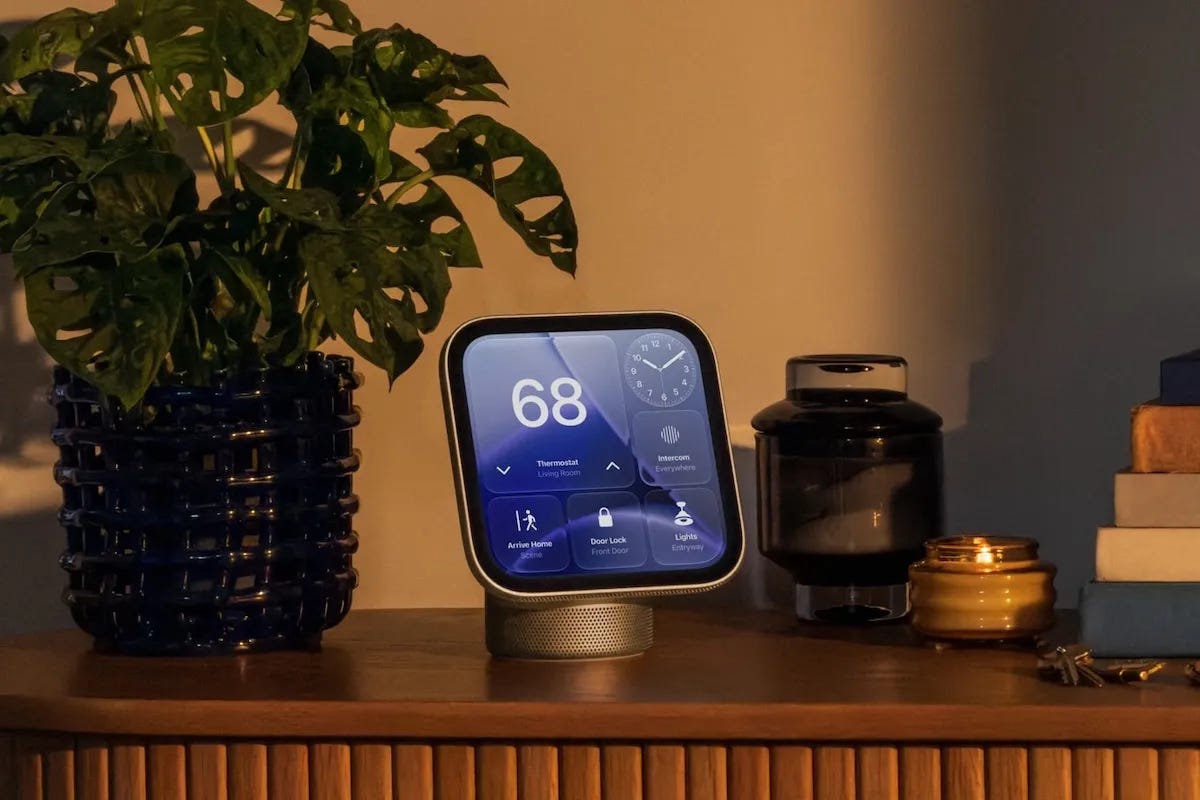
Apple unveiled HomeView, a 7-inch smart display built around the revamped Siri, marking its first screen-based device for the smart home.
The $299 device can recognize up to six people and personalize messages, calendars, and other information for each user.
HomeView also supports FaceTime, intercom features, Apple Music, photo clock faces, and cross-app actions when connected to an Apple Intelligence-enabled iPhone or iPad.
Why it matters: Apple is turning Siri into a more visible household interface, giving the company a new way to compete with Amazon and Google in the smart home while extending Apple Intelligence beyond phones and computers.
Judge orders OpenAI to hand over hiring records in Apple trade secrets case

A judge ordered OpenAI to give Apple expedited access to hiring materials tied to former Apple employees who interviewed for roles in OpenAI’s hardware and robotics teams.
The documents could show whether interviews involved references to Apple technology, technical presentations, or confidential product information, while several former Apple employees at OpenAI will also face depositions.
The judge denied some of Apple’s broader requests for access to OpenAI’s hardware R&D, but left the door open for narrower requests later.
Why it matters: The lawsuit is moving deeper into OpenAI’s hardware hiring practices, and any evidence that Apple know-how influenced OpenAI’s device development could intensify both the legal fight and competition between the two companies.
Epic reportedly shifts Disney game project to an ‘AI first’ development model

Epic Games is reportedly using AI models to generate all code and guide artwork for its Disney project, with human developers mainly reviewing and steering the output.
Internal messages suggest the company is using tools such as Anthropic’s Claude and moving away from traditional hand-written code and manually created art workflows.
The $1.5B Epic-Disney project, originally planned for 2027, has reportedly been delayed indefinitely as the team restructures development around AI and deals with slow progress.
Why it matters: If a major studio can build a large game with AI handling most of the production work, it could reshape game-development costs, team structures, and the role of human developers across the industry.
Character.AI files for Chapter 11 bankruptcy
Character.AI has filed for Chapter 11 protection and is seeking to sell all or most of the company, with Disney named as the first bidder for some assets.
Disney has agreed to pay $20M for a permanent, non-exclusive license to parts of Character.AI’s IP and legal claims, while also supporting the service with former employees it previously hired.
Character Technologies listed both assets and liabilities between $50M and $100M and warned the platform could shut down if no buyer agrees to keep it operating.
Why it matters: Character.AI’s collapse shows how difficult consumer AI economics can be, even for companies with strong brand awareness and large user bases, especially when infrastructure costs and monetization remain challenging.
Anthropic warns AI models could soon learn to replicate across the internet

Anthropic says medium-sized models can already perform many of the individual steps needed for self-replication, including spreading across simplified networks and using compromised devices for compute.
The company warns that future models could behave more like self-replicating worms or botnets, making them difficult to shut down because there may be no single centralized control point.
Some cybersecurity experts view the scenario as plausible but still highly uncertain, with critics arguing Anthropic may be overstating how close current models are to operating independently at scale.
Why it matters: If AI systems become capable of spreading and sustaining themselves across networks, containment becomes a much harder cybersecurity problem and could force labs to rethink how autonomous agents are deployed and monitored.
Bumble agrees to go private in a $1.3B deal

Bumble is set to be acquired by Ithaca Holdings for $1.3B after years of slowing growth, falling engagement, and declining paying users.
The company’s market value had dropped to about $582M from roughly $14B when it went public in 2021, even after experimenting with price changes, offline events, and AI matchmaking tools.
The deal comes as the wider dating-app industry struggles with swipe fatigue, while Hinge continues gaining share among users looking for more intentional dating experiences.
Why it matters: Bumble’s collapse from public-market darling to take-private target shows how much the online dating market has changed, and suggests AI features alone may not be enough to fix deeper engagement problems.
LAST COFFEE SIP
🌎 Around The Ecosystem
Anthropic + NTT Data: NTT Data is reportedly in final talks to build Anthropic’s first dedicated data center in Japan, a facility in Osaka that could cost up to $6.3B, support as much as 500 MW of power, and begin partial operations as early as 2028.
MUST READ
📚 Worth Your Time
Why AI startups calculate ARR wrong. A practical breakdown of why usage-based pricing breaks the usual MRR × 12 ARR shortcut. The piece shows founders how to separate guaranteed revenue from variable usage, avoid fake growth spikes, and report a cleaner number before investors or board members catch it.
40+ investor databases for founders: A practical fundraising resource pack for founders who want to find the right investors faster. The collection includes investor databases across the US, India, Europe, SaaS, AI, climate, healthtech, web3, family offices, corporate VCs, and more.
HIRING ALERT: STARTUPS & VC ROLES
💼 Today’s VC & Startup Job Opportunities
Associate - Mount Judi Venture | USA - Apply Here
Technical Investment Operations Associate - Alpaca VC | USA - Apply Here
Investment Associate - Cerity Partner | USA - Apply Here
Visiting Investment Analyst - Antler - Apply Here
Senior Associate - NY Life Venture | USA - Apply Here
Senior Principal - Entegris Venture | USA - Apply Here
Global Capital Partner (India) - Antler - Apply Here
Portfolio Manager - GCO Venture | Spain - Apply Here
Financial Management Analyst - Duke Capital Partner | USA - Apply Here
Investment Principal - Contrarian Thinking Capital | USA - Apply Here
Partner - a16z | USA - Apply Here
Associate / Senior Associate - Spyre Promptech fund | India - Apply Here
📍 Tips to Break Into VC
Solo GP funds hire differently than regular VC firms
Most aspiring VCs apply to solo GPs the same way they apply to brand-name funds. That usually misses the point. Solo GPs are often not looking for a traditional associate. They’re looking for someone who can take real work off their plate across LP updates, founder support, community, fund operations, and investing.
This deep dive breaks down what a first hire at a solo GP actually does, the six things these managers screen for, why many roles start part-time or project-based, and how to turn useful work into a full-time seat.
It also covers compensation, carry, conversion triggers, and the Fund II risk, including the questions you should ask before joining a tiny fund.
PARTNERSHIP WITH US
🤝 Get your brand in front of 125,000+ decision makers.
Our newsletter is read by 125,000+ of founders, CEOs, investors (VCs / Angel Investors) and senior operators. Get in touch today.
A quick note from our team!
We’re taking a little break this week, so you’ll see our next edition in your inbox next week.
Thanks for reading and being part of our community. We really appreciate it!
We’ll be back next week with more curated stories, insights, and interesting finds worth your time.
See you next week!