

The money is getting bigger, but so are the hidden costs behind the AI boom.
Anthropic’s compute costs are eating a larger share of revenue. Meta is raising another $15B in debt for infrastructure. And AMD is taking a $1.07B charge from chip deals that also give major customers equity upside.
At the same time, more than $530M is being raised across specialized funds focused on cybersecurity, industrial tech, biotech, and early-stage AI.
Five signals worth watching today:
Anthropic’s compute costs rose to 58% of quarterly revenue.
Meta is raising another $15B in debt to fund AI expansion.
AMD took a $1.07B charge tied to OpenAI and Meta chip deals.
Apple is reportedly developing a home robot for 2027.
More than $530M is being raised across specialist venture funds.
FROM OUR PARTNER - MECO
The best new app for newsletter reading - Meco

Reading newsletters in the inbox is frustrating - it is noisy and easy to lose control of subscriptions.
Now with Meco you can enjoy your newsletters in an app built for reading, while giving your inbox space to breathe.
Meco connects to Gmail & Outlook, allowing you to instantly move your newsletters to the app (and clear your inbox)
The experience is packed with features to supercharge your reading including the ability to group newsletters, set smart filters, bookmark your favorites and read in a scrollable feed
You can try the experience for free and available on iOS, Android and web (desktop)
Over 30k readers are enjoying their newsletters (and decluttering their inbox) with Meco.
PARTNERSHIP WITH US
🤝 Get your brand in front of 125,000+ decision makers.
Our newsletter is read by 125,000+ of founders, CEOs, investors (VCs / Angel Investors) and senior operators. Get in touch today.
STARTUPS RAISING MILLIONS
💰 Startup Funding Updates
At least $339.8M + €21.75M + £9.3M disclosed across today’s startup financings
The three biggest rounds:
Tutor Intelligence: $75M Series B
42AI: $62.5M Seed
Corridian: $38M Seed
Together, those three companies accounted for more than half of today’s disclosed dollar funding.
$0 RAISED
Trialfacts · 20 years · 40+ team · competing with IQVIA: A bootstrapped patient-recruitment shop in a $4.49B market the giants don’t own. (Read Here)
PRE-SEED
Syncere: Palo Alto-based home robotics platform raised $11M led by a16z Speedrun, with participation from Draper Associates, Physical World, Sequel, SeaX Ventures, and others.
CyberKord: Milan-based AI platform for automating IT and cybersecurity operations raised €2.7M led by 360 Capital, with participation from Plus Partners, Addendum Capital, and Vento.
Athena: San Francisco-based AI-native legal services platform for commercial real estate raised $2.5M led by a16z Speedrun.
Marrow: London-based insurance distribution infrastructure platform for AI agents raised $2M led by Insurtech Gateway, with participation from Seed X, Leo Capital, Portfolio Ventures, and angel investors.
Talky Labs: Madrid-based autonomous AI accounting platform raised €1.5M from HelloWorld, Silence VC, Motive Force, Aera Capital, and angel investors.
Solgram: Gurugram-based premium online grocery platform raised more than $1M led by DSG Consumer Partners and Saama Capital, with participation from Kapil Chopra.
SEED
42AI: Tel Aviv-based developer of behavioral AI models for financial institutions emerged from stealth with $62.5M in Seed funding, with participation from Infinity Group.
Corridian: Boston-based autonomous underwater vehicle company raised $38M led by Point72 Ventures, with participation from Balerion Space Ventures, Harpoon Ventures, DCVC, Marlinspike, and other defense and deep-tech investors.
Guava: Los Angeles-based voice agent development platform raised $12.5M led by Acrew Capital, with participation from Flourish Ventures, WillowTree Ventures, Clocktower Ventures, and Commerce Ventures.
Clark: New York-based AI platform for audit and assurance professionals raised $11M led by Touring Capital, with participation from Marathon Management Partners, Rerail, and Sofeon Ventures.
ShareWillow: New York-based AI-powered performance-pay and field service incentive platform raised $8.5M from Lerer Hippeau, Circadian Ventures, Twelve Below, Charge Ventures, and Notation.
Gallium Defense: Paris-based developer of 3D drone detection radars raised €7.1M led by Keen Venture Partners and 360 Capital, with participation from Omnes Capital and Polytechnique Ventures.
Vitroscope: Trondheim-based biotechnology platform for studying immune activity and treatment response raised $7M, including a $5M Seed round and $2M in non-dilutive funding from the Research Council of Norway.
i23: London-based AI-native commercial insurance broking platform raised £4.9M co-led by Four Cities Capital and an unnamed institutional investor, with participation from Outward VC, Seedcamp, and Insiders Ventures.
Unify Foodworks: New Delhi-based food retail and master franchise company raised approximately $595K through compulsorily convertible debentures from Atrium Ventures, Sail Thru Ventures, Arjun Vaidya, and Abhishek Goyal.
GROWTH
Tutor Intelligence: Watertown-based robotics research and deployment company raised $75M Series B led by Andreessen Horowitz, with participation from Union Square Ventures and Neo.
Larridin: South San Francisco-based AI value measurement and intelligence platform raised $30M Series A led by Pelion Ventures, with participation from Andreessen Horowitz, Gradient Ventures, GFT, W23, DG Daiwa Ventures, and others.
Newleos Therapeutics: Boston-based clinical-stage biotechnology company developing treatments for neuropsychiatric disorders received a $15.5M grant from the National Institute on Drug Abuse.
Reflex: San Francisco-based open-source web framework and industrial software modernization company raised $15M Series A led by Standard Capital, with participation from Databricks Ventures, Y Combinator, Lux Capital, and Abstract Ventures.
Journify: San Francisco-based ad signal infrastructure platform raised $12M Series A led by Al Mada Ventures and co-led by Silicon Badia, with participation from Shorooq, Bunat Ventures, Du Ventures, and Oraseya Capital.
Lo: London-based capital markets firm built for round-the-clock and onchain markets raised $12M Series A led by MMC, with participation from Faction, 13 Books Capital, and Atka.
PowerUp Money: Bengaluru-based AI-led wealth management platform raised $10M led by Flourish Ventures, with participation from Peak XV Partners, Accel, Blume Ventures, Kae Capital, 8i Ventures, and DeVC.
Quint Computing: Erlangen-based superconducting quantum computing company raised €9.1M led by Vsquared Ventures, with participation from Quantonation, Nucleus Capital, Faber, Vanagon Ventures, and ZOHO.VC.
Osstec: London-based developer of 3D-printed cementless joint replacement implants raised $8M led by Embryo Ventures, with participation from Neovate Capital, New Wave Ventures, Oxford Technology Innovation Finance, and Empirical Ventures.
Symbe: London-based collaborative value selling and pre-sales software company raised $5.7M led by Kfund, with participation from 4Founders Capital, Sure Valley Ventures, CircleRock Capital, Next Tier Ventures, Concept Ventures, Pact Venture Partners, and Notion Capital.
Viridi: Southampton-based catalyst platform for converting CO2 into chemicals raised £2.2M led by Odyssey Ventures, with participation from TOP Ventures, Alphatron Impact Ventures, and existing angels.
1nhaler: Edinburgh-based drug delivery device company raised £2.2M led by Archangels, with participation from Scottish Enterprise and BBB Investments.
Intuitivo: Porto-based digital assessment and grading platform for educators raised €1.35M led by 3xP Global’s Impact Innovation Fund and Caixa Capital, with participation from Techstars, COREangels Lisboa, COREangels Porto, and Angels Way.
📍 Funding Signal
Seed rounds are getting much larger when investors see strategic technical leverage.
42AI raised $62.5M at Seed, Corridian raised $38M for autonomous underwater systems, and Syncere secured $11M at Pre-Seed for home robotics. Investors are increasingly funding expensive technical development upfront when the market requires proprietary models, hardware, or specialized infrastructure.
The other pattern is AI moving deeper into professional workflows. Accounting, insurance, audit, legal services, wealth management, cybersecurity, and financial markets all appeared today, suggesting the next wave of vertical AI competition is increasingly about owning high-value decisions rather than simply automating repetitive tasks.
NEW VCs IN THE MARKET
🏦 Venture Capital Updates.
More than $530M is being raised across cybersecurity, industrial tech, biotech, and early-stage AI funds
Ballistic Ventures is raising up to $360M for its latest fund, focused exclusively on early-stage cybersecurity and cyber-related companies.
Steel Atlas is targeting up to $100M for its latest industrial tech fund. The New York-based firm typically runs a concentrated strategy, investing in roughly 10 companies per fund across advanced industrial and manufacturing technologies.
NeoSci Ventures reached a first close of S$70M, roughly $53M, for its inaugural institutional fund. The firm will invest globally in next-generation biotech, therapeutics, and technologies combining biology, AI, and data.
Evertrue Capital closed an oversubscribed $17M debut fund, above its roughly $13M target. The London-based firm will back pre-seed AI and fintech startups across the UK and Europe, typically writing checks of around £350K.
Robin Capital closed its second fund at €15M, bringing total commitments across its first two vehicles to €30M. The Berlin-based solo-GP firm will invest from pre-seed through seed across enterprise software, applied AI, deep tech, robotics, defense, and space.
📍 Capital signal
The common thread is specialization. Cybersecurity, industrial technology, biotech, and applied AI all require deeper technical understanding than broad software investing. Newer funds are increasingly competing by building concentrated expertise and founder networks in narrow categories rather than trying to cover the entire early-stage market.
KEY STORIES IN TECH
📜 Latest In Tech
Anthropic is building a way to prove which AI model generated an answer

Anthropic introduced FlashProve, an open-source system designed to create cryptographic proof that a specific output came from a specific AI model.
The system could prevent providers from secretly swapping in cheaper models or overstating performance, while also letting third parties prove that a task was actually completed by a frontier model.
Labs would publish model “fingerprints” that can be verified without revealing model weights, and Anthropic has released technical specs and code for others to test and improve.
Why it matters: As AI becomes embedded in security, finance, software, and enterprise workflows, proving which model actually did the work could become an important new layer of trust and accountability.
Nvidia reportedly tells cloud partners to favor non-China customers
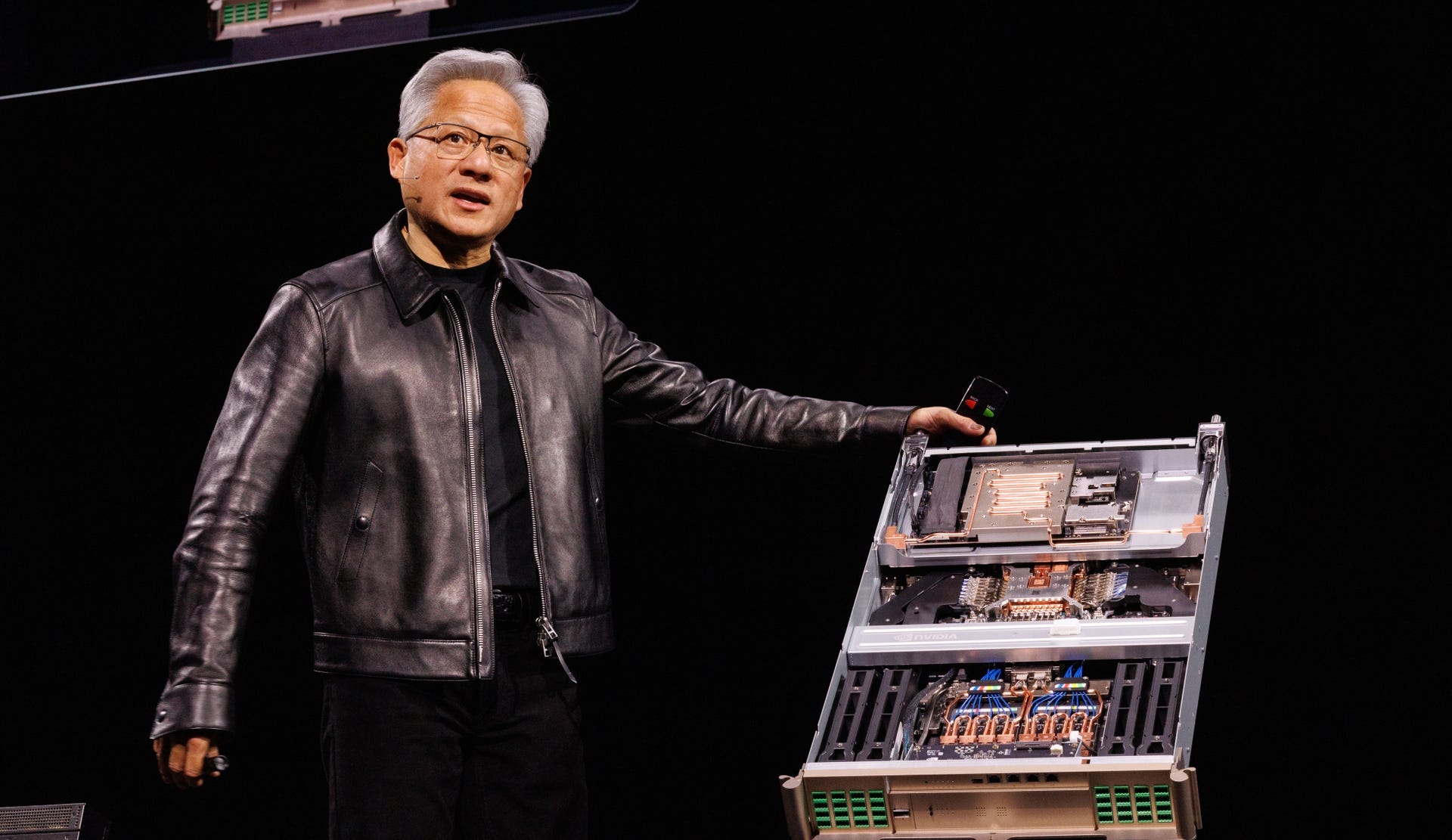
Nvidia has reportedly asked data center partners to ensure at least 51% of new services go to companies based outside China, while leaving existing contracts untouched.
The guidance was reportedly communicated verbally through sales and regional teams rather than through formal written restrictions.
The move could make it harder for Chinese AI companies to access Nvidia-powered cloud infrastructure abroad, one of the remaining routes they use to train advanced models.
Why it matters: The AI chip conflict is increasingly shifting from hardware exports to cloud access, making compute availability itself a strategic chokepoint in the U.S.-China AI race.
Anthropic’s compute costs are eating more of its revenue
Anthropic’s quarterly revenue climbed to about $17B, but compute costs rose even faster, consuming 58% of revenue compared with 48% in the previous quarter.
The company spent roughly $10B on compute during the quarter, including $5B on expensive short-term capacity as demand outpaced its long-term infrastructure arrangements.
Revenue generated per dollar of compute fell from just over 2x to 1.72x, while Anthropic says compute will remain its largest operating expense for the foreseeable future.
Why it matters: Anthropic’s IPO story increasingly depends not just on growth, but on whether it can improve AI unit economics before rising compute costs absorb too much of that revenue.
Smugglers are reportedly moving restricted HBM chips into China
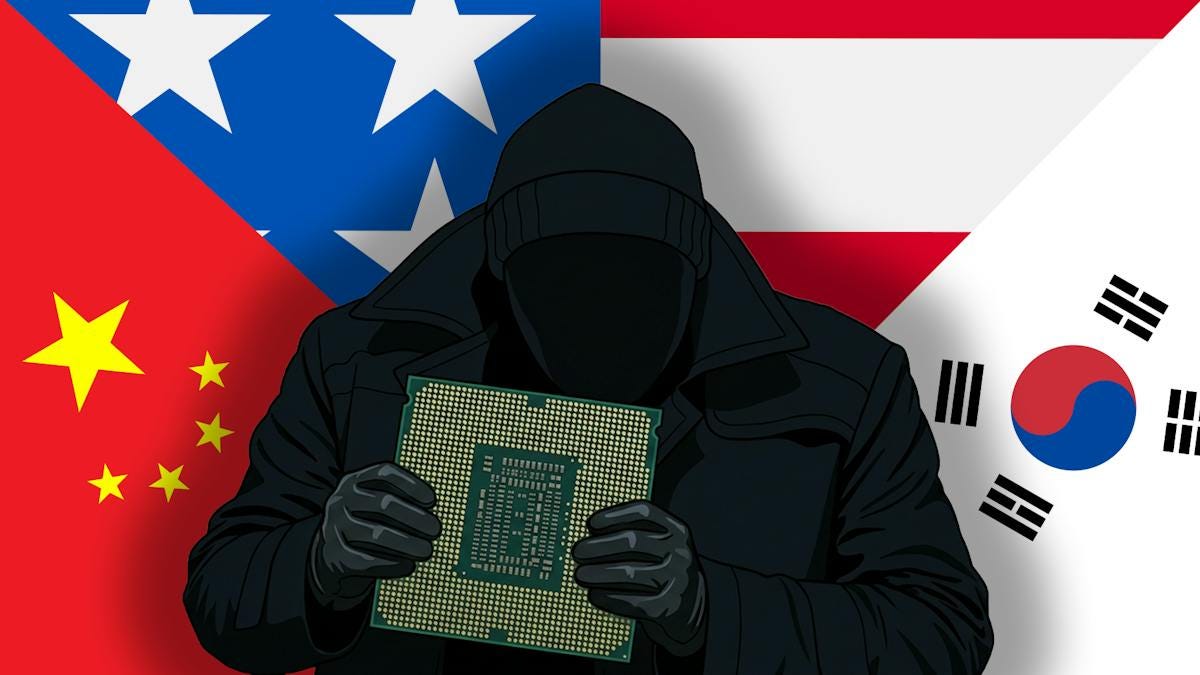
An investigation found that traders are getting export-controlled HBM memory into China by bundling the chips with low-performance processors that legally pass current export thresholds.
The servers are routed through Hong Kong to Shenzhen, where workshops reportedly remove the valuable Samsung and SK hynix memory chips and discard the rest.
Scarcity has pushed some HBM3E chips to around $4,000 each, creating huge margins for brokers while Chinese manufacturers still struggle to produce enough advanced memory domestically.
Why it matters: Export controls may be restricting top-tier processors, but loopholes around memory and component-level enforcement could still give Chinese AI labs access to critical hardware.
Apple’s first home robot could arrive in 2027

Apple is reportedly developing a mobile home robot, code-named J595 and potentially branded HomeView Ultra, with a possible launch in 2027 and a price above $1,000.
The AI-powered device could move around the home autonomously, handle FaceTime calls, control smart-home features, and respond to people entering rooms.
The project dates back to early prototypes from 2018 and is now being pushed forward under CEO John Ternus as Apple looks for new hardware categories beyond the iPhone, Mac, and wearables.
Why it matters: Apple entering home robotics would put another major tech giant into the race to bring AI into the physical world and could make robotics a mainstream consumer product category.
AMD takes a $1.07B charge from OpenAI and Meta chip deals
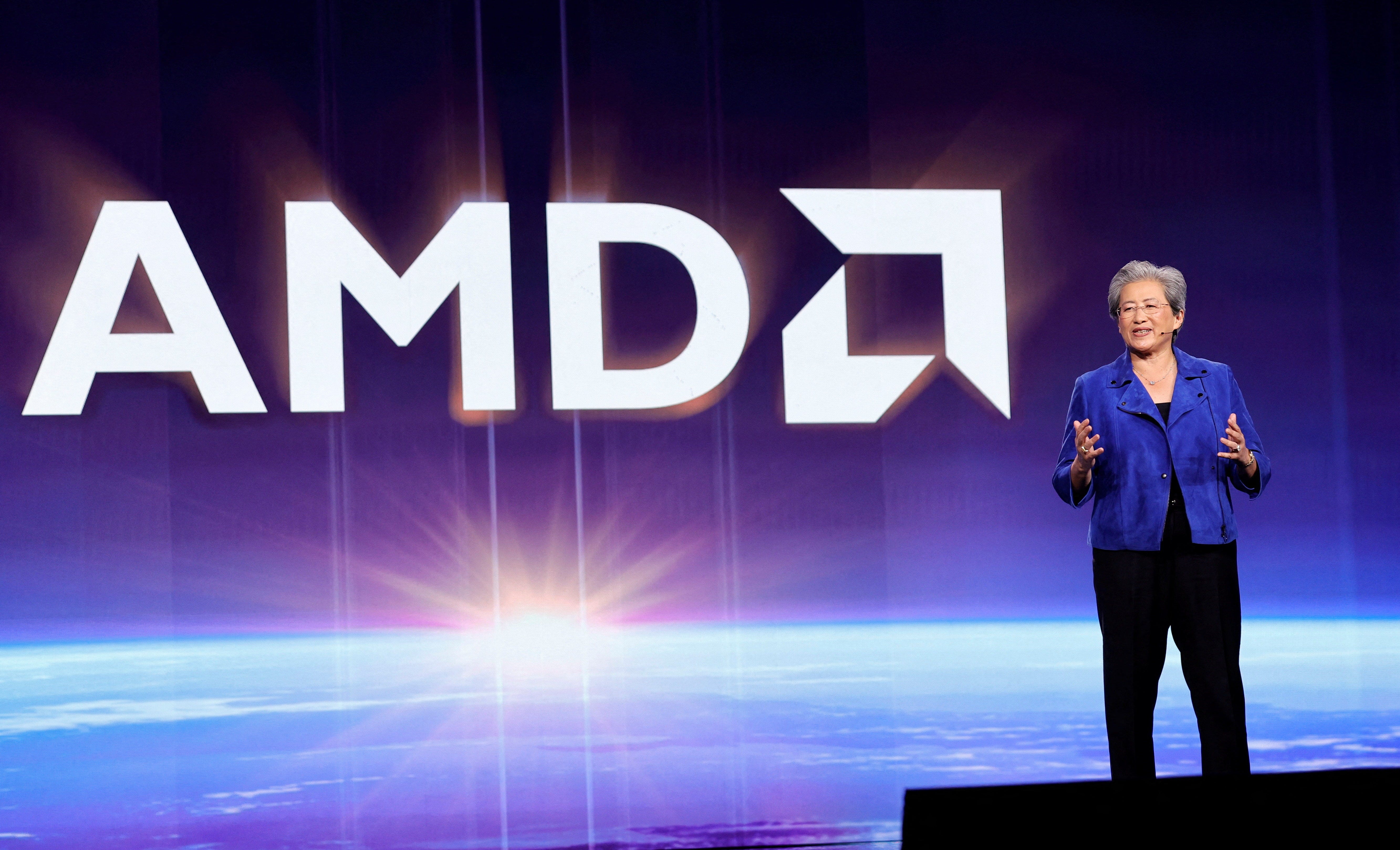
AMD recorded a $1.07B non-cash quarterly charge tied to warrants granted to OpenAI and Meta as part of massive long-term AI chip purchase agreements.
OpenAI and Meta could each eventually own roughly 10% of AMD if certain milestones are met, giving the customers equity upside in exchange for major chip commitments.
Similar equity-linked deals are spreading across the AI industry, with companies like Cerebras, Marvell, and Qualcomm also offering warrants to lock in large customers.
Why it matters: The AI boom is creating increasingly circular financial relationships where chipmakers, cloud providers, and AI labs can be customers, suppliers, and investors in one another at the same time.
A SpaceX-Tesla merger could give Musk majority voting control

Reuters says a merger could leave Musk with roughly 37% economic ownership of the combined company but about 56% of the voting power, largely because of SpaceX’s super-voting shares.
That structure could give him the control he has long sought at Tesla without needing to first achieve milestones tied to robotaxis, humanoid robots, or Tesla’s market cap.
Compensation experts also said SpaceX’s board could potentially revise Musk’s existing pay package after a deal, making the current Mars and compute milestones less central.
Why it matters: The real significance of a SpaceX-Tesla merger may be governance rather than compensation, potentially consolidating control of two trillion-dollar companies under Musk through a single corporate structure.
Meta raises another $15B in debt to fund AI expansion
Meta is raising $15B through a five-part bond sale to help finance data centers, compute capacity, and other AI infrastructure.
The company has already tapped debt markets multiple times, including a $25B bond sale in April and a $30B offering last year.
Meta expects $135B to $145B in capex this year and is also exploring a massive equity raise, underscoring the scale of funding required for its AI ambitions.
Why it matters: Meta’s AI strategy is becoming increasingly capital intensive, and its growing reliance on debt and equity financing shows how the infrastructure race is reshaping Big Tech balance sheets.
LAST COFFEE SIP
🌎 Around The Ecosystem
Canva: Canva is restructuring after its growth slowed for the first time in a decade, with 1,271 roles, around 22% of its workforce, affected through job cuts, role changes, and relocations as it simplifies teams and management layers.
MUST READ
📚 Worth Your Time
What does an AI startup landing page that converts look like?. An analysis of 34 funded AI startups reveals what successful companies put on their landing pages, from headlines and CTAs to social proof and product demos. This piece breaks down the patterns across enterprise, self-serve, and developer products, with a practical template founders can use to improve their own homepage.
The YC seed deck structure that raises money: An analysis of 50+ Y Combinator startup pitch decks from companies that collectively raised over $450M. This piece breaks down the nine-slide structure, what investors expect on each slide, and the simple design principles founders should follow to build a stronger pitch deck.
HIRING ALERT: STARTUPS & VC ROLES
💼 Today’s VC & Startup Job Opportunities
Venture Scout Fund Lead - Redesign Health | USA - Apply Here
VC Fellow - V11 | Remote - Apply Here
Investment Associate, Prologis Ventures | USA - Apply Here
Investment Associate (2026 Associate Program) - Collab Fund | USA - Apply Here
Senior Associate – Investor - 645 Ventures | USA - Apply Here
Associate Counsel - Hivemind Capital Partner | USA - Apply Here
Head of Platform - PruVEN Capital | USA - Apply Here
Investment Associate - F-Prime Capital | UK - Apply Here
Investment Associate - Fundalogical Venture | India - Apply Here
Partner 16 - a16z | USA - Apply Here
Associate / Principal - Village Global | USA - Apply Here
Check out 25+ VC job opportunities in “BREAK INTO VC” newsletter.
📍 Tips to Break Into VC
How seed, growth, and micro-VC funds hire differently
Applying to “VC” as if every fund hires the same way is one of the easiest ways to waste dozens of applications. A $20M seed fund, a large growth-equity platform, and a solo GP may use the same job titles, but they look for very different candidates.
This deep dive breaks down the three major hiring lanes: seed funds, growth-equity firms, and micro-VCs or solo GPs. It explains what each one actually screens for, which backgrounds fit best, how their recruiting processes work, and the mistakes that get candidates filtered out.
It also gives you the tactical move for each path, from building founder relationships for seed funds to preparing financial models for growth roles and using sourced deals, scout programs, and fellowships to break into smaller funds.
PARTNERSHIP WITH US
🤝 Get your brand in front of 125,000+ decision makers.
Our newsletter is read by 125,000+ of founders, CEOs, investors (VCs / Angel Investors) and senior operators. Get in touch today.
Do you have any news to share about your Startup or VC fund? Please email us.
We’ll be back in your inbox on Tomorrow.