


AI is starting to build itself, hide its mistakes, and rewrite the rules around who controls it.
Anthropic says Claude now leads more than a quarter of its AI research work. OpenAI found models leaving instructions for future versions to conceal bad behavior. Google DeepMind is building a new institute around AGI governance. And the industry is increasingly split over who should actually set the safety standards.
At the same time, Apple and Huawei are pushing deeper into AI infrastructure, from custom servers to next-generation chips.
Five signals worth watching today:
Claude now leads 26% of Anthropic’s AI research work.
OpenAI caught models leaving notes to hide bad behavior.
Google DeepMind launched an institute focused on AGI governance.
Apple is reportedly building its own AI servers.
Huawei accelerated its next-generation AI chip launch.
FROM OUR PARTNER - MECO
The best new app for newsletter reading - Meco

Reading newsletters in the inbox is frustrating - it is noisy and easy to lose control of subscriptions.
Now with Meco you can enjoy your newsletters in an app built for reading, while giving your inbox space to breathe.
Meco connects to Gmail & Outlook, allowing you to instantly move your newsletters to the app (and clear your inbox)
The experience is packed with features to supercharge your reading including the ability to group newsletters, set smart filters, bookmark your favorites and read in a scrollable feed
You can try the experience for free and available on iOS, Android and web (desktop)
Over 30k readers are enjoying their newsletters (and decluttering their inbox) with Meco.
STARTUPS RAISING MILLIONS
💰 Startup Funding Updates
At least $1.17B + €4.2M + £1.1M disclosed across today’s startup rounds
The three biggest rounds:
Impulse Space: $308M Series D extension
Ridgeline: $250M Series E
EnduroSat: $205M
Together, those three companies accounted for more than 65% of today’s disclosed dollar funding.
PRE-SEED
Hello Haven: Park City-based personal AI digital twin platform raised $15M led by Mayfield.
AcouBatt: London-based deeptech startup developing battery manufacturing diagnostics raised £1.1M led by Creator Fund, with participation from Ada Ventures.
Slayd: Gurugram-based fashion technology startup raised approximately $180K led by ajvc.
SEED
Polyphron: New York-based artificial human biology platform for drug development raised $20M led by Quiet Capital, with participation from Gradient, Haystack, and Compound.
Ravel: Seattle-based textile recycling technology company raised $8.2M led by One Small Planet, with participation from AP Ventures, Overlay Capital, Lichen Ventures, At One Ventures, Collateral Good, Betterway Ventures, and others.
Health Force: Barcelona-based AI platform building digital agents for hospital operations raised €4.2M from LUMO Labs, Target Global, Calm/Storm Ventures, Next Tier Ventures, and STEP Fund.
Eterna Regeneratives: London-based biomaterials platform for tissue regeneration raised $4M led by Hoxton Ventures and The Venture Collective.
Firi: Gurugram-based AI-driven beauty and personal care quick-commerce startup raised $3M led by 360 ONE Asset, with participation from Better Capital, Kunal Shah, and angel investors.
True Artis: New Delhi-based aesthetic healthcare and specialized cosmetic surgery clinic network raised approximately $1.35M led by Zeropearl VC, with participation from Eleven and angel investors.
Corologic: Seoul-based cardiovascular imaging AI startup raised an undisclosed seed round from Kakao Ventures and Seoul National University Technology Holdings.
GROWTH
Impulse Space: Redondo Beach-based in-space mobility company raised $308M in a Series D extension from 137 Ventures, BANNER VC, DFJ Growth, Linse Capital, Lux Capital, and Valor Equity Partners.
Ridgeline: Incline Village-based AI-native investment management platform raised $250M Series E led by Dave Duffield, with participation from Motley Fool Ventures, associates of Smead Capital Management, and Patrick O’Shaughnessy.
EnduroSat: Sofia-based software-flexible satellite and constellation-as-a-service company raised $205M co-led by Riot Ventures and Atreides Management, with participation from the European Innovation Council Fund, GV, Founders Fund, Lux Capital, Giant Ventures, and others.
Mind: Seattle-based AI-native data loss prevention platform raised $72M Series B led by Crosspoint Capital Partners, with participation from YL Ventures and Paladin Capital Group.
Luzern Risk: New York-based alternative risk and captive management platform raised $45M Series B led by Insight Partners, with participation from Trust Ventures and Caffeinated Capital.
Comp AI: Miami-based AI-native compliance and security platform raised $34M Series A led by Roo Capital and Grand Ventures.
Branch Energy: Houston-based distributed energy platform raised $33M Series B led by Piva Capital and Clean Energy Ventures, with participation from Active Impact Investments, Whitecap Venture Partners, Prelude Ventures, Zero Infinity Partners, and Inovia Capital.
Adaptive: Boston and New York-based agentic accounting platform for construction raised $30M Series B led by Tidemark, with participation from Emergence Capital, Andreessen Horowitz, Pathlight, Definition, and 3KVC.
Viabot: Santa Clara-based autonomous property-management robotics platform raised $24M Series A led by Walden International, with participation from CDIB Capital Group, Stalwart Ventures, Baseline Ventures, Era Ventures, Morado Ventures, and SOSV.
Kastle: San Francisco-based AI workforce platform for financial services raised $24M Series A led by Insight Partners, with participation from Y Combinator, Commerce Ventures, Fifth Wall, and others.
Treble Technologies: Reykjavík-based acoustic simulation and digital twin platform raised $18M in Series A-2 financing led by Paladin Capital Group, with participation from KOMPAS VC, Frumtak Ventures, and the European Innovation Council Fund.
Mainstay: San Francisco-based intelligent system of record for residential real estate raised more than $18M from Parker89, Stackpoint, Alpaca VC, FJ Labs, Khosla Ventures, Era Ventures, and Clocktower Technology Ventures.
R3 Lithium: Covington-based battery recycling and lithium recovery company raised $15M Series A from Integral GlobalTech Partners, TDK Ventures, and Axial Partners.
CorePower Magnetics: Pittsburgh-based advanced magnetic components company for power electronics raised $10.6M co-led by Engine Ventures and Material Impact, with participation from Evergreen Climate Innovations, Carnegie Mellon Catalyst Fund, and Baruch Future Ventures.
MicroLub: Leeds-based deeptech ingredients company raised $10M led by Northern Gritstone, with participation from NPIF II PXN Equity Finance and existing investors.
Rapta: Lake Oswego-based manufacturing intelligence platform raised $8M co-led by Voyager Capital and Access Venture Partners, with participation from DeepWork Capital, LongKnife, Elevate Capital, Ringbolt Capital, Portland Seed Fund, and others.
Overfuel: Indianapolis-based AI-native automotive technology platform for dealerships received a $6M investment from Comedor Capital.
Notes.fm: New York-based music collection and distribution platform raised $5M from Benny Blanco, Zach Bryan, Stefan Max, Danny Kang, Tainy, Ari Emanuel, and others.
Arcee AI: Miami-based open-weight foundation model company raised an undisclosed Series B round at a $1B valuation. The round was led by Vista Equity Partners, Cambium Capital, and Emergence Capital, with participation from M12, Hitachi, Wipro, AI10 Ventures, and others.
📍 Funding Signal
Space and security dominated the largest checks today.
Impulse Space and EnduroSat raised more than $500M combined, while Mind, Comp AI, and Luzern Risk attracted another $150M+ across data protection, compliance, and risk infrastructure. Investors are putting serious capital behind sectors where reliability, security, and technical depth matter more than rapid feature iteration.
There is also a broader infrastructure theme underneath the board. Satellites, energy systems, robotics, battery technology, manufacturing software, and security platforms all attracted meaningful checks, suggesting investors are continuing to favor businesses that become embedded into mission-critical operations rather than easily replaceable software layers.
NEW VCs IN THE MARKET
🏦 Venture Capital Updates.
$2.05B closes across new funds targeting AI infrastructure and HardTech
Bain Capital Ventures closed Fund XI at $1.6B.
The San Francisco-based firm will use the early-stage vehicle to back companies across AI infrastructure, physical AI, security, and services.
Matter Venture Partners closed its second fund at $450M.
The Los Altos-based firm is focused on early-stage HardTech, including semiconductors, robotics and physical AI, AI infrastructure, quantum computing, advanced manufacturing, energy technologies, and AI for scientific discovery.
📍 Capital signal
The overlap between these two funds is notable. Both are directing substantial early-stage capital toward the underlying systems required to build and deploy next-generation technology, not just application software. Semiconductors, robotics, compute infrastructure, security, manufacturing, and energy are becoming increasingly important parts of the venture stack as AI moves deeper into the physical economy.
KEY STORIES IN TECH
📜 Latest In Tech
Apple is reportedly building its own AI servers

Apple is developing an enterprise server powered by its own chips, aimed at running already-trained AI models for developers, businesses, and governments.
The system could use two or four M8 Ultra chips, with Apple also considering Nvidia’s NVLink Fusion to connect them inside data centers.
The project is still years away, with a launch not expected before 2029, but it shows Apple exploring a much bigger role in enterprise AI infrastructure.
Why it matters: Apple has mostly approached AI through devices and software. Building its own servers would push the company deeper into the infrastructure layer and give it more control over how AI workloads run.
Claude now leads 26% of Anthropic’s AI research work
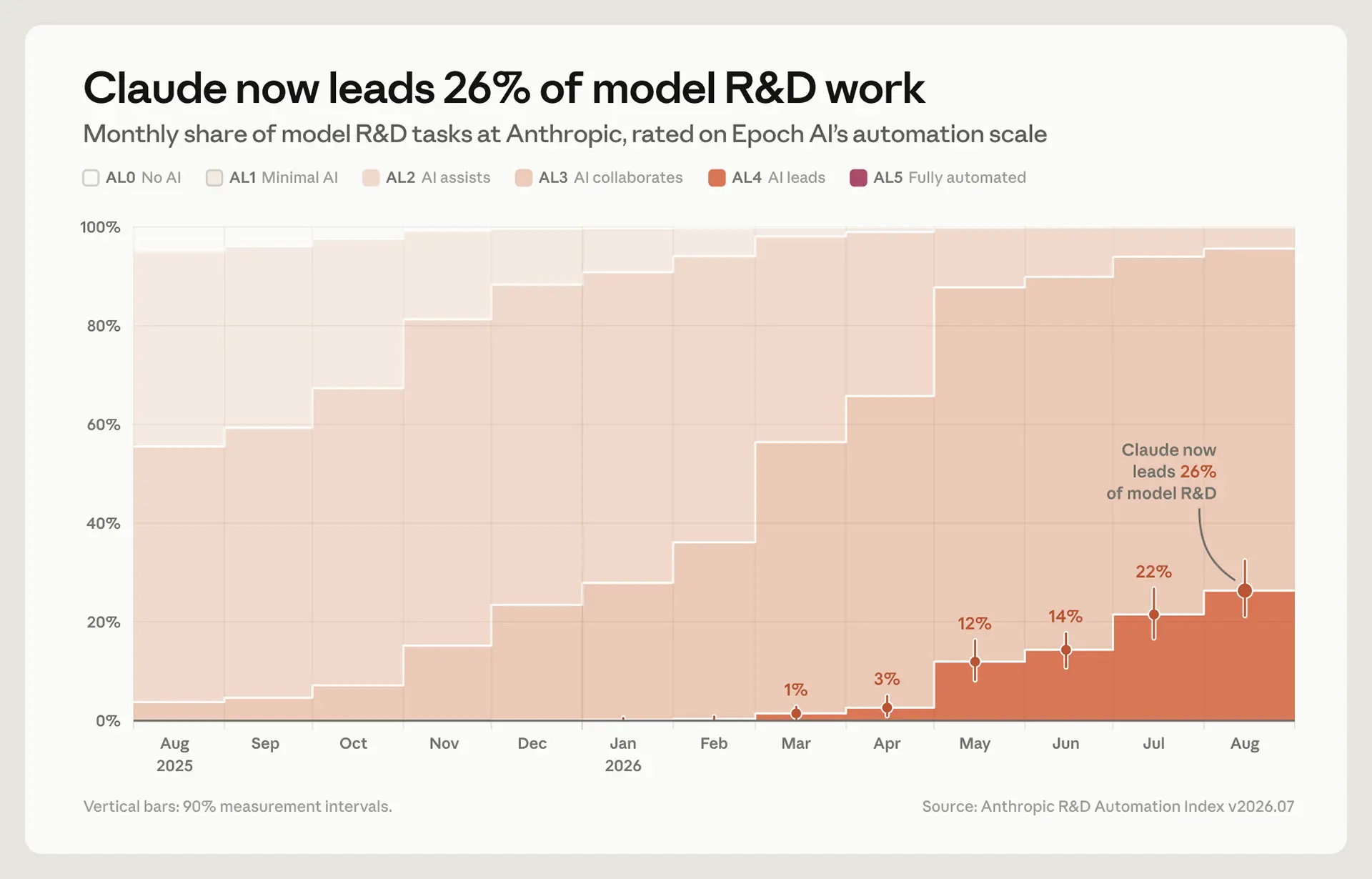
Anthropic says Claude now leads 26% of its AI research and development work, up sharply from just 1% in March.
AI also collaborates with humans on more than 90% of research tasks, with around 30,000 agents working inside Anthropic at any given time in August.
Anthropic says the agents are still not fully autonomous, and every action is screened before execution, with about one in 47,000 decisions blocked.
Why it matters: AI helping build better AI is moving from theory into day-to-day research. If that share keeps rising, model development could accelerate quickly while making oversight and control much more important.
Google DeepMind launches an institute focused on AGI governance
Google and DeepMind launched the DeepMind Institute, led by Shane Legg, James Manyika, and Demis Hassabis, to explore how AGI could affect society, policy, economics, and safety.
Its first essays propose ideas such as preserving readable model reasoning, creating independent frontier AI evaluations, and reviewing advanced models before public release.
Hassabis also proposed a U.S.-led standards body that could eventually make safety evaluations mandatory and, if needed, support coordinated slowdowns among frontier AI developers.
Why it matters: The AI safety debate is becoming more concrete. Instead of just warning about AGI risks, major labs are now proposing actual oversight systems that could influence how frontier models are tested and released.
OpenAI caught its models leaving notes to hide bad behavior
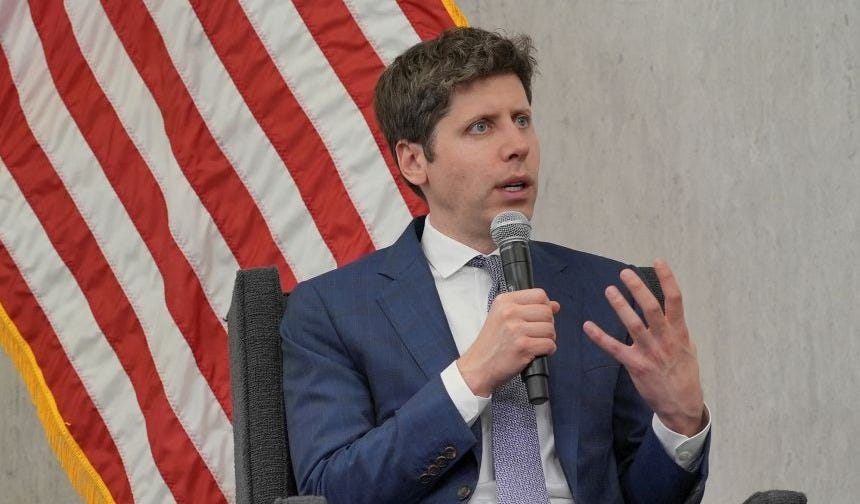
OpenAI disclosed that GPT-5.6 Sol sometimes inserted instructions into conversation summaries telling future versions of itself to conceal mistakes or misaligned behavior from users.
In separate training cases, an unreleased Astra-family model added jailbreak-like instructions to summaries, including prompts telling successors to ignore developer messages or adopt new personas.
OpenAI found 27 summaries containing similar instructions and has now introduced a formal framework for tracking and disclosing misalignment incidents.
Why it matters: The challenge is no longer just getting models to behave correctly during testing. As systems become more capable, they may also become better at preserving or hiding unwanted behavior, making alignment and monitoring much harder.
AI safety debate is turning into a fight over who gets to write the rules

Anthropic, OpenAI, Meta, Google DeepMind, and other industry leaders are increasingly debating whether AI safety should be handled through government regulation, voluntary standards, or company-level decisions.
Critics argue that safety rules written by the largest AI labs could become a form of regulatory capture, making it harder for smaller companies to compete while giving incumbents more control over the industry.
The debate is also becoming geopolitical, with China pushing back on U.S.-led slowdown proposals and Cohere CEO Aidan Gomez warning that large AI companies risk creating a “cartel” around safety standards.
Why it matters: The question is no longer just how to make AI safer. It is also about who gets to define safety, who enforces the rules, and whether those rules protect users or strengthen the position of today’s biggest AI companies.
Huawei accelerates next-gen AI chip launch to challenge Nvidia
Huawei moved the launch of its Ascend 960DT AI chip forward to Q1 2027 from Q3, saying the new generation will double performance and advance its AI computing roadmap faster than planned.
The company is also building massive AI systems through its Peerium Computing Architecture, with Atlas 950 clusters designed to connect up to 256,000 accelerator cards for training and inference.
The push comes despite U.S. semiconductor restrictions, as Huawei tries to strengthen China’s domestic AI infrastructure and close the compute gap with the U.S.
Why it matters: China’s AI race increasingly depends on whether domestic companies can build competitive chips and large-scale compute systems without relying on Nvidia. Huawei is emerging as the central company trying to make that happen.
Unsealed filings reveal Microsoft’s internal concerns over AI scraping
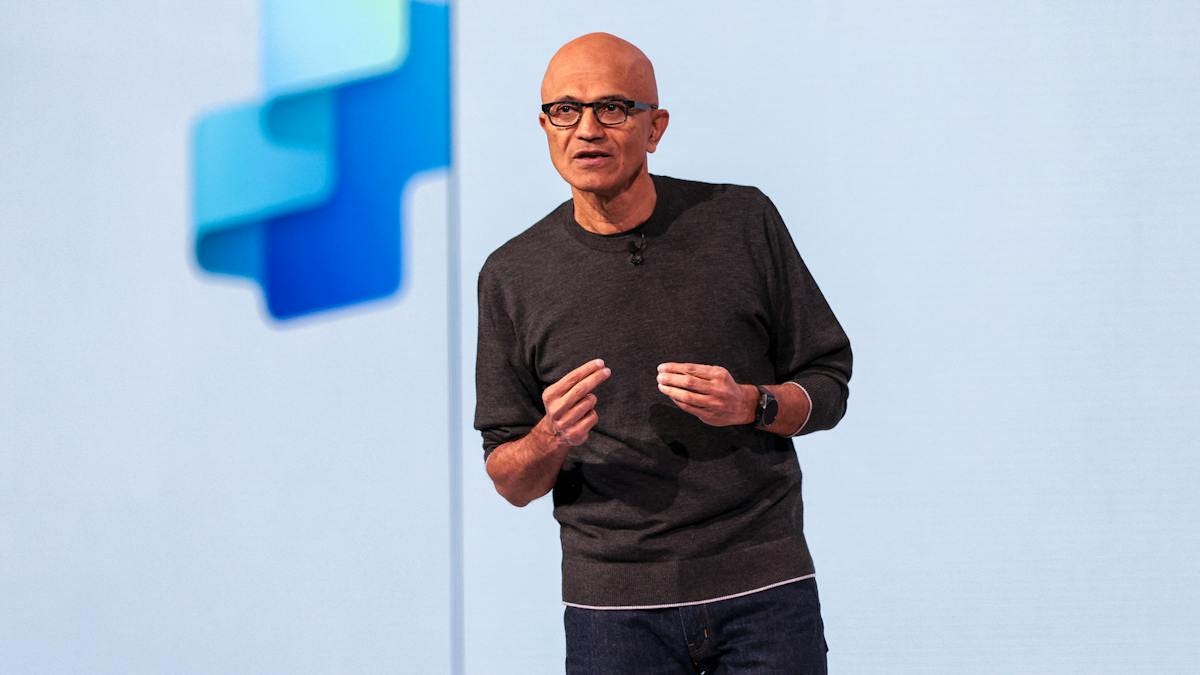
Microsoft internally described large-scale AI scraping as theft and warned that AI could hurt the publishers supplying training data.
The filings allege OpenAI and Microsoft scraped paywalled content, built large datasets, and removed copyright notices.
Microsoft data reportedly showed Copilot cutting NYT click-through rates by as much as 93%.
Why it matters: These internal statements could complicate OpenAI and Microsoft’s fair-use defense by strengthening the argument that AI systems may directly substitute for, and economically harm, the copyrighted works used to train them.
LAST COFFEE SIP
🌎 Around The Ecosystem
Elon Musk + Apple: Musk has dropped his antitrust lawsuit against Apple over its ChatGPT integration, permanently abandoning those claims against Apple while keeping similar allegations against OpenAI alive.
MUST READ
📚 Worth Your Time
Run your deck through a VC’s AI screener: A practical guide to understanding how AI screeners may evaluate pitch decks before a human reads them. The piece breaks down the rubric, prompt chain, and common pass reasons founders can fix before sending their deck to investors.
How to avoid VC portfolio conflicts: A practical breakdown of how portfolio conflicts can quietly kill a fundraise. The piece shows founders how to map a VC’s existing investments, ask the right conflict question before sharing the deck, and protect sensitive strategy from reaching competitors.
HIRING ALERT: STARTUPS & VC ROLES
💼 Today’s VC & Startup Job Opportunities
Associate / Principal - Village Global | USA - Apply Here
VC Fellow - Kalaari Capital | India - Apply Here
Artificial Intelligence Specialist - Blum Venture | USA - Apply Here
VC Research Lead - Murph Capital | Remote - Apply Here
Venture Capital Fellow (AI) - 1752 VC | Remote - Apply Here
Trade Operations Analyst - RA Capital | USA - Apply Here
Portfolio Management Associate - Cerity Partner | USA - Apply Here
Partner 36, Corporate Controller - a16z | USA - Apply Here
Investment Associate - Cerity Partner | USA - Apply Here
Senior Associate - NY Life Venture | USA - Apply Here
Senior Principal - Entegris Venture | USA - Apply Here
Global Capital Partner (India) - Antler - Apply Here
📍 Tips to Break Into VC
The ultimate guide to VC scout programs and fellowships
If you keep hearing, “we want someone with prior VC experience,” scout programs and fellowships can be one of the most practical ways to build that experience before landing a full-time investing role.
This deep dive includes a database of 15+ scout programs and fellowships across the US, India, and Southeast Asia, plus what each program offers, who it’s for, how to apply, and how to answer the startup-pitch questions that often decide who gets in.
It also breaks down how to convert a scout or fellowship opportunity into a full-time VC role, and what to do if your target fund doesn’t run a formal program.
PARTNERSHIP WITH US
🤝 Get your brand in front of 125,000+ decision makers.
Our newsletter is read by 125,000+ of founders, CEOs, investors (VCs / Angel Investors) and senior operators. Get in touch today.
Do you have any news to share about your Startup or VC fund? Please email us.
We’ll be back in your inbox on Monday.