


The price war at the frontier is officially here.
OpenAI and Anthropic both launched stronger models at lower prices within hours of each other. SpaceXAI is pushing Grok deeper into coding, Xiaomi is topping open-model rankings, and Qualcomm is bringing 30B-class models directly onto smartphones.
At the same time, Apple is exploring a screen-less health tracker and medical AI is expanding into nearly 100 countries, showing how quickly the fight is moving from model benchmarks into real products and everyday use.
Five signals worth watching today:
OpenAI launched GPT-6 Sol and Luna at roughly half the previous price.
Anthropic released Opus 5.5 with stronger performance and lower pricing.
Qualcomm introduced smartphone chips capable of running much larger AI models locally.
Xiaomi’s new model moved to the top of the open-model rankings.
Apple is exploring a screen-less fitness tracker to compete with Whoop.
FROM OUR PARTNER - SEMRUSH ONE
Your customers are searching on Google AND ChatGPT. Can they find you on both?
Search has changed. Ranking on Google still matters, but buyers are also asking AI tools which products to use, which companies to trust, and how different options compare.

Semrush One brings both sides into one place. You can track your Google rankings and AI mentions, see the prompts driving demand, compare your visibility against competitors, and find gaps you can actually act on.
It monitors 239M+ relevant LLM prompts globally, alongside the SEO data Semrush is already known for.
If search is an acquisition channel for your business, this is becoming increasingly important to understand.
PARTNERSHIP WITH US
🤝 Get your brand in front of 125,000+ decision makers.
Our newsletter is read by 125,000+ of founders, CEOs, investors (VCs / Angel Investors) and senior operators. Get in touch today.
STARTUPS RAISING MILLIONS
💰 Startup Funding Updates
At least $940.1M + €179.5M + CAD 4.24M + ₹22Cr disclosed across today’s startup rounds
The three biggest rounds:
Cyera: $400M Series G extension
Heidi: $100M Series C
Go.AI: $85M Series A
Together, those three companies accounted for more than 62% of today’s disclosed dollar funding.
PRE-SEED
Outerlimit: London-based decentralized security and authorization layer for agentic AI raised $16M from AlbionVC, Evolution Equity Partners, Crane Venture Partners, and strategic angel investors.
Benford: London and Oslo-based tech-native financial audit firm raised €5M from firstminute capital, Global Founders Capital, Sondo, and several founders and angel investors.
Beagle Labs: New York-based AI-enhanced property intelligence platform for commercial insurance underwriting raised $4.1M from Chingona Ventures, Sovereign’s Capital, Remarkable Ventures, C2 Ventures, South Loop Ventures, and Red Bike Capital.
Blair Health: Toronto-based clinical infrastructure platform for specialist women’s healthcare raised CAD 4.24M co-led by BDC Thrive Venture Fund, Accelia Capital, and Ogaei, with participation from Ontario Centre of Innovation.
SEED
Nexstrom: Singapore-based wafer-scale platform for 2D semiconductor materials raised $12M led by Xora Innovation, with participation from Foothill Ventures and SEEDS.
Zeliq: Paris-based AI-powered revenue workspace raised €7M in a seed extension led by The Moon Venture, with participation from JJCapinvest, Ora Global, Cleo Ventures, family offices, and angel investors.
Lightspring: Besançon-based DeepTech startup raised more than €3.5M led by Atlantic and OVNI Capital, with participation from Concept Ventures, Ixcore, Plug and Play Ventures, and angel investors.
Gamindo: Milan-based corporate learning and educational gamification platform raised €1.4M from Club degli Investitori, Vento, Doorway, Zanichelli Venture, and angel investors.
GROWTH
Cyera: New York-based AI-native data and identity security platform raised $400M in a Series G extension at a valuation above $12B. The round was led by Goldman Sachs Alternatives, with participation from Evolution Equity.
Heidi: Melbourne-based AI care partner for clinicians raised $100M Series C at a $900M valuation. The round was led by Blackbird, with participation from Phoenix Court, Point72 Private Investments, and Headline.
Go.AI: Chicago-based on-premises AI infrastructure platform for regulated industries raised $85M Series A led by Updata Partners, with participation from GFT Ventures and LAUNCH.
Firecrawl: San Francisco-based web data API and retrieval platform for AI agents raised $75M Series B led by Smash Capital, with participation from Altos Ventures, Nexus Venture Partners, Y Combinator, Freestyle, and Offline Ventures.
Confido: New York-based AI-powered commercial cycle platform for CPG brands raised $55M Series B led by Insight Partners, with participation from Trenches Capital, Watchfire, Barrel Ventures, Footwork, and Y Combinator.
Amber Electric: Melbourne-based energy flexibility platform raised €49M Series E led by 1GT, with participation from E.ON.
Morphotonics: Veldhoven-based nanoimprint lithography company raised more than €40M Series B from 3M Ventures, Innovation Industries, BOM, Invest-NL, European Innovation Council Fund, Ernij Next, and the European Investment Bank.
CellPoint: London-based AI-led payments platform for airlines and hospitality raised $34M from Toscafund through its private equity affiliate Penta Capital.
Biolevate: Paris-based agentic AI platform for regulated life sciences operations raised €30M Series A co-led by RAISE France and Orange Ventures, with participation from MSD Global Health Innovation Fund, Station F, and EQT Ventures.
Chamelio: New York-based AI-native platform for in-house legal teams raised $26M Series A led by Entrée Capital, with participation from Work-Bench, Emerge Ventures, and Bright Pixel Capital.
Teal Health: San Francisco-based at-home cervical cancer screening company raised $22M Series A led by .406 Ventures, with participation from Emerson Collective, Forerunner, Serena Ventures, and MPower Partners.
Sela: San Francisco-based voice AI platform for mortgage sales raised $21M across seed and Series A financing led by Costanoa, with participation from Emergence Capital.
Spott: Leuven-based AI-native recruitment and applicant tracking platform raised €18.3M Series A led by Balderton Capital, with participation from Base10 Partners, Y Combinator, and Fortino Capital.
W4 Games: Dublin-based enterprise technology company supporting the open-source Godot Engine raised $18M Series B led by Tencent, with participation from OSS Capital, Lux Capital, Naval Ravikant, and Tobias Lütke’s family office.
Dialybrid: Cantù-based medical device company developing vascular access technology for hemodialysis raised €15M Series A led by XGEN Venture, with participation from CDP Venture Capital.
Atum: San Francisco-based open payments network for global money movement raised $13.5M from Variant, PayPal Ventures, Abstract Ventures, Road Capital, Mirana Ventures, and others.
Bird&Be: Toronto-based fertility and wellness platform raised $13M led by BDC Thrive and BFG Partners, with participation from BAM Ventures, Founder Collective, Rejuvenation Ventures, and HSR Ventures.
Monetary Metals: Scottsdale-based gold yield marketplace raised $10.5M. Investors were not disclosed.
Primo: Paris-based corporate IT automation and unified operations platform raised €6.9M led by Headline and Global Founders Capital, with participation from Arthur Waller and Romain Niccoli.
h2site: Loiu-based hydrogen technology company developing membrane reactors for hydrogen production and ammonia cracking received €3.4M from Enova.
Definedge Securities: Pune-based trading analytics, algorithmic, and wealth-creation platform raised ₹22Cr in Pre-Series A funding from Nitin Agarwal, D. Prasad, Anant Jain, and Sachin Kasera.
Voxela: Fremont-based senior care technology company closed a Series A led by Delight Ventures, with participation from Sompo Growth Partners, Happiness Capital, and Blue Heron Ventures. The round brought total funding to approximately $13.2M, though the latest round amount was not disclosed.
Primrose Bio: San Diego-based manufacturer of technologies for biologic production raised an undisclosed round led by Signet Healthcare Partners, with participation from 1315 Capital, Ligand Pharmaceuticals, LDV Partners, and Agent Capital.
Respiree: Singapore-based AI platform for disease progression management closed a Series A extension with participation from ARKRAY and PARTNERS and Bizedge Capital. The amount was not disclosed.
📍 Funding Signal
Investors are paying up for businesses embedded in regulated or mission-critical workflows.
Cyera, Go.AI, Heidi, Biolevate, Chamelio, Teal Health, and Beagle Labs all operate in areas such as cybersecurity, healthcare, legal operations, insurance, or regulated enterprise infrastructure. These are markets where accuracy, compliance, trust, and switching costs matter as much as product speed.
The other notable theme is capital intensity. Semiconductor materials, lithography, energy flexibility, healthcare devices, and security infrastructure all attracted meaningful checks. Today’s board suggests investors are increasingly comfortable funding technically difficult businesses when the underlying market has high barriers to entry and clear strategic value.
NEW VCs IN THE MARKET
🏦 Venture Capital Updates.
a16z is putting $35M behind an AI-native college alternative
Andreessen Horowitz is investing $35M in the Horowitz Andreessen Academy, a San Francisco-based alternative to traditional college focused on AI-native, project-based education for students pursuing technology careers or startups.
The program has raised another $7M from outside backers and plans to launch with roughly 50 students in fall 2027. Partners include Anthropic, Google, Meta, Nvidia, and OpenAI.
📍 Capital signal
Venture firms are increasingly investing in talent pipelines, not just companies. If AI changes the skills startups need faster than universities can update curricula, programs like this could become a new way for investors to identify, train, and build relationships with future founders and technical talent before they enter the startup ecosystem.
KEY STORIES IN TECH
📜 Latest In Tech
Apple is exploring a screen-less fitness tracker to take on Whoop
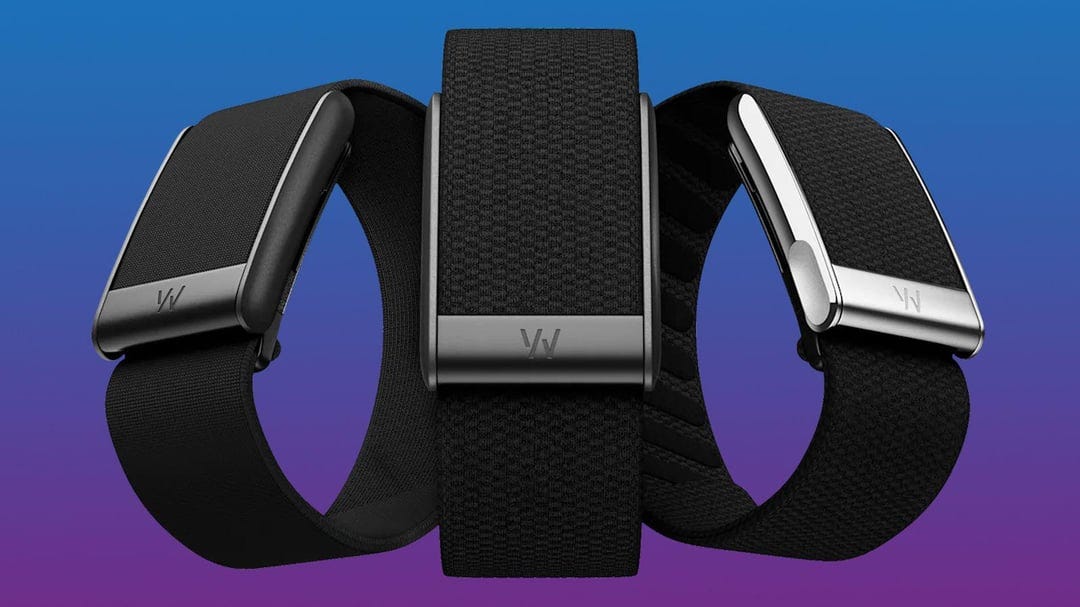
Apple is reportedly testing a screen-less fitness band with a fabric strap and sensor module, positioning it as a simpler alternative to the Apple Watch.
The project is still exploratory, with several prototypes under development and no launch expected before 2028.
If Apple moves forward, it would put the company into more direct competition with Whoop in continuous health and fitness tracking.
Why it matters: Apple could be preparing to expand its wearables strategy beyond smartwatches, targeting users who want passive health tracking without another screen.
Qualcomm launches new Snapdragon chips built for on-device AI
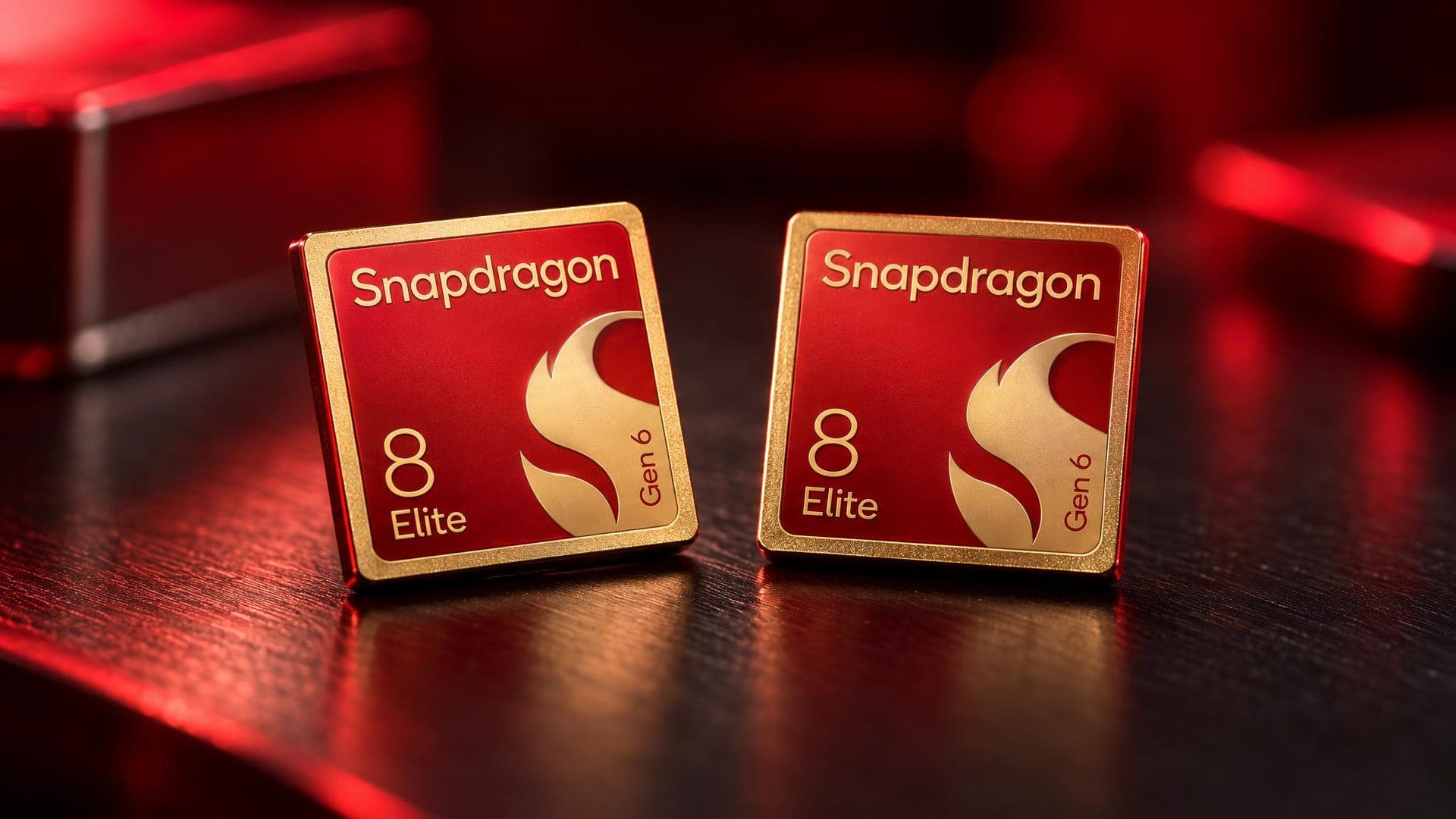
Qualcomm unveiled the Snapdragon 8 Elite Gen 6 and Extreme Gen 6, designed to run more AI tasks directly on smartphones.
The Extreme chip can run a 30B mixture-of-experts model locally, while smaller models can power personal memory, speaker recognition, and voice agents on-device.
The chips also bring AI deeper into cameras, calls, and audio, with Motorola already announcing a phone powered by the new flagship processor.
Why it matters: The AI race is shifting from cloud-only models to powerful on-device systems. If smartphones can run advanced agents locally, AI could become faster, more private, and much more deeply integrated into everyday use.
OpenAI launches GPT-6 Sol and Luna at half the previous price
OpenAI released GPT-6 Sol for complex work like coding and GPT-6 Luna for high-volume tasks such as summarization and information extraction.
Both models cost about 50% less through the API than their 5.6 predecessors, while OpenAI says Sol makes roughly half as many factual mistakes.
The launch came just 90 minutes after Anthropic introduced Opus 5.5, highlighting how quickly the model race is accelerating.
Why it matters: The competition is shifting from simply building the most capable model to delivering strong performance at much lower cost, which could accelerate AI adoption across businesses and developers.
Anthropic launches Opus 5.5 with lower prices and stronger performance

Anthropic released Opus 5.5, saying it delivers top-tier coding and knowledge work performance while beating its larger Fable model on several benchmarks.
At the same time, output pricing dropped from $25 to $20 per million tokens, with lower compute requirements also making the model faster to serve.
Anthropic is pairing those gains with Fable-level safeguards for cybersecurity and biology, while preparing stricter evaluation systems for future models.
Why it matters: Frontier AI competition is increasingly about delivering more capability for less money. Anthropic and OpenAI are now pushing performance and pricing at nearly the same time, which could quickly drive down the cost of advanced AI.
OpenAI has solved more than 100 open math problems

OpenAI says the model behind its Navier-Stokes work has also produced solutions to more than 100 previously unsolved problems across mathematics.
That claim has drawn scrutiny from mathematicians, so OpenAI is creating an independent advisory group at the Institute for Advanced Study to help assess and communicate results.
The nine-member panel can offer public advice, but it cannot slow or redirect OpenAI’s internal research.
Why it matters: AI is moving beyond benchmarks into claims of original mathematical discovery, making independent verification and credible evaluation much more important.
Anthropic and OpenEvidence are bringing medical AI to nearly 100 countries
OpenEvidence will offer a free clinical decision-support tool to doctors across about 100 low- and middle-income countries, using Anthropic’s models on the backend.
The system will be adapted to local disease patterns, healthcare infrastructure, available treatments, and other regional differences rather than using a one-size-fits-all approach.
OpenEvidence is already heavily used by U.S. clinicians, and the partnership aims to extend that access to regions where medical literature and specialist expertise are much harder to reach.
Why it matters: Medical AI is starting to move beyond wealthy healthcare systems. If these tools can adapt reliably to local conditions, they could give doctors in underserved regions much faster access to evidence-based guidance.
Alibaba introduces China's most powerful AI chip
Alibaba introduced the Zhenwu V900, which it says is 3x faster than its previous chip and can scale across clusters of up to 500,000 accelerators.
The chip is designed for frontier model training, supporting Alibaba’s plan to build AI systems with 5T to 10T parameters.
T-Head has already shipped 560,000 Zhenwu chips to more than 400 customers, backed by Alibaba’s broader $53B AI investment push.
Why it matters: Alibaba is trying to reduce dependence on Nvidia by building its own chips, models, and infrastructure, strengthening China’s ability to compete across the entire AI stack.
SpaceXAI launches Grok 4.7 for coding and knowledge work

SpaceXAI says Grok 4.7 is its strongest model yet for coding and complex knowledge tasks, with access through Cursor, Grok Build, its API, and third-party platforms.
Pricing starts at $2 per million input tokens and $6 per million output tokens, while a faster version costs roughly twice as much.
The model was trained for longer, harder tasks and can verify its own work, while safety testing also showed meaningful capability in sensitive bio and dual-use domains.
Why it matters: The frontier model race is getting more competitive on both capability and price, with Grok positioning itself as another serious option for developers doing complex coding and agentic work.
Xiaomi’s new AI model tops the open-model rankings

Xiaomi’s MiMo-V2.6-Pro scored 46 on Artificial Analysis’s Intelligence Index, putting it ahead of other openly available models.
The model uses a 1.02T-parameter mixture-of-experts design, activating only 42B parameters per request to keep inference costs low.
Xiaomi says the latest performance jump came from a short reinforcement-learning run that cost about $2.62M, though its training methods have also drawn scrutiny from Anthropic.
Why it matters: If Xiaomi can sustain frontier-level open-model performance at much lower cost, it could put more pressure on both Chinese rivals and closed-model providers competing on price and capability.
LAST COFFEE SIP
🌎 Around The Ecosystem
Meta + OpenClaw: Meta says Muse was built from scratch but was “heavily inspired” by OpenClaw, including similar workspace files and agent design ideas, as the company tries to turn the open-source personal agent concept into a product that can scale to billions of users.
Apple: Opened Apple Music Hall, a 600-person live venue inside London’s Battersea Power Station, combining a configurable stage, Spatial Audio recording, two studios, and multicamera production to turn live performances into content for Apple Music.
MUST READ
📚 Worth Your Time
Which AI startups survive model releases? A practical analysis of how major AI model releases affect the startups built around them. The piece breaks down why some AI startups get absorbed, repriced, or cut off after lab releases, while others become stronger because they own the workflow, buyer, or distribution layer.
The YC seed deck structure: Most founders build decks from random templates. This piece breaks down the repeatable structure used by YC startups that raised $450M+. It also covers the simple design rules that make a deck clear, readable, and easy for investors to understand quickly.
HIRING ALERT: STARTUPS & VC ROLES
💼 Today’s VC & Startup Job Opportunities
VC Fellow - V11 | Remote - Apply Here
Head of Platform - PruVEN Capital | USA - Apply Here
Investment Associate - Fundalogical Venture | India - Apply Here
Associate / Principal - Village Global | USA - Apply Here
Associate or Senior Associate - Bessemer Partner | USA - Apply Here
Partner 18, Events Associate, Crypto - a16z | USA - Apply Here
Investment Operations Associate - Sand Capital | USA - Apply Here
Associate, Healthcare - B Capital Group | USA - Apply Here
Portfolio Reporting Team Lead - Cerity Partner | USA - Apply Here
Associate - Mount Judi Venture | USA - Apply Here
Technical Investment Operations Associate - Alpaca VC | USA - Apply Here
📍 Tips to Break Into VC
Every resource you need to break into VC, in one place
Breaking into venture capital often means piecing together scattered lectures, templates, interview guides, models, databases, and random threads.
This resource hub brings 100+ curated VC resources into one place, covering fund economics, valuation, cap tables, investment memos, market sizing, portfolio strategy, scout roles, financial models, fellowship lectures, interview preparation, and more.
If you want one structured place to actually learn how venture capital works and prepare for VC roles, start here.
PARTNERSHIP WITH US
🤝 Get your brand in front of 125,000+ decision makers.
Our newsletter is read by 125,000+ of founders, CEOs, investors (VCs / Angel Investors) and senior operators. Get in touch today.
Do you have any news to share about your Startup or VC fund? Please email us.
We’ll be back in your inbox on Tomorrow.