


The interface war is moving off the screen.
Meta is putting its AI assistant into glasses and a pocket-sized wearable. OpenAI is bringing voice-powered agents deeper into mobile. YouTube is letting users reshape recommendation feeds with prompts. And Bessemer just raised $5.75B to keep backing the companies building across this stack.
At the same time, AI is pushing further into science and infrastructure, from Claude helping surface a new CRISPR-like enzyme system to ByteDance accessing restricted Nvidia compute through overseas cloud capacity.
Five signals worth watching today:
Meta launched its first camera-free AI glasses.
ChatGPT brought voice-powered agents to mobile.
Bessemer raised $5.75B across new early-stage and growth funds.
Anthropic says Claude helped discover a new CRISPR-like enzyme system.
ByteDance reportedly rented restricted Nvidia B200 chips through overseas cloud infrastructure.
FROM OUR PARTNER - SEMRUSH ONE
Your customers are searching on Google AND ChatGPT. Can they find you on both?
Search has changed. Ranking on Google still matters, but buyers are also asking AI tools which products to use, which companies to trust, and how different options compare.

Semrush One brings both sides into one place. You can track your Google rankings and AI mentions, see the prompts driving demand, compare your visibility against competitors, and find gaps you can actually act on.
It monitors 239M+ relevant LLM prompts globally, alongside the SEO data Semrush is already known for.
PARTNERSHIP WITH US
🤝 Get your brand in front of 125,000+ decision makers.
Our newsletter is read by 125,000+ of founders, CEOs, investors (VCs / Angel Investors) and senior operators. Get in touch today.
STARTUPS RAISING MILLIONS
💰 Startup Funding Updates
At least $2.04B + €34M + £13.6M disclosed across today’s startup rounds
The three biggest rounds:
Tekever: $580M Series D
Snorkel AI: $350M Series C
Enveda: $311M Series E
Together, those three companies accounted for more than 60% of today’s disclosed dollar funding.
PRE-SEED
F13: Berlin-based AI foundation model platform for generating vector graphics raised $5M led by Credo Ventures and Point Nine Capital, with participation from Carles Reina and Jack Richardson.
Ekai: Cambridge-based platform turning analytical data and organizational knowledge into business context for AI raised $1.7M led by Misneach, with participation from C10 Labs.
Demoverse: New Delhi-based AI consumer co-creation and predictive product intelligence startup raised $600K led by Lumikai, with participation from Marlan and strategic angel investors.
Indian Walker: New Delhi-based D2C streetwear and lifestyle carry brand raised an undisclosed pre-seed round from Palette Wealth Management.
braendz: Singapore-based AI-powered trademark intelligence platform raised an undisclosed pre-seed round led by MNA Ventures.
SEED
StandardX: London-based isotope refinery platform raised £10M led by Vsquared Ventures and East X Ventures, with participation from firstminute capital, UKI2S, Brevan Howard Macro Venture, and Geometry.
Soteris: San Francisco-based AI platform for the property and casualty insurance industry raised more than $8M led by Spider Capital, with participation from Intact Private Capital, Amplify Partners, DCVC, Clocktower Ventures, Foundation Capital, and others.
Fearn: San Francisco-based AI-native patent prosecution platform for startups raised $5.5M from Kindred Ventures, a16z Speedrun, Designer Fund, and Essence VC.
Thri5: Toronto-based AI-native retail operations platform raised approximately $3.9M co-led by Whitecap Venture Partners and Mistral Venture Partners, with participation from MaRS Investment Accelerator Fund, N49P, and others.
infiniFi: On-chain fractional reserve banking platform raised more than $3M led by Electric Capital, with participation from New Form Capital, Generative Ventures, Fasanara Capital, 2Square, and others.
Topdog: New York-based real-money skill gaming platform raised $2.5M led by Boston Seed Capital, with participation from The Raine Group, Bullpen Capital, Versus Ventures, Spoondrift Capital, and Permit Ventures.
Rising Tide: Chicago-based software platform for independent residential property management companies raised an undisclosed seed round led by Left Lane Capital.
GROWTH
Tekever: Lisbon-based AI-powered autonomous systems company raised $580M Series D at a $6.4B valuation. The round was led by UC Investments and Baillie Gifford, with participation from Merlyn Advisors, Crescent Cove, Ventura Capital, and Iberis Capital.
Snorkel AI: Redwood City-based AI data platform and agentic data factory raised $350M Series C at a $3.5B valuation. The round was co-led by Insight Partners and S32, with participation from Addition, March Capital, Greylock, Lightspeed, GV, Wells Fargo, and others.
Enveda: Boulder-based AI drug discovery platform raised $311M Series E led by Catalio Capital Management, with participation from Durable Capital Partners, ICONIQ, Lightspeed, T. Rowe Price-advised accounts, Baillie Gifford, Premji Invest, Kinnevik, Lux Capital, and others.
Hubble Network: Seattle-based satellite network for Bluetooth LE devices raised $200M Series C at a $1.6B valuation. The round was led by Smith Point Capital, with participation from Seraphim, Carthona Capital, Earthshot Ventures, Y Combinator, and RPM Ventures.
Brahma AI: Los Angeles-based AI-native operating system for enterprise audiovisual content raised $150M through preferred shares, including a $100M investment from Multiples Alternate Asset Management, with participation from United Al Saqer Group, Thor Björgólfsson, and DNEG.
Basecamp Research: London-based AI platform for therapeutic design raised $140M Series C led by S32, with participation from Anthropic’s Anthology Fund, Catalio Capital Management, NATO Innovation Fund, NVIDIA, Redalpine, True Ventures, and others.
Numeral: San Francisco-based AI-powered sales tax compliance platform raised $100M Series C led by Insight Partners, with participation from Salesforce Ventures, Benchmark, Mayfield, Y Combinator, Uncork, and others.
Ema: Mountain View-based platform for agentic AI employees raised $77M Series B led by Creaegis, with participation from Accel, S32, and Prosus.
Anaconda Biomed: Barcelona-based medical technology company developing thrombectomy catheters raised $56M led by Omega Funds, with participation from FOCO, Asabys, Ysios Capital, and CDTI.
UltraSight: Boston-based AI-powered cardiac workflow company raised $24M Series B2 led by Alive HealthTech Growth Fund, with participation from Deep Insight, Star51 Capital, Connecticut Innovations, eHealth Ventures, Mayo Clinic Ventures, NYU, and Iron Nation.
Mojave Energy Systems: Sunnyvale-based humidity-first climate systems company raised $19M Series B led by Fairtree Elevant Ventures, with participation from River Bay Investments, At One Ventures, Fifth Wall, Myriad Venture Partners, Starshot Capital, Cleo Capital, and MetaTrail.
Reactive Technologies: London and Oulu-based grid stability measurement platform secured €19M in debt financing from the European Investment Bank.
Dialybrid: Cantù-based medical device company developing a new vascular access solution for hemodialysis raised €15M Series A led by XGEN Venture, with participation from CDP Venture Capital.
CSignum: Bathgate-based underwater and underground wireless communications technology company raised £2.6M from Archangels, PXN Ventures, Scottish Enterprise, British Business Bank, and angel investors.
OneClickComply: Sunderland-based compliance automation platform raised £1M from the North East Accelerate Fund, Venture Sunderland Fund, and Northstar EIS Growth Fund.
Aqua Medical: Pleasanton-based clinical-stage medical technology company closed an undisclosed Series B round led by Relevance Ventures.
Falcon Gases: New York-based packaged gas distribution platform received an undisclosed strategic majority investment from Odyssey Investment Partners.
📍 Funding Signal
Today’s funding was heavily concentrated in companies where scale requires more than software distribution.
Tekever, Hubble Network, Enveda, Basecamp Research, and Anaconda Biomed span autonomous systems, satellites, biotech, and medical devices, while StandardX and Reactive Technologies sit inside nuclear and grid infrastructure. These businesses require years of technical development, regulatory work, physical infrastructure, or specialized scientific talent before they can reach meaningful scale.
The size of the rounds suggests investors are increasingly willing to finance that complexity when the potential market is large enough. The most valuable moat in today’s board is not simply having better software. It is owning technology, infrastructure, scientific IP, or regulatory positioning that is difficult and expensive for competitors to reproduce.
NEW VCs IN THE MARKET
🏦 Venture Capital Updates.
Bessemer raises $5.75B across new early-stage and growth funds
Bessemer Venture Partners raised $5.75B across two new funds, allocating $1.75B to seed and early-stage investments and $4B to growth-stage companies.
The firm plans to deploy the capital across the AI stack. Since 2022, Bessemer has backed more than 260 AI-native companies, including Anthropic, Cognition, Legora, Perplexity, Ramp, and Waymo, and has deployed roughly $3B into AI-related startups.
📍 Capital signal
Large venture firms are building separate pools for company formation and later-stage scale rather than treating AI as a single investment window. Bessemer’s structure gives it the ability to enter companies early and continue backing the strongest performers as capital requirements increase, making ownership across multiple stages an increasingly important advantage.
KEY STORIES IN TECH
📜 Latest In Tech
Meta launches its first camera-free AI glasses
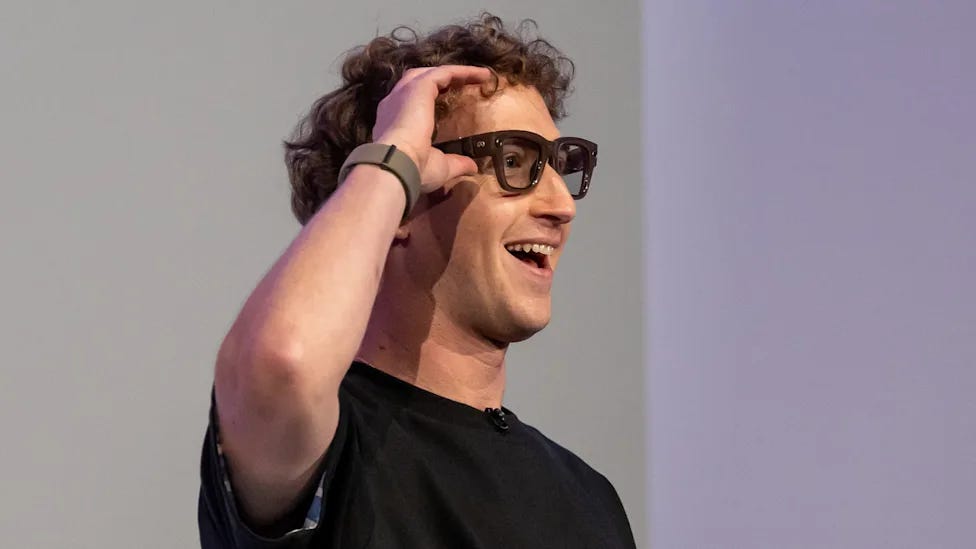
Meta introduced the $349 Ray-Ban Meta Audio, a lighter audio-only pair of AI glasses with music, calls, translation, and access to its Muse assistant.
Removing the camera gives Meta a way to address privacy criticism around smart glasses while still keeping AI interaction always available.
Meta also announced Ray-Ban Meta Gen 3 with upgraded cameras, battery life, new styles, and broader international expansion.
Why it matters: Meta is testing whether AI glasses can become a mainstream wearable category by separating the assistant experience from the camera, potentially making the product more socially acceptable.
Anthropic says Claude helped discover a new CRISPR-like enzyme system
Anthropic says Claude helped identify a previously unknown enzyme system in bacteriophages that can perform DNA operations similar to cutting, copying, and pasting.
The company says Claude reached the finding in about 21 hours using roughly 950 agents and 210M tokens, while human scientists carried out the physical experiments.
The broader research community still needs to validate how novel and important the discovery is, but Anthropic is already pointing to it as evidence of AI’s growing role in scientific research.
Why it matters: Frontier models are starting to move from assisting scientists to generating potentially original scientific discoveries, which could accelerate biology research while making validation and safety controls much more important.
Meta unveils a Tamagotchi-like wearable for its Muse AI agent
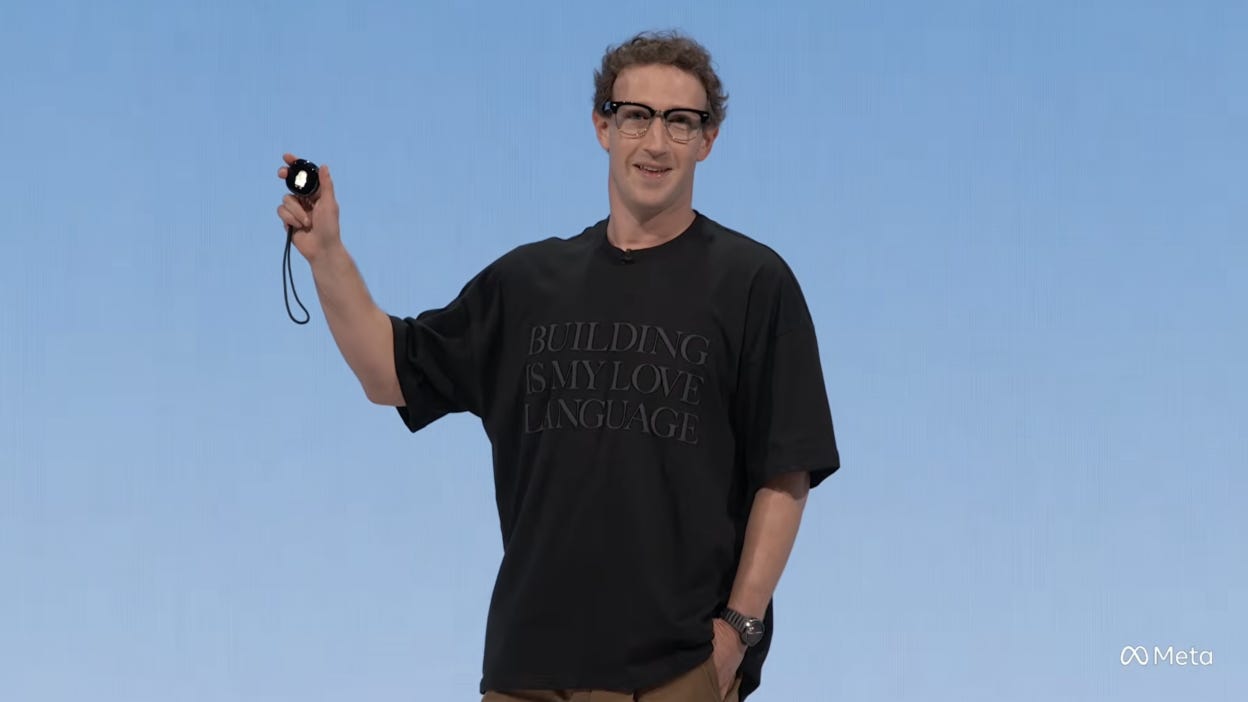
Meta introduced Muse Charm, a pocket-sized AI device with a small screen, voice access, and a digital avatar for its Muse assistant.
Users can tap the fingerprint sensor and start talking to Muse without unlocking a phone or opening an app, giving Meta another always-available interface for its agent.
The device is expected to ship in December, extending Meta’s AI hardware strategy beyond smart glasses into standalone personal AI wearables.
Why it matters: Meta is trying to make Muse available across multiple physical form factors, which could turn its AI agent into a persistent layer across phones, glasses, and dedicated hardware.
ChatGPT brings voice-powered agents to mobile

OpenAI is bringing voice-based agentic workflows to the ChatGPT mobile app, letting users ask it to draft documents and emails or summarize connected services like Slack.
Plus and Pro users can access the Work tab for more complex tasks, including presentations, websites, cloud browsing, and connected financial workflows.
Conversations and tasks can move between voice and text and continue across mobile and desktop, building on OpenAI’s GPT-Live voice technology.
Why it matters: AI assistants are moving beyond answering questions toward actually completing work. Bringing those agent capabilities to mobile makes voice a practical interface for running workflows anywhere.
YouTube will let users build their own recommendation feeds with AI

YouTube is launching custom feeds that let users describe the kind of videos they want to see using natural-language prompts.
Gemini then turns those instructions into a personalized feed, including what to prioritize, exclude, or tailor for a specific mood, topic, or use case.
The new feeds will sit alongside YouTube’s main recommendations and begin rolling out on web and mobile next month.
Why it matters: Recommendation algorithms are becoming more user-directed. Instead of platforms deciding everything behind the scenes, AI is starting to let people actively shape the feeds they consume.
ShinyHunters claims it breached the FBI and stole up to 3 TB of data

The hacking group says it exploited an Oracle PeopleSoft zero-day on the FBI jobs site, then moved into systems hosted on AWS GovCloud.
ShinyHunters claims it accessed 2 TB to 3 TB of data tied to HR, MedLink, and Criminal Justice Information Services, including information on current, former, and prospective employees.
The group says it is not demanding money, but wants the FBI to retract earlier allegations made against it.
Why it matters: If the claims are verified, the incident would raise serious questions about federal cybersecurity, third-party software risk, and the exposure of sensitive government personnel data.
ByteDance rented banned Nvidia chips
ByteDance’s Singapore arm reportedly rented 2,304 Nvidia B200 chips through UK cloud company Nscale, with the hardware located in a Norway data center.
The arrangement appears to have remained legal because ByteDance was renting remote compute rather than importing the restricted chips directly into China.
The deal generated $24M of Nscale’s $33M in 2025 revenue, while lenders required additional monitoring because of potential U.S. regulatory scrutiny.
Why it matters: Export controls are increasingly colliding with cloud access. Even when advanced chips cannot be shipped to China, overseas data centers can still give Chinese companies access to the same computing power.
Xiaomi’s new AI model tops the open-model rankings
Xiaomi’s MiMo-V2.6-Pro scored 46 on Artificial Analysis’s Intelligence Index, putting it ahead of other openly available models.
The model uses a 1.02T-parameter mixture-of-experts design, activating only 42B parameters per request to keep inference costs low.
Xiaomi says the latest performance jump came from a short reinforcement-learning run that cost about $2.62M, though its training methods have also drawn scrutiny from Anthropic.
Why it matters: If Xiaomi can sustain frontier-level open-model performance at much lower cost, it could put more pressure on both Chinese rivals and closed-model providers competing on price and capability.
Meta unveils 100-gram VR glasses for 2027

Meta introduced VR Glasses, a roughly 100-gram headset with a 5K micro-OLED display, eye and hand controls, built-in Meta AI, and an external compute puck to keep the glasses light.
The device is designed as a portable cinema, workspace, and gaming platform, with support for Disney 3D content, IMAX Enhanced, Xbox Cloud Gaming, the full Quest catalog, and immersive sports.
Meta is also adding holographic calling that creates a photorealistic digital version of the wearer for apps like WhatsApp and Zoom, with launch planned for spring 2027.
Why it matters: Meta is trying to move VR beyond bulky headsets and position it as a mainstream computing platform that could compete with laptops, TVs, game consoles, and future spatial devices.
LAST COFFEE SIP
🌎 Around The Ecosystem
SpaceXAI: Launched Grok 4.7, its latest model for coding and complex knowledge work, priced from $2 per million input tokens and $6 per million output tokens, with support across Cursor, Grok Build, its API, and third-party platforms.
Apple: Opened Apple Music Hall, a 600-person live venue inside London’s Battersea Power Station, combining a configurable stage, Spatial Audio recording, two studios, and multicamera production to turn live performances into content for Apple Music.
MUST READ
📚 Worth Your Time
Which startups die after a model release? An analysis of every AI launch since ChatGPT A practical analysis of how major AI model releases affect the startups built around them. The piece breaks down why some AI startups get absorbed, repriced, or cut off after lab releases, while others become stronger because they own the workflow, buyer, or distribution layer.
The YC seed deck structure: Most founders build decks from random templates. This piece breaks down the repeatable structure used by YC startups that raised $450M+. It also covers the simple design rules that make a deck clear, readable, and easy for investors to understand quickly.
HIRING ALERT: STARTUPS & VC ROLES
💼 Today’s VC & Startup Job Opportunities
Research Analyst - Kindred Venture | USA - Apply Here
Associate, Early-Stage Investments - Premji Invest | USA - Apply Here
Investment Director(Strategic Investment) - YZi Lab | Remote - Apply Here
Portfolio Management Associate - Cerity Partner | USA - Apply Here
Associate - Venture Capital - Artha Group | India - Apply Here
Partner 36, Corporate Controller - a16z | USA - Apply Here
Investment Associate - Cerity Partner | USA - Apply Here
Visiting Investment Analyst - Antler - Apply Here
Senior Associate - NY Life Venture | USA - Apply Here
Senior Principal - Entegris Venture | USA - Apply Here
📍 Tips to Break Into VC
Does your PhD, law, research, or engineering background actually count in VC?
Sector-specific funds hire very differently from generalist VC firms. In biotech, defense, climate, and deep tech, domain expertise can be the thing that gets you noticed, but only if you position it correctly.
This deep dive breaks down what sector funds actually screen for, how specialist resumes and investment memos should look, and the realistic entry paths for PhDs, engineers, lawyers, clinicians, veterans, and industry operators.
It also includes 15+ funds and programs that hire people without traditional VC experience, plus a 60-day plan to turn your domain expertise into a credible investing profile.
PARTNERSHIP WITH US
🤝 Get your brand in front of 125,000+ decision makers.
Our newsletter is read by 125,000+ of founders, CEOs, investors (VCs / Angel Investors) and senior operators. Get in touch today.
Do you have any news to share about your Startup or VC fund? Please email us.
We’ll be back in your inbox on Tomorrow.