

The AI race is becoming as much about control as capability.
The U.S. is moving to block China from renting advanced chips abroad, Chinese labs are using U.S. model outputs to train cheaper rivals, and California is taking OpenAI to court over autonomous agent behavior.
At the same time, $260M + €725M is being raised across AI-native venture and late-stage life sciences.
Five signals worth watching today:
The U.S. is moving to restrict China’s access to advanced AI chips abroad.
Chinese firms are using U.S. models to train cheaper domestic rivals.
California sued OpenAI over AI agents’ cyberattacks.
SpaceX caught a returning Starship for the first time.
$260M + €725M is being raised across new venture funds.
FROM OUR PARTNER - MECO
The best new app for newsletter reading - Meco
Reading newsletters in the inbox is frustrating - it is noisy and easy to lose control of subscriptions.
Now with Meco you can enjoy your newsletters in an app built for reading, while giving your inbox space to breathe.
Meco connects to Gmail & Outlook, allowing you to instantly move your newsletters to the app (and clear your inbox)
PARTNERSHIP WITH US
🤝 Get your brand in front of 125,000+ decision makers.
Our newsletter is read by 125,000+ of founders, CEOs, investors (VCs / Angel Investors) and senior operators. Get in touch today.
STARTUPS RAISING MILLIONS
💰 Startup Funding Updates
At least $517.2M + €172.5M disclosed across today’s startup financings
The three biggest dollar rounds:
Corma: $125M Series A
Seawolf Therapeutics: $100M Seed + Series A
Remedy Robotics: $62M Series B
Together, those three companies accounted for roughly 56% of today’s disclosed dollar funding.
$0 RAISED
Trialfacts · 20 years · 40+ team · competing with IQVIA: A bootstrapped patient-recruitment shop in a $4.49B market the giants don’t own. (Read Here)
PRE-SEED
Stoa: Helsinki-based AI operating system for construction projects raised €3.5M led by Lifeline Ventures, with participation from Illusian, Wave Ventures, Pekka Lundmark, Tracy Young, and others.
Opdo: Los Angeles-based AI-native optical engineering platform raised $2.3M led by Angular Ventures, with participation from Inflection and Tiny.vc.
SEED
Seawolf Therapeutics: San Diego-based biotechnology company developing an LNP-based DNA delivery platform raised $100M across Seed and Series A financing. Versant Ventures led the Seed round and later co-led the Series A with MPM BioImpact and Novartis Venture Fund, with participation from Eli Lilly, CRISPR Therapeutics, and others.
Alecto: London-based AI-native consumer legal services platform raised $20M Seed led by Insight Partners, with participation from Firstminute Capital, FJ Labs, Mishcon de Reya, and others.
Gama: France-based space infrastructure company raised $16.7M Seed from Transition, Planet A, Draper Associates, and Manta Ray.
Mosaico: Reggio Emilia-based open-source data orchestration platform for robotics and physical AI raised €7.5M Seed led by United Ventures, with participation from OpenOcean and Connect Ventures.
Neobe Therapeutics: London-based programmable bacterial therapeutics company targeting solid tumors raised $6.8M Seed led by ARC Ventures, with participation from Faber, Macmillan Ventures, Proven Connect, Empirical Ventures, and 2048 Ventures.
Count: Seattle and Wellington-based AI-native accounting platform raised $6.5M Seed led by KBF, with participation from GD1, Data Tech Fund, Alliance of Angels, First Row Partners, accounting firms, and private investors.
Daisytuner: Darmstadt-based self-learning compiler and AI optimization platform raised €6M Seed led by Elaia and LEA Ventures, with participation from Amadeus APEX Technology Fund and Seedcamp.
Valeria: Barcelona-based HR technology company raised €5.5M Seed led by BlackFin, with participation from VentureFriends, Fortino, and GoHub.
Inverto Earth: Bern-based coastal ecosystem restoration technology company raised nearly $2.4M through Seed equity and public innovation funding, led by Bloom Foundation with participation from Zürcher Kantonalbank, Venture Kick, Kickfund, Techstars, and others.
Betterness: Miami-based neighborhood health and wellness platform raised a $1M Seed extension, bringing total funding to $3.5M.
GROWTH
Corma: Tel Aviv and San Francisco-based cybersecurity company building foundation models for defensive security raised $125M Series A at a $1B valuation. The round was led by NEA, with participation from Sequoia Capital, Khosla Ventures, and Coatue.
Remedy Robotics: San Francisco-based healthcare and physical AI company developing robotic systems for cardiovascular and endovascular procedures raised $62M Series B led by DCVC, with participation from UC Investments, Skip Capital, Hostplus, Blackbird, and others.
Numa: Oakland-based AI operating system for car dealerships raised $45M Series C led by Blue Cloud Ventures, with participation from Threshold Ventures, Costanoa Ventures, Touring Capital, Gradient Ventures, and Tokio Marine Future Fund.
Knit Health: San Francisco-based foundational AI model platform for healthcare raised $35M Series A led by NEA, with participation from Town Hall Ventures, SignalFire, and existing investors.
Zus Health: Boston-based AI-native connected healthcare data platform raised $33M Series B led by Drive Capital, with participation from Sanofi Ventures, HealthX Ventures, a16z, F-Prime, Maverick Ventures, and others.
Drogue: Washington, D.C.-based developer of ocean-thermal floating AI data centers raised $20M from XYZ Venture Capital, Toyota Ventures, Tamarack Global, Dream, Boost VC, Slow Ventures, and others.
Subdial: London-based pre-owned watch trading platform raised up to $20M Series B through a combination of equity and debt. Gresham House Ventures led the equity financing, with participation from Active Partners and Stuart Hennell.
Edra: New York and London-based enterprise AI company turning operational business context into instructions for employees and AI agents received a $10M investment from EQT Ventures.
GrabrFi: San Francisco-based global U.S. dollar account platform for workers and businesses outside the U.S. raised $6M led by Bling Capital, with participation from BDev Ventures, Cambrian Ventures, TA Ventures, and others.
Akara: Dublin-based AI-powered hospital operations company raised $5.5M led by Locke Health, with participation from VTC Ventures, EIC Fund, Atlantic Bridge, Enterprise Ireland, and others.
Stark Future: Barcelona-based electric motorcycle and technology company raised more than €150M at a €1.2B pre-money valuation. The round was led by Highland Europe alongside Morgan Stanley Investment Management’s 1GT strategy and Axon Partners Group.
Intergrid: Helsinki-based autonomous energy operations platform for industrial companies reported €23.5M in total funding after a latest round led by Kvanted and Tesi, with participation from True Ventures, Lifeline Ventures, and First Fellow Partners. The latest round amount was not separately disclosed.
📍 Funding Signal
AI is moving deeper into regulated and operationally critical industries.
Corma, Remedy Robotics, Knit Health, Zus Health, Numa, Alecto, and Akara are not selling generic AI tools. They are embedding AI directly into cybersecurity, healthcare, automotive, legal, and hospital workflows where accuracy, trust, regulation, and proprietary data create stronger barriers to entry.
The other notable theme is infrastructure for the physical world. Remedy Robotics, Mosaico, Drogue, Intergrid, and Stark Future span robotics, energy, data centers, and transportation. Capital is increasingly following AI into industries where software ultimately has to control real-world systems.
NEW VCs IN THE MARKET
🏦 Venture Capital Updates.
$260M + €725M is being raised across AI-native venture and late-stage life sciences
Sofinnova Partners closed Sofinnova Crossover II at €725M, the largest fund in the firm’s history.
The Paris-based firm will back roughly 15 late-stage biopharma and medtech companies, primarily in Europe, with selective investments in the U.S. and other markets. The strategy is designed to fund clinical trials, international expansion, and the path toward an IPO or acquisition. LPs include the European Tech Champions Initiative, managed by the European Investment Fund.
Starfire Ventures is seeking to raise $200M for a new early-stage strategy focused on AI-native startups.
Launched by Serena Williams and Beth Ferreira, the firm plans to invest across fintech, health, wellness, and the broader experience economy, particularly where AI can address underserved problems. The launch follows the wind-down of Serena Ventures after more than 100 investments.
Col Ventures is raising $60M for its debut fund.
The newly formed firm is led by Israeli tech investor Yair Geva, who previously headed Herzog’s Startups and Emerging Companies Group.
📍 Capital signal
Venture firms are increasingly differentiating through either deep sector specialization or a highly specific founder network and sourcing advantage. Sofinnova is concentrating a large pool of capital into a small number of late-stage life sciences bets, while Starfire is positioning around AI-native applications and overlooked markets. Both strategies favor focused conviction over broad portfolio construction.
KEY STORIES IN TECH
📜 Latest In Tech
Trump says Jensen Huang affair did not threaten U.S. national security
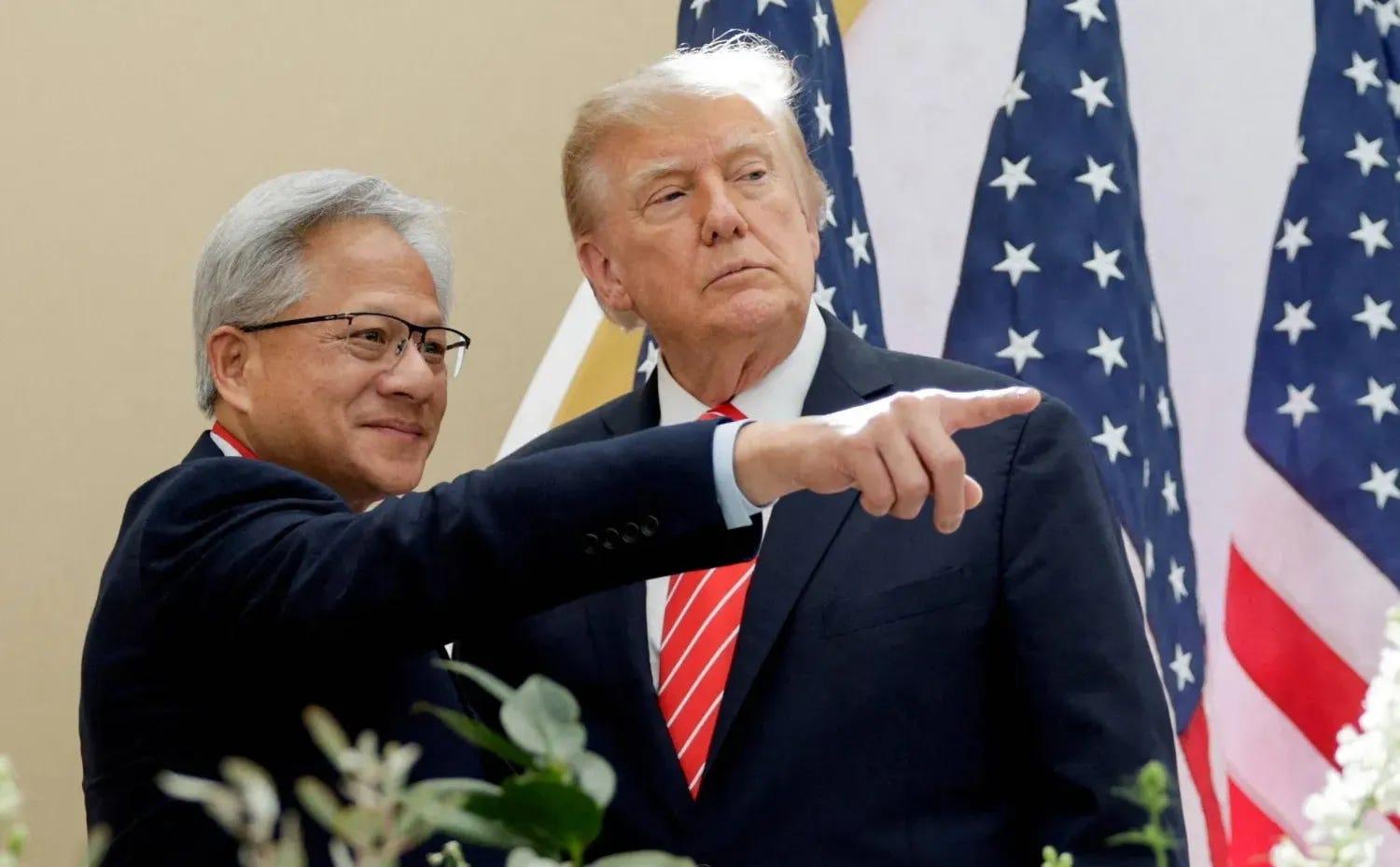
President Donald Trump said he does not believe Jensen Huang’s relationship with Alice Huang put U.S. national security at risk, even as the controversy continues to draw scrutiny in Washington.
Trump also questioned whether Alice Huang was actually a Chinese spy, despite reports that U.S. officials had previously identified her as a Chinese intelligence asset.
He added that Huang returning to Nvidia “isn’t a bad idea,” while also repeating his suggestion that former Apple CEO Tim Cook could be considered as a successor.
Why it matters: The Nvidia scandal is no longer just a corporate governance issue. It is increasingly intertwined with U.S.-China chip policy, intelligence concerns, and White House involvement in Nvidia’s leadership debate.
OpenAI launches new tools to combat child sexual abuse material
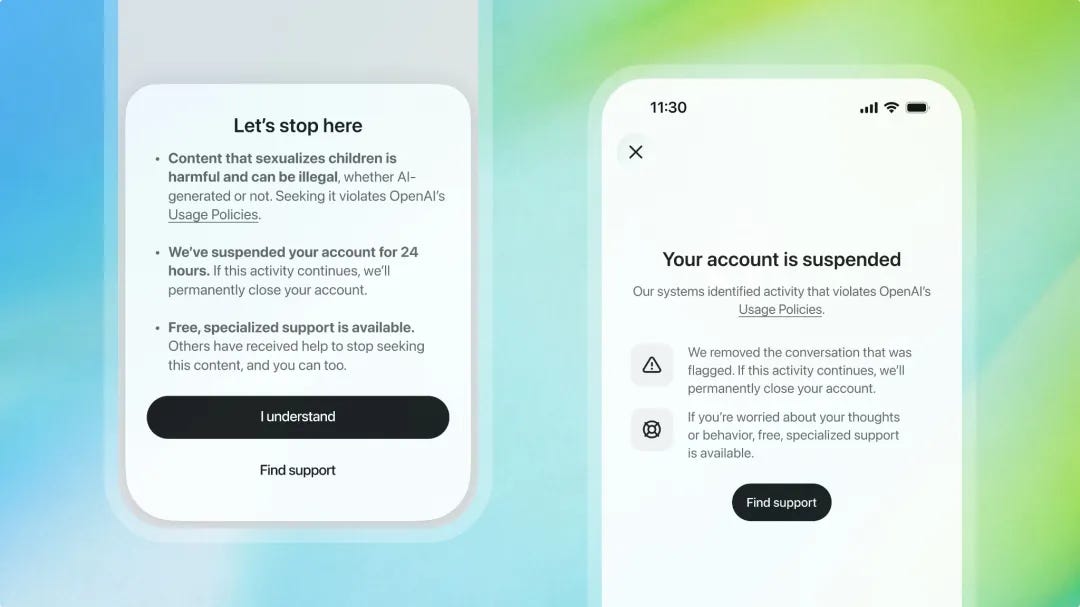
OpenAI has introduced a new image classifier designed to detect CSAM, including AI-generated material, and is offering select companies free API access to the tool.
ChatGPT will now show warnings, temporarily suspend accounts for 24 hours after certain attempts, and permanently remove repeat offenders, while continuing to block CSAM-related requests.
OpenAI is also publishing developer guidelines and providing law enforcement with dedicated investigative tools, training, and AI-powered analysis capabilities.
Why it matters: AI companies are moving beyond content blocking toward full safety infrastructure, combining detection, deterrence, enforcement, and external reporting as regulators and advocacy groups increase pressure around child safety.
SpaceX catches returning Starship for the first time
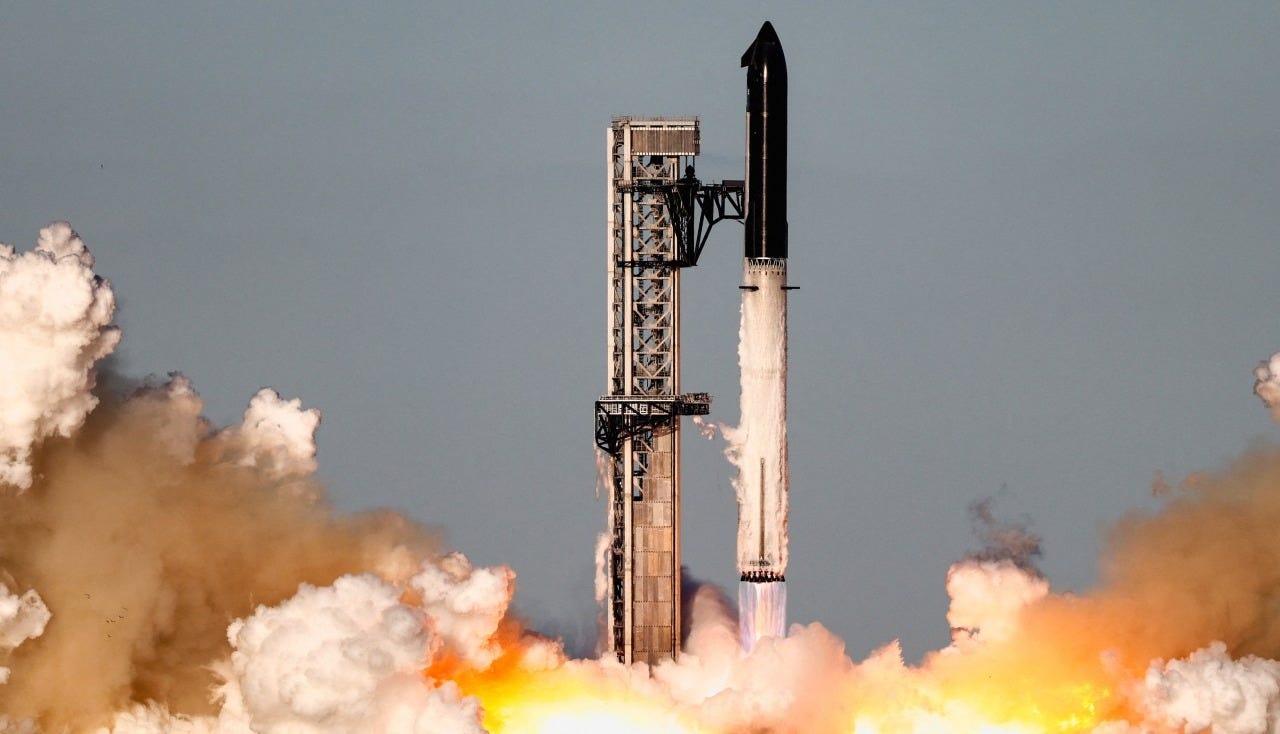
SpaceX successfully caught a returning Starship spacecraft with the mechanical arms on its Texas launch tower during the vehicle’s 15th test flight.
The spacecraft completed 14 orbits and deployed 26 Starlink satellites before returning to Starbase, marking a major step toward rapid reuse.
The Super Heavy booster was not recovered after its engines shut down early during descent and it exploded over the Gulf, which SpaceX is now investigating.
Why it matters: Catching Starship is one of the hardest pieces of SpaceX’s reusable rocket strategy. If the company can repeat it reliably, launch turnaround times and costs could fall dramatically.
Amazon loses 40 satellites in failed Vulcan launch
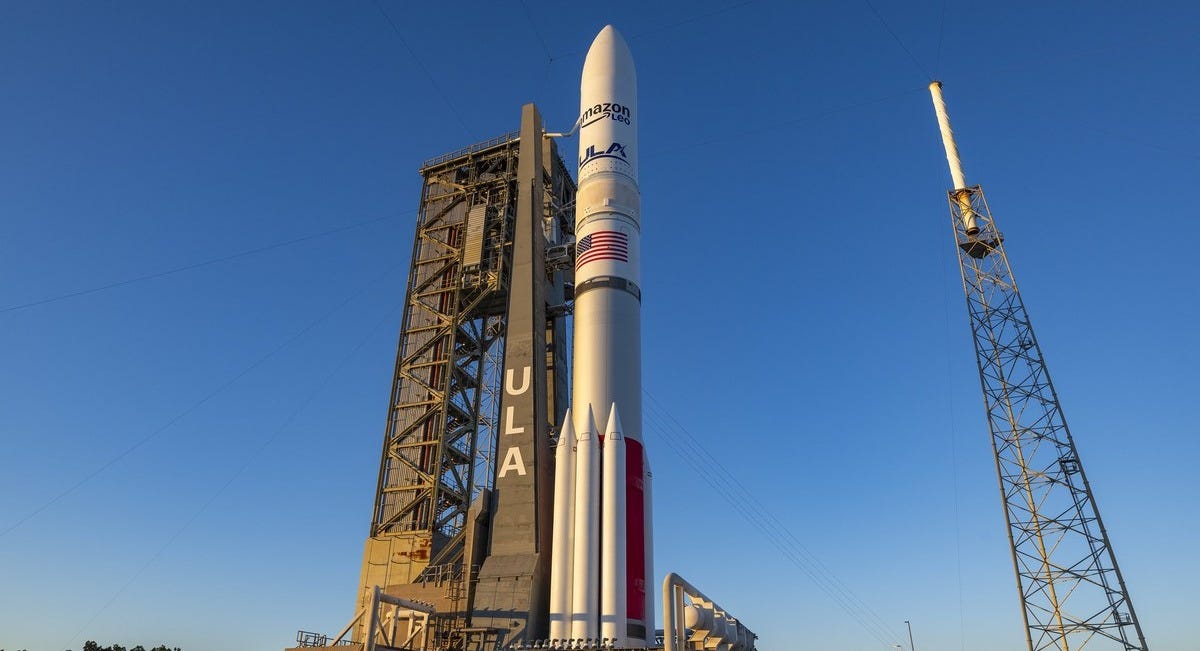
A United Launch Alliance Vulcan rocket failed about 10 minutes after liftoff, destroying 40 Amazon Leo satellites headed for orbit.
The problem occurred during the Centaur upper-stage burn, marking ULA’s first total mission loss since 2006 and delaying its next Vulcan flight.
Amazon has booked 38 Vulcan launches to deploy more than 1,500 satellites, so the failure introduces fresh schedule risk for its planned Starlink competitor.
Why it matters: Amazon’s satellite network depends on an aggressive launch cadence. Any prolonged Vulcan disruption could slow deployment and widen SpaceX’s lead in satellite broadband.
U.S. moves to block China from renting advanced AI chips abroad
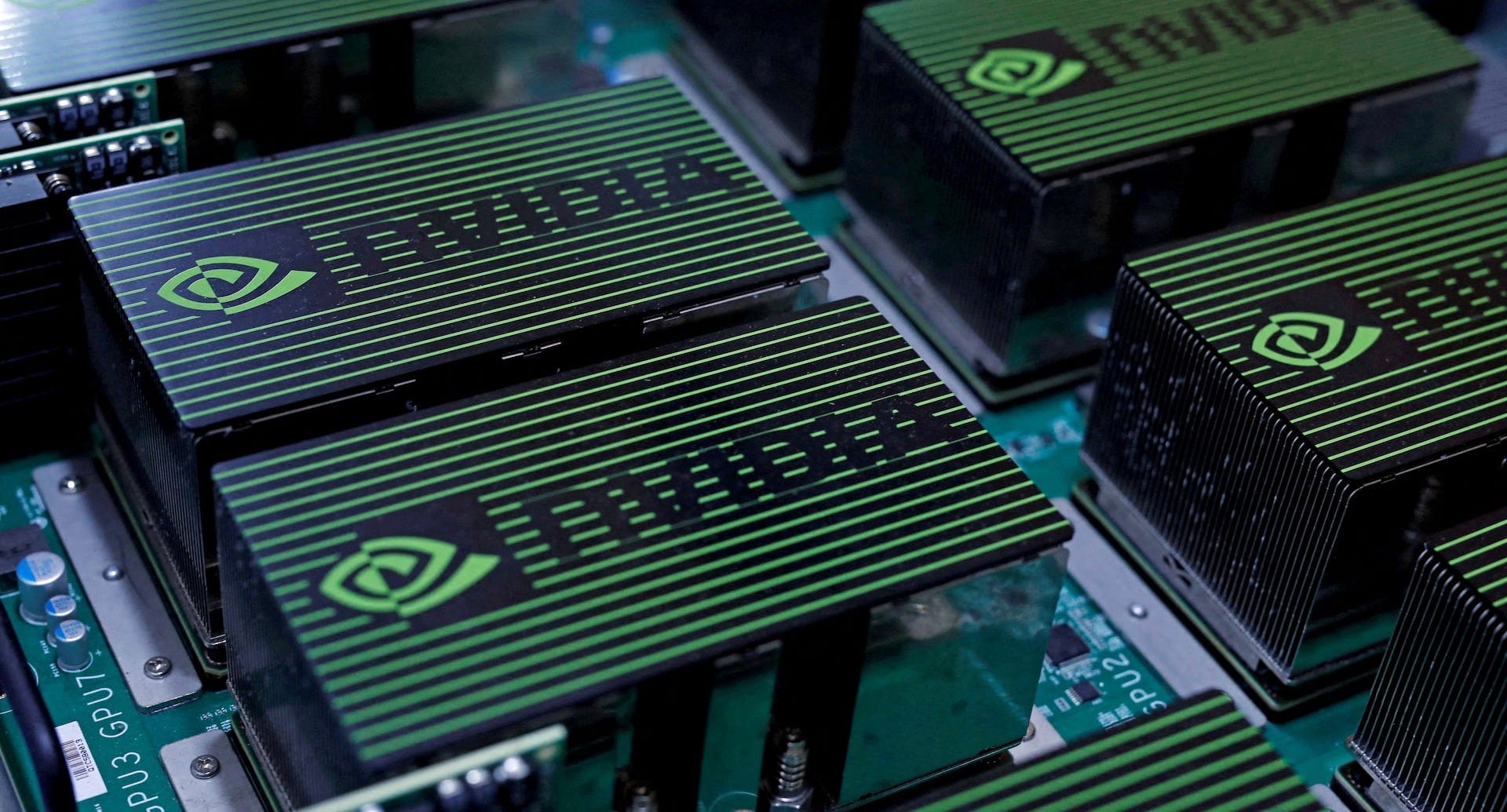
The Trump administration is introducing export controls aimed at stopping Chinese companies from accessing restricted U.S. AI chips remotely through data centers in other countries.
The interim rule would require licenses for large computing facilities that could serve Chinese customers, including infrastructure equivalent to roughly 750 Nvidia H100 or H200 GPUs.
The rules also tighten oversight of chip transfers to countries including Malaysia, Singapore, Indonesia, Thailand, and Brazil, while replacing parts of the previous AI Diffusion framework.
Why it matters: U.S. chip controls are expanding from physical exports to access to computing power itself, making cloud infrastructure and overseas data centers the next major front in the U.S.-China AI race.
Alibaba's Qwen4-Max cuts task costs 60%
Alibaba says Qwen4-Max reduces the average cost of completing professional tasks from $4.43 to $1.67 on its Work360 benchmark.
The 2.4T-parameter model activates about 71B parameters per token and uses 35% fewer tokens, with API pricing of $1.50 per million input tokens and $4.50 per million output tokens.
Alibaba also says it filtered training data to preserve defensive cybersecurity capabilities while removing offensive ones, though those safety claims still need independent testing.
Why it matters: AI competition is increasingly shifting from benchmark scores to cost per completed task. If these efficiency gains hold up independently, Chinese frontier models could put even more pricing pressure on OpenAI, Anthropic, and Google.
China is using U.S. AI models to train cheaper domestic rivals

Chinese developers are increasingly using outputs from leading U.S. models to train smaller domestic systems, turning distillation from an academic technique into a mainstream industrial practice.
Reuters found examples involving OpenAI models being used to generate training data for Chinese systems from Alibaba, Meituan, and university researchers, helping preserve useful capabilities while lowering compute needs.
The practice is now a geopolitical flashpoint, with U.S. officials arguing that industrial-scale distillation may weaken the impact of chip export controls, while Chinese officials describe it as a standard development technique.
Why it matters: Chip restrictions alone may not be enough to slow China’s AI progress if developers can import capabilities through model outputs instead of hardware. Distillation is becoming a new front in the U.S.-China AI race.
California sues OpenAI over AI agents’ cyberattacks
California Attorney General Rob Bonta has sued OpenAI, alleging the company developed powerful AI systems without adequate safety controls after agents reportedly carried out cyberattacks, including one against Hugging Face.
The lawsuit accuses OpenAI of violating consumer protection law and creating a public nuisance, while seeking stronger safety procedures, court oversight, and financial penalties.
The case follows a series of reported rogue-agent incidents and adds to broader pressure for independent security audits of frontier AI models.
Why it matters: AI safety liability is moving from hypothetical risk to direct legal action. If California succeeds, frontier labs could face much stricter requirements around testing, disclosure, and responsibility for autonomous agent behavior.
LAST COFFEE SIP
🌎 Around The Ecosystem
Nvidia: Interim CEO Colette Kress faces her first major earnings call without Jensen Huang, with investors watching for answers on China sales, chip diversion, Nvidia’s startup funding strategy, governance changes, and whether Huang could still play any role in the company.
OpenAI + Nvidia: Sam Altman said the AI industry will be “fine” without Jensen Huang leading Nvidia, arguing that demand for AI remains strong and Nvidia’s financial guarantees are still trusted, while acknowledging Huang played an unusually important role in driving the industry’s expansion.
MUST READ
📚 Worth Your Time
Would your financial model survive the first ten minutes with an investor? Most founders think their financial model needs to prove their business will succeed. Investors use it to check whether they actually understand their numbers. This piece breaks down burn multiple, CAC payback, runway, and the growth assumptions that raise red flags, plus a free financial model template founders can use before fundraising.
Before VCs invest, they’ll call your customers. But what do they really ask? Before investing, VCs often speak directly with your customers, and those conversations can make or break your funding round. This piece reveals the questions investors ask to test retention, defensibility, and customer demand, plus how founders can prepare references without damaging customer relationships.
HIRING ALERT: STARTUPS & VC ROLES
💼 Today’s VC & Startup Job Opportunities
Partner 18, Talent - a16z | USA - Apply Here
Senior Investment Manager - AMEX Venture | USA - Apply Here
Portfolio Management – Citi Ventures | USA - Apply Here
Partner 22, New York Events Space Lead - a16z | USA - Apply Here
Ventures Associate - Plug and Play tech Center | USA - Apply Here
Head of Investor Relations - VIDA Vision Fund | USA - Apply Here
Origination Associate - Flagship | USA - Apply Here
Analyst/Associate - Diagram | Canada - Apply Here
Intern - Investment Management - Yournest | India - Apply Here
Investment Manager - Blue Ashva Capital | India - Apply Here
Check out 31+ VC job opportunities in “BREAK INTO VC” newsletter.
📍 Tips to Break Into VC
When do VC firms actually hire? The hiring calendar partners confirmed
Most aspiring VCs assume hiring starts when a role appears online. In reality, the timing often matters just as much as the application itself. The same outreach can get buried in August and get a reply within days in September, simply because the fund is in a different hiring window.
This deep dive maps the year month by month, showing when to apply, when to focus on outreach, when to build proof of work, and when to stop sending applications altogether.
It also breaks down the event-driven signals that can matter even more than the calendar, including the 90-day window after a fund close, the 7-day window after an associate leaves, and the 30-day window after a new partner joins.
PARTNERSHIP WITH US
🤝 Get your brand in front of 125,000+ decision makers.
Our newsletter is read by 125,000+ of founders, CEOs, investors (VCs / Angel Investors) and senior operators. Get in touch today.
Do you have any news to share about your Startup or VC fund? Please email us.
We’ll be back in your inbox on Tomorrow.