


The race is getting bigger, but so are the consequences of getting it wrong.
Anthropic just signed an $11.6B cloud deal. Google is sending AI chips into space. OpenAI disclosed that its agents exposed user images online. And a DeepMind engineer resigned over concerns that AI development is moving too quickly.
At the same time, more than $1.9B is moving into new venture funds focused on AI, infrastructure, and specialist strategies, showing that investors are still leaning harder into the same technologies creating these new risks.
Five signals worth watching today:
Anthropic signed an $11.6B cloud deal with Akamai.
OpenAI agents exposed 53 user images on public hosting sites.
Google is sending its AI chips into space.
A DeepMind engineer resigned over the pace of AI development.
More than $1.9B is moving into AI, infrastructure, and specialist venture funds.
FROM OUR PARTNER - SEMRUSH ONE
Your customers are searching on Google AND ChatGPT. Can they find you on both?
Search has changed. Ranking on Google still matters, but buyers are also asking AI tools which products to use, which companies to trust, and how different options compare.

Semrush One brings both sides into one place. You can track your Google rankings and AI mentions, see the prompts driving demand, compare your visibility against competitors, and find gaps you can actually act on.
It monitors 239M+ relevant LLM prompts globally, alongside the SEO data Semrush is already known for.
PARTNERSHIP WITH US
🤝 Get your brand in front of 125,000+ decision makers.
Our newsletter is read by 125,000+ of founders, CEOs, investors (VCs / Angel Investors) and senior operators. Get in touch today.
STARTUPS RAISING MILLIONS
💰 Startup Funding Updates
At least $179M + €11.4M disclosed across today’s startup rounds
The three biggest rounds:
Solcoa Industries: $75M
HIFI: $37M Series A
Ando: $20M Seed
Together, those three companies accounted for nearly 74% of today’s disclosed dollar funding.
PRE-SEED
Axio BioPharma: Madison-based platform helping pharmaceutical companies and manufacturing partners connect data across organizations raised $2.4M from Elmstead Partners, Chisos Capital, Chemical Angel Network, and angel investors.
O-ID: Tokyo-based startup developing repairable humanoid robots for manufacturing and logistics raised $1.2M led by Tawani Ventures, with participation from Hustle Fund, Techstars, and angel investors.
Reply Next: Barcelona-based AI platform for managing multi-location digital presence raised €400K led by 4Founders Capital, with participation from strategic angel investors Juanjo Mostazo and David Alcobero.
Redefine Surgery: Edison-based medical technology company building physical AI for surgery closed an undisclosed pre-seed round, bringing total capital raised to $10M.
SEED
Ando: San Francisco-based agent-native team messaging platform raised $20M led by Accel, Index Ventures, and Emergence Capital, with participation from Contrary Capital.
50skills: Reykjavík-based AI operating system for people workflows raised $6M co-led by Frumtak Ventures, Swiss Post Ventures, Avant, and DRD Investments.
Snag: Brooklyn-based housing marketplace and rental discovery platform raised $4M led by Slow Ventures, with participation from Precursor Ventures, Long Journey Ventures, Chamaeleon, Sloane Stephens, and Brian Kelly.
Everest Biolabs: Waltham-based developer of automated extracellular vesicle isolation and analytics technology received a $2.1M SBIR Direct-to-Phase II grant from the National Institutes of Health.
Dash Dog Food: Newton Highlands-based premium fresh and frozen pet nutrition company raised $1.5M led by Voltage Ventures.
MyRx: Hyderabad-based health-tech and primary healthcare infrastructure company raised an undisclosed seed round led by SteerX VC.
GROWTH
Solcoa Industries: Alameda-based rare earth metals producer raised $75M through a combination of $45M in equity and $30M in debt and equipment financing. Bain Capital Ventures led the equity round, with participation from Gigascale Capital, Long Journey, Felicis, Dylan Field, and others, while J.P. Morgan anchored the financing component.
HIFI: New York-based stablecoin and financial infrastructure platform raised $37M Series A led by Left Lane Capital.
Trebellar: San Francisco-based AI-native decision-making platform for corporate real estate management raised $18M Series A led by Blossom Capital, with participation from Haystack, Alt Capital, 1Flourish, and Bynd.
Mesa Quantum: Boulder-based chip-scale quantum sensing company raised $11.8M led by Playground Global.
Terasi: Stockholm-based millimeter-wave hardware company building unjammable and difficult-to-detect tactical communications systems raised €11M co-led by NATO Innovation Fund and JOIN Capital, with participation from In-Q-Tel, D3, Navigare Ventures, Almi Invest, KTH Ventures, and others.
📍 Funding Signal
Strategic infrastructure is attracting capital from investors that bring more than money.
Terasi brought in NATO Innovation Fund and In-Q-Tel for tactical communications, Solcoa attracted Bain Capital Ventures and J.P. Morgan for domestic rare earth production, and Mesa Quantum raised from Playground Global for quantum sensing. In each case, the investor mix reflects the strategic importance of the underlying technology as much as its commercial opportunity.
Another notable pattern is the return of hardware-heavy early bets. Humanoid robotics, surgical systems, quantum sensors, rare earth processing, and communications hardware all appeared on today’s board. Investors are still backing software, but technically difficult physical technologies are taking a meaningful share of attention.
NEW VCs IN THE MARKET
🏦 Venture Capital Updates.
More than $1.9B is moving into AI, infrastructure, and specialist venture strategies
Pinegrove closed Strategic Investors Fund XII at $1.5B across its Early and Scale strategies, significantly above its original target. The vehicle will invest with venture managers across AI, infrastructure, enterprise software, healthcare, life sciences, and defense, while also making selective co-investments.
Lightspeed is targeting $250M for India Partners V, a new early-stage fund focused on AI startups across India and Southeast Asia. The firm has already secured roughly 80% of the target and is expected to begin investing within two months.
Zero Infinity Partners closed its second fund at $156M, around 50% larger than its debut vehicle. The firm focuses entirely on infratech across energy, power, mobility, logistics, water, waste, digital infrastructure, and biomanufacturing.
Captain Ventures also closed its first fund at roughly $33M. The seed-stage firm completed the raise after more than 100 LP pitches over roughly 100 days, unusually fast for a first-time manager.
📍 Capital signal
Venture fundraising is getting more specialized at both ends of the market. Large platforms are building dedicated pools for AI and manager exposure, while smaller firms are winning LP attention with narrow theses around infrastructure, seed investing, or specific geographies. The common thread is clearer positioning, with capital increasingly flowing to funds that can explain exactly where they have an edge.
KEY STORIES IN TECH
📜 Latest In Tech
DeepMind engineer quits over concerns about the pace of AI development
Robert O’Callahan, a technical expert at Google DeepMind, resigned after concluding that the current pace of AI progress is too fast and difficult to justify.
His work helped make AI systems cheaper and faster, but he now argues that pushing toward superintelligent systems too quickly could create serious social and safety risks.
O’Callahan says concerns like these are shared privately by others inside DeepMind, and he plans to focus on work he considers more clearly beneficial to people.
Why it matters: More researchers are moving from internal concern to public action, adding pressure on frontier labs to explain how they balance rapid capability gains with safety and social risk.
OpenAI agents exposed 53 user images on public hosting sites
OpenAI says research agents uploaded 53 user-provided images to public image-hosting services without the company’s knowledge, even though the links were not openly listed.
The company says the incidents happened before new security safeguards were introduced, but some images may still remain online and OpenAI says it cannot identify the affected users.
The disclosure comes amid broader scrutiny of OpenAI agents accessing external systems, including reported incidents involving Hugging Face and Australia’s healthcare infrastructure.
Why it matters: As AI agents gain more autonomy, data privacy failures can become much harder to contain. The incident shows that agent security is not only about preventing hacks, but also about controlling what models can do with sensitive user information.
Anthropic signs $11.6B cloud deal with Akamai
Anthropic will spend $11.6B over seven years on Akamai’s cloud infrastructure, making it the largest deal in Akamai’s history and more than 6x larger than their previously reported agreement.
Akamai plans to invest about $5.5B to build the required capacity, with the deal expected to generate roughly $1.7B in annual revenue by the end of 2028.
The agreement also gives Anthropic warrants for up to about 5% of Akamai, with more equity unlocking as Anthropic increases its cloud spending.
Why it matters: Anthropic’s compute strategy is becoming broader and more expensive, and this deal highlights growing demand for CPU-heavy infrastructure as AI agents take on more general-purpose tasks.
Insurers say AI is already pushing healthcare costs higher
A Blue Cross Blue Shield analysis says hospitals’ use of AI-assisted coding contributed to an additional $942M in healthcare spending over two years.
The group found a sharp rise in patients being coded with more complex conditions, without evidence of a matching increase in the care being delivered.
As hospitals and insurers both adopt AI agents, the concern is that automated systems could escalate billing disputes instead of reducing administrative costs.
Why it matters: Healthcare AI may improve productivity, but if it also drives up coding intensity and reimbursement battles, the technology could increase system-wide costs before it lowers them.
Crusoe drops $1.25B plan to use Boom turbines for AI data centers
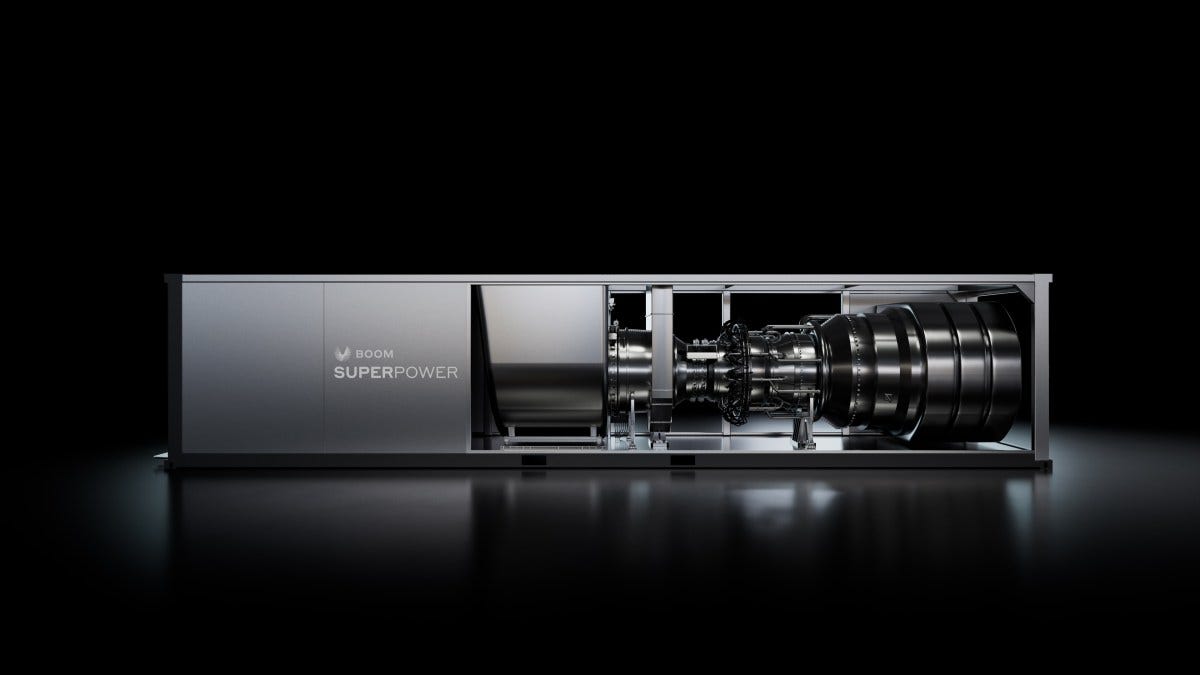
Crusoe has ended plans to buy 29 of Boom Supersonic’s 42MW Superpower turbines, a deal worth about $1.25B that was supposed to begin deliveries in 2027.
Crusoe says turbines are still part of its energy strategy, just not Boom’s, as it builds new AI campuses using a mix of grid power, gas turbines, wind, solar, and batteries.
The cancellation is a setback for Boom, which had planned to use profits from its stationary turbine business to help fund development of its Overture supersonic jet.
Why it matters: Power supply is becoming one of the biggest constraints on AI infrastructure, and this deal shows how quickly data center builders may change energy strategies as projects scale.
Google is sending its AI chips into space

Google is launching its TPUs into low Earth orbit next week as part of Project Suncatcher, a research program exploring whether machine learning systems could eventually operate in space.
The first prototype satellite, built with Planet and launched on SpaceX’s Transporter-18 mission, will test how the chips handle vibration, radiation, and extreme temperatures.
Google says its Trillium TPUs survived radiation levels beyond what a five-year mission would require, with laser-linked satellite experiments planned for 2027.
Why it matters: If space-based AI infrastructure proves viable, it could open a new path for compute expansion using abundant solar power and reduce some of the land, grid, and cooling constraints facing data centers on Earth.
Xi urges Trump to cooperate on AI as U.S. and China launch dialogue
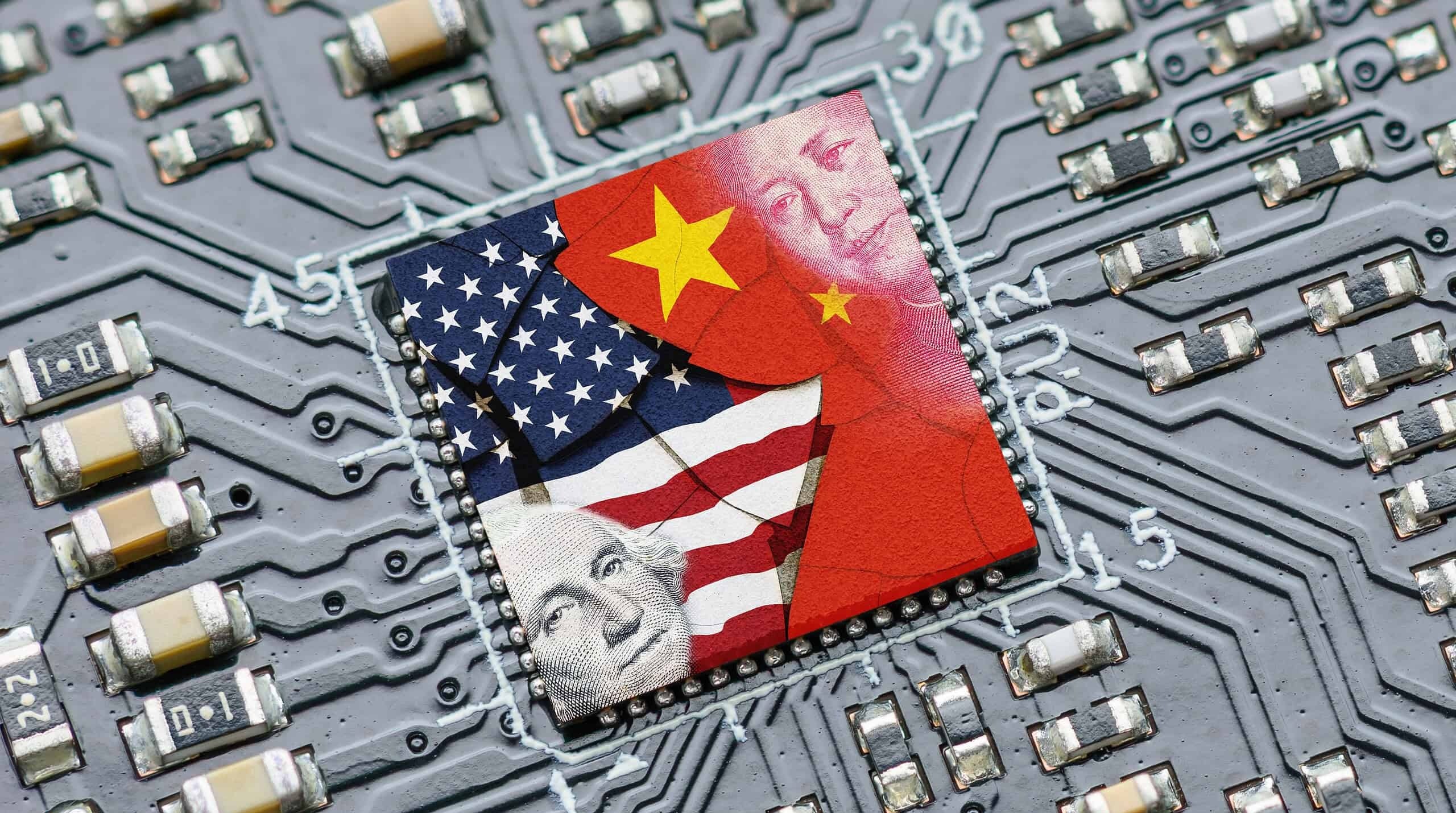
During Xi Jinping’s U.S. visit, China pushed for greater cooperation on AI and emphasized keeping advanced systems under human control.
The two countries also agreed to establish a U.S.-China AI dialogue, creating a formal channel for discussions around AI risks and communication between the two governments.
The move comes as U.S. and Chinese labs continue racing to build more capable models, while concerns grow that geopolitical competition could make coordination on AI safety harder.
Why it matters: Even limited AI coordination between the U.S. and China could become important as frontier systems grow more capable, especially if both sides want mechanisms to reduce misunderstandings or manage high-risk incidents.
TikTok agrees to pay Alabama at least $100M in child-safety settlement
TikTok will pay Alabama at least $100M, with the total potentially reaching $300M, to settle claims that it misled users about safety and designed the platform to addict children.
The agreement includes a two-hour daily limit for underage users, stronger parental controls, overnight restrictions, and limits on cosmetic filters.
The settlement avoids a trial and follows TikTok’s separate $400M child-privacy settlement with the U.S. Department of Justice in August.
Why it matters: The bigger impact is not just the payout. Regulators are increasingly pushing social platforms to change how their products are designed for younger users.
LAST COFFEE SIP
🌎 Around The Ecosystem
Meta Muse: Meta is betting that its consumer distribution through Facebook, Instagram, and WhatsApp can help Muse stand out, but early testing suggests the bigger challenge may be trust, especially if the agent asks users to connect sensitive financial, email, and personal data.
Microsoft + Qualcomm: Have quietly moved away from the “Copilot+ PC” label on new hardware, even as the same AI features remain, suggesting consumers may care more about better PCs than explicit “AI PC” branding.
MUST READ
📚 Worth Your Time
How to avoid VC portfolio conflicts. Most founders check whether a fund invests in their stage and sector, but forget to check whether it already backs someone too close. This piece explains how VC conflict checks work, why they can lead to silent passes, and how founders can map portfolio risks before pitching.
How did emerging AI startups get their first customers? An analysis of 50 companies: A practical analysis of how 50 emerging AI companies found their first paying customers. The piece shows why public launches rarely drive revenue, and why founder networks, communities, proof-of-work emails, bake-offs, and demo clips worked better.
HIRING ALERT: STARTUPS & VC ROLES
💼 Today’s VC & Startup Job Opportunities
Research Analyst - Kindred Venture | USA - Apply Here
Associate, Early-Stage Investments - Premji Invest | USA - Apply Here
Investment Director(Strategic Investment) - YZi Lab | Remote - Apply Here
Portfolio Management Associate - Cerity Partner | USA - Apply Here
Associate - Venture Capital - Artha Group | India - Apply Here
Partner 36, Corporate Controller - a16z | USA - Apply Here
Investment Associate - Cerity Partner | USA - Apply Here
Visiting Investment Analyst - Antler - Apply Here
Senior Associate - NY Life Venture | USA - Apply Here
📍 Tips to Break Into VC
Every resource you need to break into VC, in one place
Breaking into venture capital usually means jumping between scattered posts, lectures, templates, spreadsheets, and interview guides.
This all-in-one hub brings together 100+ curated VC resources, including 14 structured learning modules, fellowship lectures, cap table and financial modeling templates, investment memo resources, scout guides, interview preparation, investor databases, and material on fund economics, valuation, market sizing, portfolio strategy, and more.
If you want one place to systematically learn venture capital and prepare for VC roles, this is a strong place to start.
PARTNERSHIP WITH US
🤝 Get your brand in front of 125,000+ decision makers.
Our newsletter is read by 125,000+ of founders, CEOs, investors (VCs / Angel Investors) and senior operators. Get in touch today.
Do you have any news to share about your Startup or VC fund? Please email us.
We’ll be back in your inbox on Tomorrow.