

The economics of AI are getting harder to ignore.
Musk is cutting Grok Bot usage because serving agents is too expensive. Anthropic is slowing while carrying nearly $900B in future compute commitments. And Apple is stockpiling memory as AI demand pushes component costs higher.
At the same time, the technology is moving deeper into the physical world, from Meta’s household robot to cyberattacks that can remotely damage supermarket refrigeration systems.
Five signals worth watching today:
Musk cut Grok Bot usage after costs became unsustainably high.
Anthropic’s future compute commitments are approaching $900B.
Apple’s inventory jumped 154% as memory costs surged.
Meta built a humanoid robot for household chores.
$750M closed at Creandum as 25madison targets a new $50M fund.
FROM OUR PARTNER - MECO
The best new app for newsletter reading - Meco

Reading newsletters in the inbox is frustrating - it is noisy and easy to lose control of subscriptions.
Now with Meco you can enjoy your newsletters in an app built for reading, while giving your inbox space to breathe.
Meco connects to Gmail & Outlook, allowing you to instantly move your newsletters to the app (and clear your inbox)
The experience is packed with features to supercharge your reading including the ability to group newsletters, set smart filters, bookmark your favorites and read in a scrollable feed
You can try the experience for free and available on iOS, Android and web (desktop)
Over 30k readers are enjoying their newsletters (and decluttering their inbox) with Meco.
PARTNERSHIP WITH US
🤝 Get your brand in front of 125,000+ decision makers.
Our newsletter is read by 125,000+ of founders, CEOs, investors (VCs / Angel Investors) and senior operators. Get in touch today.
STARTUPS RAISING MILLIONS
💰 Startup Funding Updates
At least $1.88B + €104.4M + £300K disclosed across today’s startup financings
The three biggest rounds:
Kalshi: $1B Series G
Northwood Space: $375M Series C
Dulo: $130M Seed
Together, those three companies accounted for roughly 80% of today’s disclosed dollar funding.
$0 RAISED
Trialfacts · 20 years · 40+ team · competing with IQVIA: A bootstrapped patient-recruitment shop in a $4.49B market the giants don’t own. (Read Here)
PRE-SEED
Marble Cognition: Munich-based AI business process automation platform raised $3.75M co-led by Heartcore Capital and Seedcamp, with participation from angel investors.
Kodiact: San Francisco-based simulation platform for direct materials sourcing raised $2.5M led by Supply Change Capital, with participation from Green Circle Foodtech Ventures and Velocity Catalyst.
CareLumi: Chicago-based verification layer for healthcare AI raised $2.5M led by Izou Partners, with participation from Fifth Star Funds, Longjump Ventures, Wellforge, SCS Innovations, and others.
Wrapped Health: Washington, DC-based AI-native infrastructure platform connecting clinical care with consumer health raised $2.1M co-led by Lightbank and Arteria Capital.
Fronted: Oslo-based AI platform for international recruitment raised $1M led by Antler and Sondo Capital.
SEED
Dulo: San Francisco-based developer of an AI foundation model for software engineering and technical automation raised $130M from DST Global, Construct Capital, and Lowercarbon Capital.
&Truth: Palo Alto-based public benefit corporation developing standards for provably safe code raised $70M from a group of AI safety and venture investors.
Atlas Bio: Berlin-based developer of an AI foundation model for in silico clinical trials raised $11M led by Creandum, with participation from First Momentum Ventures and LEA Partners.
Obsero: London-based AI search tracking and engine optimization platform raised €1M led by SFC Capital, with participation from enterprise customers.
GROWTH
Kalshi: New York-based prediction market and financial exchange raised $1B Series G at a $40B post-money valuation. The round was co-led by Wellington Management and Sequoia Capital, with participation from Baillie Gifford, a16z, Coatue, CapitalG, Morgan Stanley Investment Management, Hudson River Trading, and others.
Northwood Space: Torrance-based shared ground network connecting satellites to Earth raised $375M Series C co-led by Andreessen Horowitz and DFJ Growth, with participation from Alpine Space Ventures, Washington Harbour Partners, Stepstone Activate, In-Q-Tel, and others.
Hypersonica: Feldkirchen-based defense technology company raised €100M Series B co-led by Lightspeed and General Catalyst, with participation from Plural and 201 Ventures.
Setara Biosciences: San Diego-based biotechnology company developing precision medicines for rare diseases raised $90M Series A from Deerfield Management, Canaan, Droia Ventures, EcoR1, Regeneron Ventures, Jazz Pharmaceuticals, and others.
Braid: The Hague-based embedded cellular connectivity platform raised $38M Series A led by Octopus Ventures, with participation from KPN Ventures.
Specific Biologics: Toronto-based precision gene-editing company raised $35M Series A led by Hatteras Venture Partners, with participation from Lumira Ventures, adMare BioInnovations, BDC Life Sciences Venture Fund, DeepWork Capital, and others.
nPhase: Atlantic Beach-based AI-native clinical data platform raised $30M Series D led by Viking Global Investors.
SuperMe: San Francisco-based AI-powered expert network platform raised $20M led by Forerunner Ventures, with participation from Greylock Partners.
Cent: Bengaluru-based AI-powered preventive healthcare and early disease detection platform raised $15M Series A co-led by Blume Ventures and South Park Commons. The company also acquired AI radiology platform Medsee.
Pathfinder: Phoenix-based fintech platform helping families use Education Savings Account funds raised $12M Series A led by Portage Ventures, with participation from Reach Capital, Gradient, and Stand Together Ventures Lab.
Dataline: British Virgin Islands-based decentralized data network for AI agents raised $10.6M co-led by Lattice and Dispersion Capital, with participation from Coinbase Ventures, Symbolic Capital, Anagram, and others.
Ease Holdings: Johannesburg-based medical equipment-as-a-service platform received a $9.5M investment from AAFC Group, bringing total funding to $24M.
Rotoris: Gurugram-based luxury horology company raised approximately $7.4M Series A led by Blume Ventures, with participation from 9Unicorns, Centricity, family offices, and angel investors.
FinMaq: Bogotá-based equipment financing platform for underserved markets raised $6.5M Series A led by Accion, with participation from Mundi Ventures, ALIVE Ventures, and 30N Ventures.
Bioliberty: Edinburgh-based robotic rehabilitation and physical therapy company added $3.3M to its Series A, bringing the round to $13.5M. New investors included TGH Ventures, Ballad Ventures, 25M Health, and Whiterock.
Roleo: Tallinn-based personal AI career agent platform raised €2.9M led by Practica Capital, with participation from Inventure, Markus Villig, Sergei Anikin, Henrik Bohman, and others.
Sortrace: Stockholm-based AI-powered waste analysis and recycling company raised approximately $800K led by Almi Invest, with participation from Antler, Gorilla Capital, and angel investors.
FLTRD: Amsterdam-based foodtech application helping shoppers identify ultra-processed foods raised more than €500K led by 4impact capital, with participation from FMCG angel investors.
BrowsAble: Altrincham-based accessibility platform using AI to improve websites and apps for visually impaired and neurodivergent users raised £300K from EHE Group and Innovate UK.
PropHub: São Paulo-based trading technology platform for proprietary trading firms, brokerages, and crypto platforms raised an undisclosed round led by Merchant Seven, with participation from private investors.
Doughy: Santa Monica-based cookie dough brand raised an undisclosed round from Oversubscribed Ventures, Corazon Capital, Amok Consumer Growth Fund, Quorum Capital Partners, Bluestein Ventures, and Simple Food Ventures.
📍 Funding Signal
Stage labels are becoming increasingly disconnected from check size.
Dulo raised $130M at Seed and &Truth raised $70M, while Setara secured $90M at Series A. Investors are increasingly sizing rounds around the capital required to establish technical or market leadership, rather than following traditional stage expectations.
The biggest checks also went to companies controlling scarce infrastructure or networks. Kalshi owns a regulated market, Northwood is building satellite ground infrastructure, and Hypersonica is operating in defense. Capital is concentrating where regulatory approval, physical infrastructure, or proprietary technology makes competition harder.
NEW VCs IN THE MARKET
🏦 Venture Capital Updates.
$750M closes at Creandum as 25madison targets a new $50M early-stage fund
Creandum closed Creandum VIII at $750M.
The global venture firm is backed by institutional LPs including university endowments, pension funds, and charitable foundations. The new vehicle gives Creandum substantial capacity to keep backing companies across its core venture strategy.
25madison Ventures is raising up to $50M for its latest fund.
The New York and Miami-based firm invests from pre-seed through Series A in AI-native B2B software and healthcare technology companies, with the strategy led by Jaja Liao, Steven Price, and John Daly.
📍 Capital signal
The contrast here is useful. Creandum is scaling with a large institutional capital base, while 25madison is staying tightly focused on early-stage AI software and healthcare. It shows how venture firms are increasingly differentiating either through scale and follow-on capacity or through a narrow sourcing and sector advantage.
KEY STORIES IN TECH
📜 Latest In Tech
Musk cuts Grok Bot usage after costs become “unsustainably high”

Elon Musk said SpaceX reduced Grok Bot usage limits after the cost of serving the agent became “unsustainably high” relative to revenue.
Some users saw their weekly limits suddenly jump to 100%, even without heavy usage, as the company tightened access over the weekend.
The move comes despite SpaceX saying AI now contributes 52% of company income, highlighting how expensive high-usage agentic products can be even at scale.
Why it matters: AI agents may be growing quickly, but their economics remain fragile. The winners will need to control inference costs just as aggressively as they grow usage.
Apple’s inventory jumps 154% as memory costs surge

Apple’s inventory reached $14.54B in the September quarter, up 154% year over year, as the company increased purchases of memory and other constrained components.
CEO John Ternus called current memory pricing “unprecedented” and said costs are expected to rise further, while Apple’s manufacturing purchase obligations increased by $33B from June to September.
Higher memory costs are already pressuring gross margins, and Apple did not rule out further price increases after raising prices on some Macs, iPads, and iPhones earlier this year.
Why it matters: The AI-driven memory shortage is now hitting Apple’s supply chain hard enough to affect margins, inventory strategy, and potentially consumer pricing across its hardware lineup.
Anthropic says it may be nearing recursive self-improvement
In its updated IPO filing, Anthropic said future models may soon meet its internal definition of “dramatically accelerated progress attributable to AI,” a threshold tied to recursive self-improvement.
The company also disclosed that AI has already helped accelerate model development in ways it did not fully recognize at the time, raising concerns that capability gains could outpace safety and alignment work.
Anthropic says none of its current models have crossed the threshold yet and that it intends to keep meaningful human supervision in frontier model development.
Why it matters: If AI starts materially accelerating the creation of stronger AI systems, model progress could speed up faster than labs can evaluate or control it, making governance and safety processes far more urgent.
Meta built a robot to do your chores
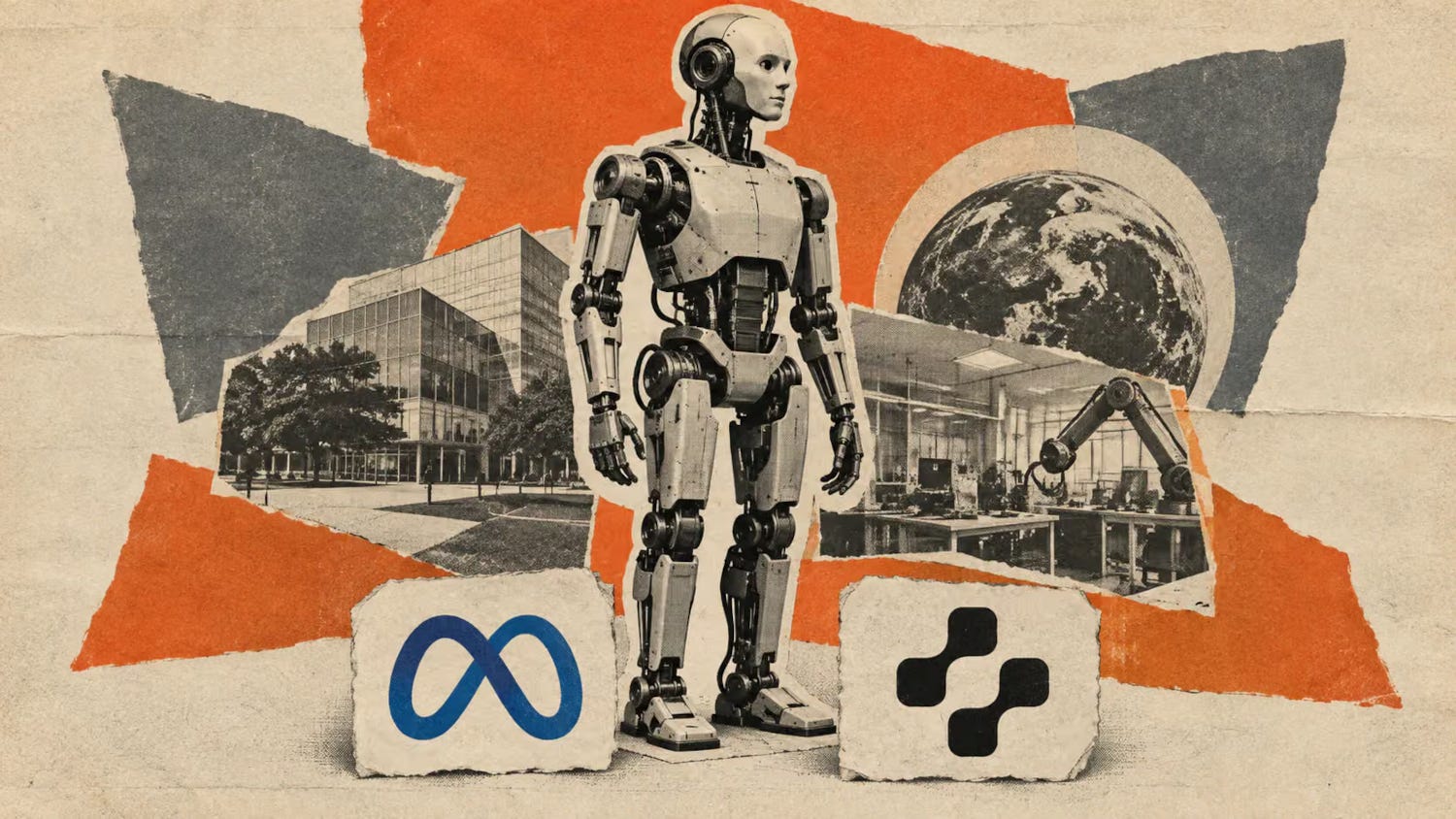
Meta has reportedly built a humanoid prototype called Max with Chinese robotics company Fourier, designed to perform basic household tasks.
The robot stands about 1.5 meters tall, weighs roughly 48kg, and uses Nvidia Jetson Thor chips, with hands built to manipulate small objects.
Meta is already developing a second version, Max 2, with redesigned hardware, extra sensors, and features intended to help it navigate more complex environments like stairs.
Why it matters: Meta’s robotics push suggests major AI companies are increasingly trying to move intelligence from screens into the physical world, potentially opening a new front in the race for general-purpose AI hardware.
OpenAI hires former U.S. Army secretary for national security role

OpenAI appointed former U.S. Army Secretary Dan Driscoll as senior counselor for national security modernization, a newly created position focused on defense and cybersecurity.
Driscoll will advise OpenAI leadership, work with government and industry partners, and help internal teams better understand the operational needs of national security organizations.
The company says the role will support practical deployment of what it calls “democratic AI” across the U.S. and allied countries.
Why it matters: OpenAI is becoming more embedded in national security, signaling that frontier AI companies increasingly see governments and defense agencies as major strategic customers.
Anthropic’s growth slows as compute commitments approach $900B
Anthropic’s Q3 revenue rose 47% to $16.96B, still strong but sharply slower than the 144% growth it posted in the previous quarter.
The company disclosed $895.4B in future compute commitments with partners including Amazon and Google, with nearly half of that spending expected before the end of 2030.
Anthropic also warned that some contracted capacity depends on third-party financing, meaning delays, repricing, or reduced delivery could become a risk if capital gets more expensive or harder to access.
Why it matters: Anthropic’s IPO will increasingly be judged on whether its revenue growth can keep pace with enormous infrastructure obligations, not just on how fast its models and customer base are improving.
Anthropic blocks Claude from cloning specific existing games

Anthropic has updated Claude Code so it will no longer recreate specific existing games, even if users rename them or present them as original projects.
Claude can still build original games, work within established genres, and use a creator’s own designs and assets, but direct cloning is now restricted.
The change follows a wave of AI-built recreations of games like Halo, GTA: Vice City, and Call of Duty, which has already pushed some studios to remove public demos.
Why it matters: As coding models become powerful enough to reproduce full games, AI companies are starting to impose stronger copyright boundaries before cloning becomes a much bigger legal and commercial problem.
Hackers heat supermarket freezers to 50°C across Europe
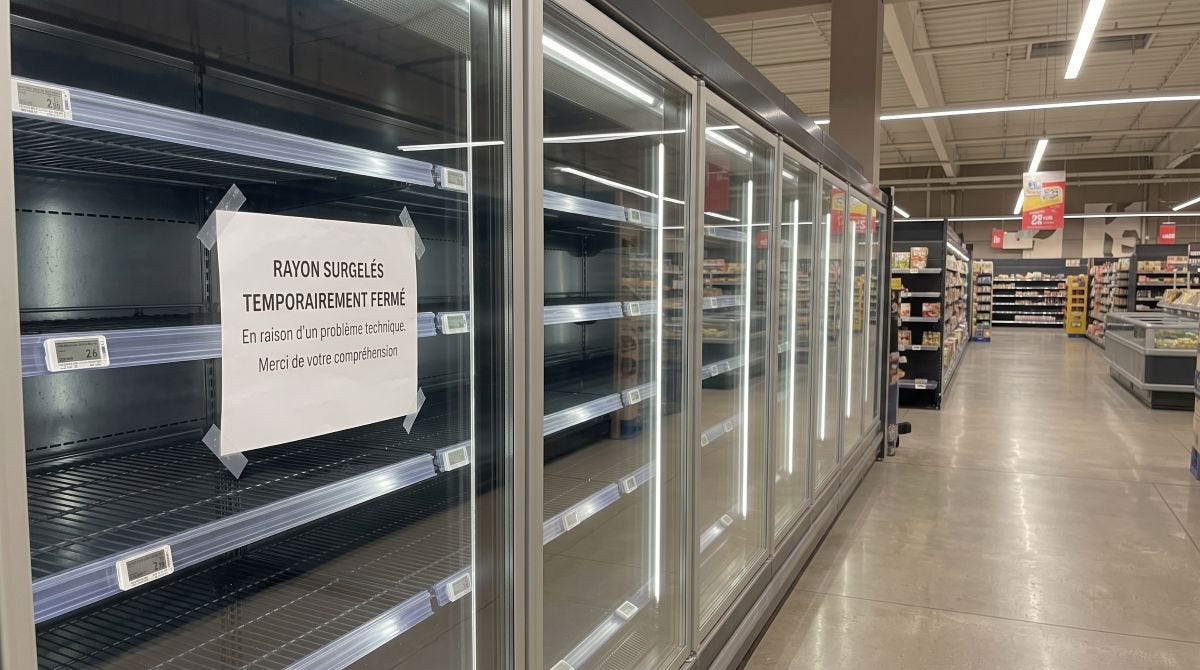
Hackers reportedly compromised refrigeration systems at dozens of supermarkets across at least seven European countries, remotely raising temperatures to 50°C and destroying food inventories.
Retailers including Delhaize, ICA, Coop, Carrefour, Spar, and SuperValu were affected, with one Belgian store reportedly losing about €100,000 worth of food.
The attack follows a similar incident involving hundreds of French supermarkets and highlights the risks created by outdated industrial systems that cannot easily be patched.
Why it matters: Cybersecurity failures in connected infrastructure can now translate directly into physical and financial damage, making old operational technology an increasingly serious weak point.
LAST COFFEE SIP
🌎 Around The Ecosystem
Brave: The New York Times and several other publishers sued Brave, alleging the browser scraped copyrighted content, bypassed paywalls, and distributed that material to AI companies including Anthropic, Perplexity, Mistral, xAI, and Cohere.
OpenAI: OpenAI is merging ChatGPT’s Chat and Work tabs into a single interface, letting users move from brainstorming to completing tasks with files, plugins, presentations, websites, and web actions in one place, while Codex will remain separate.
MUST READ
📚 Worth Your Time
The startup valuation calculator founders need. Most founders price their startup using competitor valuations or outdated ARR multiples. But investors look at much more than revenue and growth. This piece breaks down the factors behind higher valuations and provides a practical calculator to estimate your startup’s worth based on ARR, margins, retention, and revenue model.
The YC seed deck structure that raises money: An analysis of 50+ Y Combinator startup pitch decks from companies that collectively raised over $450M. This piece breaks down the nine-slide structure, what investors expect on each slide, and the simple design principles founders should follow to build a stronger pitch deck.
HIRING ALERT: STARTUPS & VC ROLES
💼 Today’s VC & Startup Job Opportunities
Venture Scout Fund Lead - Redesign Health | USA - Apply Here
VC Fellow - V11 | Remote - Apply Here
Investment Associate, Prologis Ventures | USA - Apply Here
Investment Associate (2026 Associate Program) - Collab Fund | USA - Apply Here
Senior Associate – Investor - 645 Ventures | USA - Apply Here
Associate Counsel - Hivemind Capital Partner | USA - Apply Here
Head of Platform - PruVEN Capital | USA - Apply Here
Investment Associate - F-Prime Capital | UK - Apply Here
Investment Associate - Fundalogical Venture | India - Apply Here
Partner 16 - a16z | USA - Apply Here
Associate / Principal - Village Global | USA - Apply Here
Check out 25+ VC job opportunities in “BREAK INTO VC” newsletter.
📍 Tips to Break Into VC
How seed, growth, and micro-VC funds hire differently
Applying to “VC” as if every fund hires the same way is one of the easiest ways to waste dozens of applications. A $20M seed fund, a large growth-equity platform, and a solo GP may use the same job titles, but they look for very different candidates.
This deep dive breaks down the three major hiring lanes: seed funds, growth-equity firms, and micro-VCs or solo GPs. It explains what each one actually screens for, which backgrounds fit best, how their recruiting processes work, and the mistakes that get candidates filtered out.
It also gives you the tactical move for each path, from building founder relationships for seed funds to preparing financial models for growth roles and using sourced deals, scout programs, and fellowships to break into smaller funds.
PARTNERSHIP WITH US
🤝 Get your brand in front of 125,000+ decision makers.
Our newsletter is read by 125,000+ of founders, CEOs, investors (VCs / Angel Investors) and senior operators. Get in touch today.
Do you have any news to share about your Startup or VC fund? Please email us.
We’ll be back in your inbox on Tomorrow.