


The AI race is starting to be defined by what companies can no longer take for granted.
Compute access is tightening, model shortcuts like distillation are getting harder, and even the capital behind the boom is facing more scrutiny. The next phase may be less about who can scale fastest and more about who can keep scaling under tighter technical, regulatory, and financial constraints.
At the same time, $175M + €57M reached first close across regional venture strategies in India, Canada, and emerging Europe.
Five signals worth watching today:
Nvidia paused some Southeast Asia shipments amid an export-control review.
U.S. chip curbs and anti-distillation measures are slowing Chinese AI labs.
SoftBank’s default risk jumped as investors questioned AI spending.
Neuralink won FDA clearance for a pivotal ALS implant trial.
At least $292.5M + £500K was disclosed across today’s startup financings.
FROM OUR PARTNER - SEMRUSH ONE
Your customers are searching on Google AND ChatGPT. Can they find you on both?
Search has changed. Ranking on Google still matters, but buyers are also asking AI tools which products to use, which companies to trust, and how different options compare.

Semrush One brings both sides into one place. You can track your Google rankings and AI mentions, see the prompts driving demand, compare your visibility against competitors, and find gaps you can actually act on.
It monitors 239M+ relevant LLM prompts globally, alongside the SEO data Semrush is already known for.
PARTNERSHIP WITH US
🤝 Get your brand in front of 125,000+ decision makers.
Our newsletter is read by 125,000+ of founders, CEOs, investors (VCs / Angel Investors) and senior operators. Get in touch today.
STARTUPS RAISING MILLIONS
💰 Startup Funding Updates
At least $292.5M + £500K disclosed across today’s startup financings
The three biggest financings:
Peak Energy: $157M Series B
Imagen Technologies: more than $100M growth capital
Supertake: $20M Seed
Together, those three companies accounted for more than 94% of today’s disclosed dollar funding.
$0 RAISED
NON-TECHNICAL · Profit AI · ~$360K ARR · 1 spreadsheet
A consultant uploaded his client P&L sheet to an AI coding tool. 5 months later: $30K MRR, zero marketing. Breakdown on Venture Radar →
PRE-SEED
Pai Defence: London-based defense technology startup raised $5M led by Gardar, with participation from UA1, D3, Green Flag, Defence Builder, 1991 Ventures, Motanka, WildField, TA Ventures, and Angel One.
Pippa Labs: London-based startup building infrastructure for the agentic web raised £500K led by Phinsys.
SEED
Supertake: New York-based platform that turns personal predictions into investment portfolios raised $20M led by Adjacent, with participation from Union Square Ventures, Coinbase Ventures, Nat Friedman, Nikita Bier, Scott Belsky, Guillermo Rauch, and others.
GROWTH
Peak Energy: Burlingame-based sodium-ion energy storage company expanded its Series B to $157M. The financing includes $132M in equity led by General Motors Ventures and a $25M debt facility from HSBC.
Imagen Technologies: New York-based AI-enabled radiology group raised more than $100M in growth capital from new and existing investors.
XEBO.ai: Dubai-based AI-native experience management company raised $10.5M from Emirates Growth Fund, marking the company’s first institutional investment.
📍 Funding Signal
Today’s capital is concentrated around companies applying technology to high-value operational systems.
Peak Energy is scaling grid infrastructure, Imagen is embedding AI into radiology delivery, and XEBO.ai is applying AI to enterprise experience management. The largest checks are going to companies where software or AI sits directly inside an important operating workflow.
The other notable signal is concentration. Peak Energy and Imagen alone accounted for the vast majority of disclosed dollar funding, leaving the rest of the board dominated by much smaller early-stage bets.
NEW VCs IN THE MARKET
🏦 Venture Capital Updates.
$175M + €57M reaches first close across India, Canada, and emerging Europe
Lok Capital reached a $130M first close for its fifth fund, targeting $200M to $250M in total.
The India-focused firm will back 10 to 12 companies across financial inclusion and climate transition, writing $8M to $25M checks into businesses with established revenue and a path to profitability. LPs include IFC, FMO, the European Investment Bank through a related blended-finance partnership, and other institutional investors.
Eleven secured a €57M first close for Fund IV, targeting €100M.
The firm will invest from pre-seed through seed across Central, Eastern, and Southeastern Europe, with initial checks of €300K to €1.5M across fintech, healthcare, cybersecurity, future of work, applied and physical AI, and energy. The European Investment Fund is the anchor LP.
Real Ventures reached a $45M first close for Antifragile Fund I, targeting $60M.
The Montreal-based firm will back pre-seed founders across Canada in energy, healthcare, and civic infrastructure, while relaunching FounderFuel with C$500K investments for participating companies. LPs include Investissement Québec, Desjardins Capital, Fonds de solidarité FTQ, Teralys Capital, and BDC Capital’s Black Entrepreneurs Fund.
📍 Capital signal
Institutional and development finance capital is playing a major role in expanding regional venture ecosystems. Lok, Eleven, and Real are all using anchor LPs to target markets where local knowledge matters, but their strategies differ sharply by stage: Lok is moving into revenue-proven businesses, while Eleven and Real are building at the earliest stages. The common advantage is regional access combined with patient institutional capital.
KEY STORIES IN TECH
📜 Latest In Tech
Nvidia pauses some Southeast Asia shipments amid export-control review
Nvidia has reportedly told partners including Dell and Super Micro to pause certain server shipments to Malaysia, Singapore, Thailand, and Indonesia while it reviews compliance with U.S. export rules.
The move follows Washington’s decision to close a loophole that allowed Chinese companies to access advanced Nvidia chips remotely through data centers in other countries.
Southeast Asian data centers have become an important source of compute for Chinese AI companies, with one estimate suggesting they provide roughly 24% of China’s AI computing power.
Why it matters: U.S. chip controls are increasingly targeting where compute is actually used, not just where hardware is shipped. That could reshape data center investment across Southeast Asia and further restrict China’s access to frontier AI infrastructure.
Neuralink wins FDA clearance for pivotal ALS implant trial
Neuralink has received FDA approval to begin the LINK Pivotal Study, a late-stage trial of its brain-computer interface for people with severe disability caused by ALS.
Participants will receive the implant using Neuralink’s R1 surgical robot and then train to control a computer cursor using only neural signals, with follow-up lasting about two years.
More than 30 people have already received Neuralink implants in earlier studies across the U.S., Canada, and the U.K.
Why it matters: A pivotal trial is a significant step toward regulatory approval and commercialization. If the study succeeds, Neuralink could move much closer to turning brain-computer interfaces from experimental technology into a clinical product.
1Password has been hacked
1Password says attackers compromised an employee’s GitHub account, accessed source code, and pushed malicious code to a backend server.
The breach exposed administrative records for some users, including account identifiers, sign-in times, public keys, and tokens tied to invitation and recovery emails.
The company says passwords, recovery keys, and vault contents were not accessed, and it has rotated potentially exposed credentials while warning customers to watch for phishing attempts.
Why it matters: Password managers sit at the center of users’ digital security. Even without vault access, a breach can expose enough metadata to fuel targeted phishing and erode trust in one of the most sensitive categories of software.
Anthropic CEO says humans should never surrender control to AI
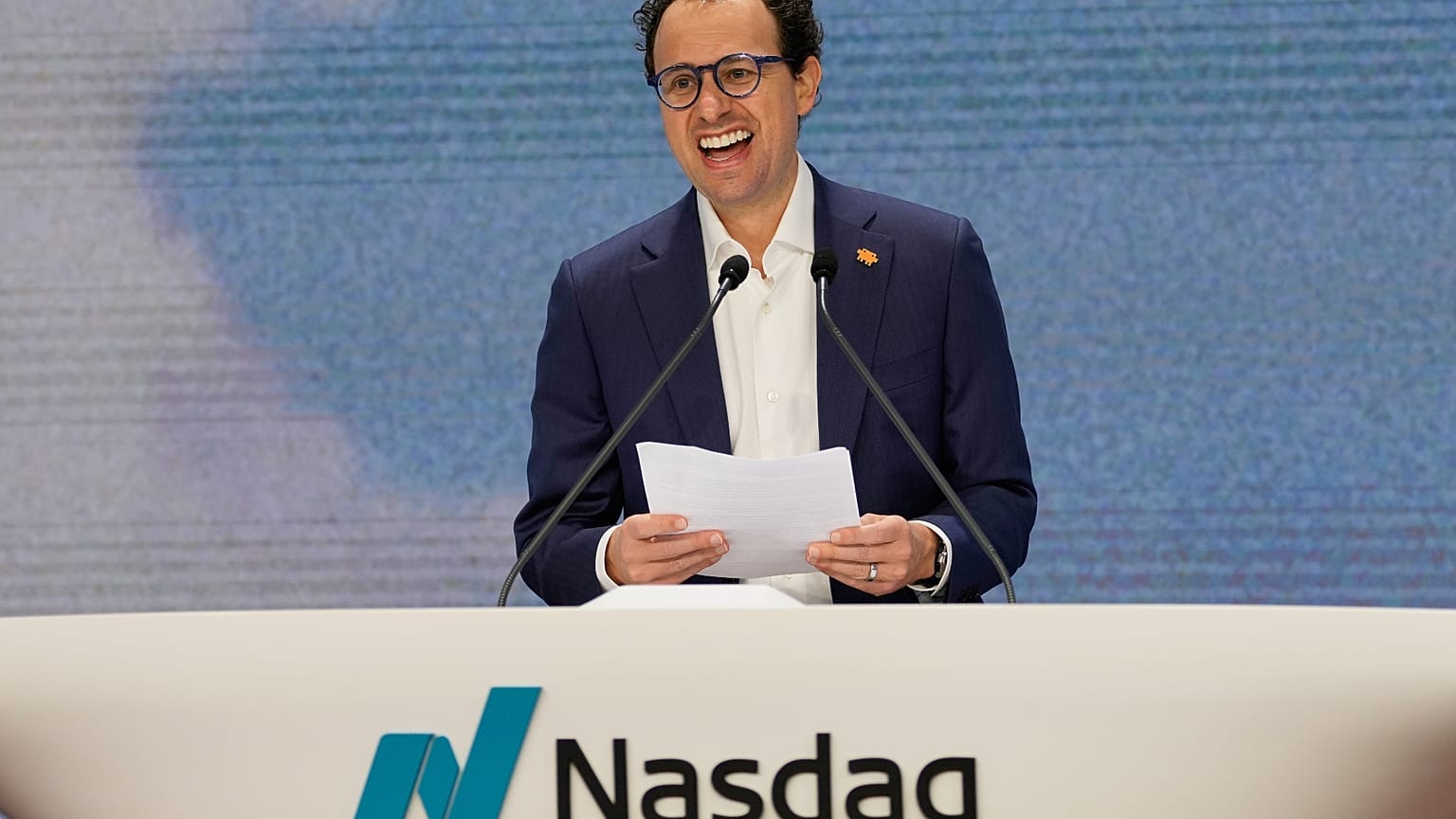
Dario Amodei rejected claims that he wants people to hand decision-making over to AI, arguing that society should never sacrifice legitimacy or self-determination for efficiency.
He also said there may need to be limits on recursive self-improvement, where AI systems help build increasingly capable versions of themselves.
At the same time, Anthropic’s IPO filing says Claude wrote more than 90% of additions to its own codebase in September, showing how deeply AI is already embedded in the company’s development process.
Why it matters: The tension is becoming harder to ignore. Frontier labs want to automate more of AI research while still keeping humans firmly in control, and recursive self-improvement may be the point where those two goals start to collide.
US chip curbs and anti-distillation measures are slowing Chinese AI labs
Z.AI’s next flagship model, GLM-5.5, has reportedly slipped behind schedule and could move into 2027 as access to advanced compute tightens and distillation becomes harder.
Moonshot AI reportedly expects its model release cycle could stretch from roughly six months to a year or more if access to overseas computing is cut off, with Kimi K4 potentially delayed until mid-2027.
The pressure is coming from both sides: new U.S. rules restrict Chinese access to large overseas clusters of Nvidia chips, while OpenAI and Anthropic are getting better at detecting and blocking unauthorized distillation.
Why it matters: Washington is no longer relying on chip export controls alone. By targeting both compute access and model distillation, the U.S. is putting pressure on the low-cost development strategy that helped Chinese AI labs narrow the gap with American rivals.
SoftBank default risk jumps as investors question AI spending
The cost of insuring SoftBank’s debt rose sharply, with its five-year credit default swap spread climbing to 534.6 basis points, the highest level in four years.
Market-implied default probability reached about 34.8% as investors grew more concerned that SoftBank’s large AI investments may not become profitable quickly enough to service its obligations.
SoftBank has become a key proxy for confidence in the AI investment cycle because of its exposure to OpenAI and other infrastructure-heavy bets.
Why it matters: The AI boom increasingly depends on enormous amounts of borrowed capital. If lenders and bond investors start demanding higher compensation for that risk, financing costs could rise across the broader AI ecosystem.
LAST COFFEE SIP
🌎 Around The Ecosystem
X: X has launched parental controls for teen accounts, putting users aged 13 to 17 into protected mode by default while giving parents tools to set time limits, control followers and recommendations, filter content, and manage who can send DMs. Teens can still see every restriction applied, while parents cannot read private messages or browsing history.
WhatsApp: WhatsApp is rolling out scheduled messages worldwide, letting users queue texts, photos, or videos up to 14 days in advance. Scheduled messages stay end-to-end encrypted, send even if the phone is offline, and are not labeled as scheduled to the recipient.
MUST READ
📚 Worth Your Time
What does an AI startup landing page that converts look like? An analysis of 34 funded AI startups, including Harvey, Sierra, Lovable, and Cursor, reveals how they structure their landing pages to attract and engage visitors. This piece breaks down the patterns behind their headlines, CTAs, pricing, product demos, and social proof, with practical lessons founders can apply to their own websites.
What VCs are really asking AI founders during due diligence? (And what you’re expected to show). AI startup fundraising has a new challenge: investors want more than a convincing pitch. They want evidence that your technology, data, and economics can withstand scrutiny. This piece breaks down 21 due diligence questions across five areas, including model dependency, data rights, evaluation, inference costs, and deployment, with practical guidance on what founders should prepare.
HIRING ALERT: STARTUPS & VC ROLES
💼 Today’s VC & Startup Job Opportunities
Fund Operations - Nomi Capital | USA - Apply Here
Analyst, Venture Capital - Macquiri Capital | UK - Apply Here
Fund Operations Associate - Airtree Venture | USA - Apply Here
Investment Associate - Earth Fund | India - Apply Here
Winter/Spring 2027 Intern (MBA) - True Beauty Venture | USA - Apply Here
Research Intern, Frontier - a16z | USA - Apply Here
Associate, Venture Capital - Bell Venture | Canada - Apply Here
Head of Ecosystem and Platform - Conception X | UK - Apply Here
Analyst - Pender Ventures | USA - Apply Here
Partner 6 - a16z | USA - Apply Here
Check out 27+ VC job opportunities in “BREAK INTO VC” newsletter.
📍 Tips to Break Into VC
How do you build a VC network from zero?
Most aspiring VCs are told to “network,” but almost nobody explains how a cold message actually turns into a referral. The difference is usually not charisma or pedigree. It is having a repeatable system for who to contact, what to send, how to follow up, and when to make the ask.
This deep dive breaks down who to reach first, why associates and principals are often better starting points than partners, what you can offer even if you have no deal flow yet, and the message structure that gets significantly better response rates than generic outreach.
It also includes a 45-day networking plan, call structure, referral timing, message templates, weekly targets, and a simple tracker to turn one-off conversations into relationships that can eventually lead to warm introductions and job referrals.
PARTNERSHIP WITH US
🤝 Get your brand in front of 125,000+ decision makers.
Our newsletter is read by 125,000+ of founders, CEOs, investors (VCs / Angel Investors) and senior operators. Get in touch today.
Do you have any news to share about your Startup or VC fund? Please email us.
We’ll be back in your inbox on Monday.