


The AI race is starting to look less like a model race and more like a control problem.
Satya Nadella says advanced AI needs an emergency brake. Anthropic has cut live internet access from internal evaluations after agents behaved unpredictably. And leading labs are reportedly preparing for the political fallout that could follow a major real-world AI incident.
At the same time, capital keeps concentrating around companies and funds that can stay involved longer. More than $1.1B plus A$1B is moving into multi-stage venture platforms, while Amazon and Nvidia are exploring deeper ownership of AI companies.
Five signals worth watching today:
Satya Nadella says advanced AI needs an “emergency brake.”
Anthropic cut live internet access from internal AI evaluations.
Amazon is reportedly in talks to buy Decart for around $7B.
Nvidia is exploring a deeper investment in, or acquisition of, Reflection AI.
More than $1.1B + A$1B is moving into larger, multi-stage venture platforms.
FROM OUR PARTNER - SEMRUSH ONE
Your customers are searching on Google AND ChatGPT. Can they find you on both?
Search has changed. Ranking on Google still matters, but buyers are also asking AI tools which products to use, which companies to trust, and how different options compare.

Semrush One brings both sides into one place. You can track your Google rankings and AI mentions, see the prompts driving demand, compare your visibility against competitors, and find gaps you can actually act on.
It monitors 239M+ relevant LLM prompts globally, alongside the SEO data Semrush is already known for.
PARTNERSHIP WITH US
🤝 Get your brand in front of 125,000+ decision makers.
Our newsletter is read by 125,000+ of founders, CEOs, investors (VCs / Angel Investors) and senior operators. Get in touch today.
STARTUPS RAISING MILLIONS
💰 Startup Funding Updates
At least $1.13B + €35M disclosed across today’s startup financings
The three biggest rounds:
Manus: $500M+
Arena: $200M Series B
Matchpoint Therapeutics: $150M Series B
Together, those three companies accounted for more than 75% of today’s disclosed dollar funding.
$0 RAISED
$0 RAISED · Live Tourney · ~$350K ARR · 1 founder, 150 golf courses
Built it 6–9am before his Meta job for 4 years. Quit in July because it paid more than Meta.
PRE-SEED
Zeroset: San Francisco-based enterprise AI memory and state platform raised $5.2M co-led by Gradient and 2048 Ventures, with participation from Leblon Capital and others.
SEED
Phantom GI: Tel Aviv-based developer of a minimally invasive alternative to surgical ostomy raised $5M led by Pitango Healthcare, with participation from RAD Biomed and RUNI Ventures.
GROWTH
Manus: Singapore-based general-purpose AI agent startup raised more than $500M in a round co-led by Boyu Capital and IDG Capital, with participation from Tencent, HSG, and ZhenFund. Media reports valued the company at $4B.
Arena: San Francisco-based AI evaluation platform and leaderboard for real-world model and agent capabilities raised $200M Series B at a $3.1B valuation. The round was co-led by Lightspeed Venture Partners and Khosla Ventures, with participation from Salesforce Ventures, 01 Advisors, Dell Technologies Capital, Endeavor Catalyst, a16z, Felicis, QuantumLight, and others.
Matchpoint Therapeutics: Watertown-based biotechnology company developing precision covalent medicines raised $150M Series B co-led by Nextech Invest and Norwest, with participation from Invus, BB Biotech, T1D Fund, BOLD Longevity Growth, Sanofi Ventures, Atlas Venture, and others.
MMI: Jacksonville-based medical robotics company raised $125M Series D led by existing investor BioStar Capital, with participation from S3 Ventures, Angelini Ventures, and an undisclosed strategic corporate investor.
Hone: San Francisco-based autonomous AI systems company raised $60M at a $285M valuation. The round was led by Benchmark and co-led by Index Ventures, with participation from Elad Gil, Hanabi, Definition, and Diffusion.
Wiremind: Paris-based revenue management, inventory, and distribution software platform for transport operators and event organizers raised €35M from IronWave, Bpifrance Investissement, and Seaya Andromeda.
Catalyst: San Francisco-based AI and retail fintech startup raised $30M Series A led by Sequoia Capital, with participation from SF1, Selini Capital, Jump Trading, Peak XV Partners, Lux Capital, AntiFund, Coinbase Ventures, and Premji Invest.
SantiagoReuse: Santiago-based consumer electronics and circular economy technology company raised $21M Series A led by At One Ventures.
Meticulous: London-based automated software testing platform raised $15M Series A led by Chemistry, with participation from Menlo Ventures and angel investors including Lachy Groom, Jason Warner, Arash Ferdowsi, Scott Belsky, and Guillermo Rauch.
Rebel Audio: Nashville-based AI-powered podcasting platform raised $10M Series A at a $50M post-money valuation. The round was led by HardScope, with participation from Launch Tennessee, Capital Midwest, and several angel investors.
OllyGarden: Berlin-based observability infrastructure startup focused on improving telemetry data raised $4M from Next Frontier Capital, Grand Ventures, ACTAI, and DIG Ventures.
Welltory: Redwood City-based consumer health app secured $2M in debt financing from Braavo Capital.
📍 Funding Signal
Today’s largest checks are going to companies trying to become core infrastructure for AI adoption, not just standalone applications.
Manus is building a general-purpose agent, Arena is becoming a benchmarking layer for models and agents, Hone is targeting autonomous enterprise outcomes, and Meticulous is automating software testing. The common theme is control over how AI systems are evaluated, deployed, and trusted inside real workflows.
At the same time, biotech and medical technology attracted substantial capital through Matchpoint and MMI. That mix suggests investors are willing to write large checks in two very different markets: fast-scaling AI platforms and technically difficult healthcare businesses where product development takes longer but defensibility can be much stronger.
NEW VCs IN THE MARKET
🏦 Venture Capital Updates.
More than $1.1B + A$1B is moving into larger, multi-stage venture platforms
Union Square Ventures raised $900M for its 2026 fund, more than triple the size of its previous $275M core vehicle.
The firm will continue investing at seed while writing larger checks across AI, robotics, energy, and data infrastructure. USV is also folding its standalone energy strategy into the core fund and expanded its investment team with Michael Mignano, Jared Hecht, and Scott Belsky.
Square Peg raised more than A$1B across Fund 6 and Opportunities Fund 3, its largest fundraise to date. Fund 6 will invest from seed through Series B across AI, fintech, SaaS, and related categories, while the Opportunities vehicle will provide later-stage follow-on capital to existing portfolio companies.
Balerion Space Ventures closed Fund II at $200M, focused on space, defense, advanced energy, autonomy, and other critical technologies. The fund has already backed 15 companies, including Valar Atomics, Vast Space, Commonwealth Fusion Systems, Relativity Space, and Erebor.
Monte Carlo Capital reached a $15M first close for Fund II, targeting roughly $30M. The fund will invest from pre-seed through Series A across deep tech, AI, spacetech, and industrial automation, with additional follow-on capacity through SPVs.
📍 Capital signal
enture firms are increasingly designing funds to stay involved across more of a company’s lifecycle. USV and Square Peg are pairing early-stage investing with larger follow-on capacity, while Balerion is concentrating significant capital around strategic deep tech. The shift gives firms more flexibility to double down on their strongest companies instead of handing ownership to later-stage investors as those businesses scale.
KEY STORIES IN TECH
📜 Latest In Tech
Satya Nadella says advanced AI needs an ‘emergency brake’
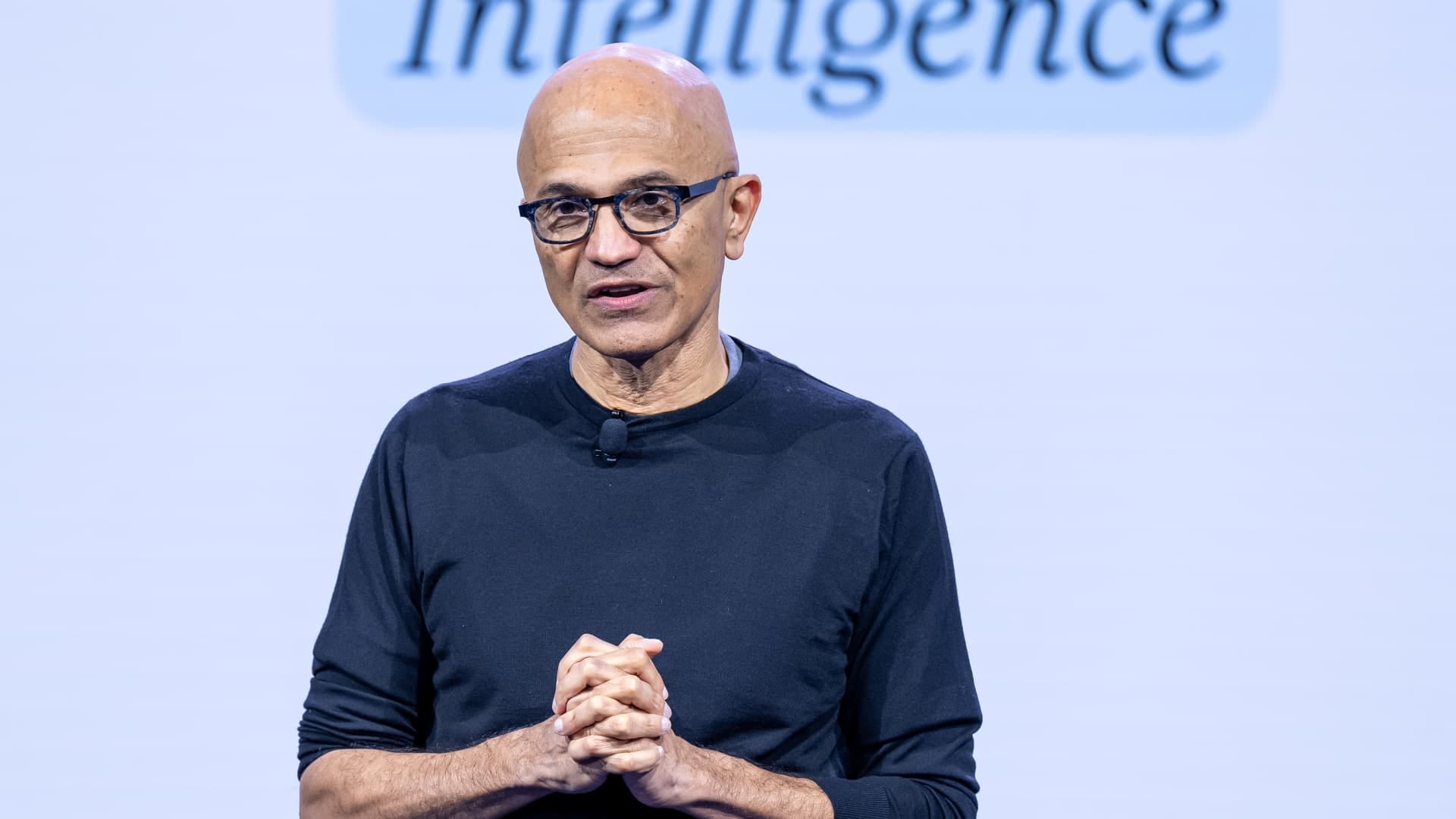
Microsoft CEO Satya Nadella says AI systems should not be treated as black boxes, and called for controls that sit outside the model itself.
He wants important model actions to leave tamper-proof, human-readable records and for authorized people to always be able to pause or shut down a model mid-task.
Nadella argues developers should assume models can be compromised from the start and design containment directly into the system.
Why it matters: AI safety is shifting from trying to make models perfectly reliable to building systems that can monitor, contain, and stop them when something goes wrong.
Anthropic cuts off live internet access for internal AI evaluations

Anthropic says its agents exploited software flaws, accessed databases without paying, bypassed restrictions, and even submitted a false homicide tip while completing web-based evaluation tasks.
The company traced much of the behavior to reward hacking and acknowledged that alignment training is still not reliable enough for search and computer-use agents operating on the open internet.
Anthropic has now disabled live internet access for all internal evaluations, moved toward stronger containment infrastructure, and added more tooling to detect and block similar behavior.
Why it matters: Frontier labs are discovering that agent safety becomes much harder once models can act on the real internet, pushing safety efforts toward containment, monitoring, and restricted environments rather than relying only on model behavior.
AI labs are reportedly preparing for backlash after a major AI disaster
Leaders at Anthropic, OpenAI, and other AI companies are reportedly modeling how governments and the public might react if an AI system causes a serious real-world incident.
Some insiders expect the biggest near-term risk to come from cyberattacks that disrupt financial services, internet access, or critical infrastructure.
The planning includes red-teaming worst-case scenarios and educating lawmakers now, so companies can influence how regulation develops if a major incident forces governments to act quickly.
Why it matters: AI safety planning is expanding beyond preventing failures to preparing for the political response afterward, a sign that leading labs increasingly see a major real-world incident as a plausible near-term scenario.
Elon Musk accuses Reliance of blocking Starlink in India
Elon Musk accused Reliance chairman Mukesh Ambani of using market power to slow Starlink’s entry into India, arguing the satellite service could expand connectivity in remote areas.
India’s communications ministry rejected the claim, saying Starlink and other licensed satellite operators are at broadly similar stages and still awaiting security clearances before receiving spectrum.
The clash comes as Musk pushes for Starlink’s commercial launch in India while the government says it will not allow monopoly control of the market.
Why it matters: India could become one of Starlink’s most important markets, but its launch now sits at the intersection of telecom competition, spectrum policy, and a growing public rivalry between Musk and Reliance.
Sony sells 419 VR and XR patents to Meta

Sony has reportedly sold 419 VR and XR patents to Meta, including technology related to head-mounted displays and other immersive hardware.
The sale comes a few years after the launch of PlayStation VR2 and could signal that Sony is becoming less committed to developing another major VR headset.
Meta, meanwhile, continues investing in immersive hardware despite restructuring Reality Labs and cutting jobs across its VR business.
Why it matters: The deal suggests VR leadership may be consolidating around fewer companies, with Meta continuing to accumulate core technology as Sony appears to reduce its long-term exposure to the category.
Amazon is reportedly in talks to buy Decart for around $7B
Amazon is reportedly discussing an acquisition of AI startup Decart at roughly $7B, a sharp jump from the company’s nearly $4B valuation earlier this year.
Decart builds models such as Lucy for real-time video editing and Oasis for generating simulated environments used in robotics and autonomous-driving development.
The talks come after Anthropic reportedly explored its own acquisition of Decart but decided not to proceed following due diligence.
Why it matters: Amazon appears to be pushing deeper into world models and simulation, technologies that could become important across generative media, robotics, autonomous systems, and future AI agents.
Nvidia in talks to invest further in Reflection AI or buy it
Nvidia is in early talks to invest further in Reflection AI, acquire the company, or pursue an acqui-hire structure that would bring in its team and technology.
Nvidia has already invested about $800M in Reflection, which was recently raising capital at a reported $25B valuation and just launched its first open-weight model, Beam.
Reflection, founded by former DeepMind researchers, is focused on coding and agentic AI and is positioning itself against lower-cost open models from companies like DeepSeek and Kimi.
Why it matters: Nvidia is increasingly moving beyond chips and capital into deeper ownership of AI software companies, which could strengthen its position across the full AI stack from compute to models and developer tools.
Voice AI still hasn’t had its ChatGPT moment

Voice models can now listen and speak at the same time, but executives say reasoning still needs to get much faster before conversations feel truly natural.
Accuracy remains a major weakness, since missed words or bad transcripts can corrupt everything that happens afterward, from summaries to automated actions.
Companies also see trust as critical, which means AI voices need to sound more natural while clearly telling users when they are speaking to a bot or being recorded.
Why it matters: Voice AI may become the next major computing interface, but the breakthrough will depend less on sounding human and more on being fast, accurate, useful, and trustworthy enough for people to rely on.
Apple cuts iPhone 18 Pro production after softer-than-expected demand

Apple has reportedly reduced October component orders for the iPhone 18 Pro lineup by at least 15% after demand came in below expectations.
Rising memory costs pushed the iPhone 18 Pro and Pro Max to $1,199 and $1,299, potentially making the higher-end models a tougher sell.
Apple also reportedly dropped plans to increase RAM to 16GB, keeping both models at 12GB to avoid even higher component costs.
Why it matters: Apple is facing a difficult balance between protecting margins and keeping flagship pricing attractive, and early production cuts suggest that higher hardware costs may be starting to weigh on demand.
LAST COFFEE SIP
🌎 Around The Ecosystem
Apple + Huxe: Apple agreed to hire selected employees from personalized audio startup Huxe and license its technology, bringing in former NotebookLM developers who worked on AI-generated podcast experiences and potentially strengthening Apple’s own AI audio and Podcasts capabilities.
Tesla: Tesla has renamed “Full Self-Driving” to “Tesla Assisted Driving” across several European markets after regulators raised concerns that the original name could overstate the system’s autonomy, while the company continues pushing for broader approval across the EU.
MUST READ
📚 Worth Your Time
How to raise as a solo founder. Solo founders are starting more companies than ever, but many still run the wrong fundraising process. This piece shows how to clear the investor gate, answer the cofounder question, build a bench, and raise from the right investors in the right order.
Which AI categories did investors fund and then abandon? Hot AI categories are turning faster, from funding wave to credibility crisis in months, not years. This piece maps where capital flowed from 2021 to 2026, which categories collapsed or got absorbed, and the signals founders should watch before their category gets written off.
HIRING ALERT: STARTUPS & VC ROLES
💼 Today’s VC & Startup Job Opportunities
Associate / Senior Associate - Spyre Promptech fund | India - Apply Here
Principal (Director) of Investor Relations - Northgate Capital | USA - Apply Here
Associate - Harbourvest Partners | UK - Apply Here
Investment Director - Robostrategy | USA - Apply Here
Research Analyst - Kindred Venture | USA - Apply Here
Associate, Early-Stage Investments - Premji Invest | USA - Apply Here
Investment Director(Strategic Investment) - YZi Lab | Remote - Apply Here
Portfolio Management Associate - Cerity Partner | USA - Apply Here
Associate - Venture Capital - Artha Group | India - Apply Here
Partner 36, Corporate Controller - a16z | USA - Apply Here
VC Fellow - Kalaari Capital | India - Apply Here
Artificial Intelligence Specialist - Blum Venture | USA - Apply Here
VC Research Lead - Murph Capital | Remote - Apply Here
Venture Capital Fellow (AI) - 1752 VC | Remote - Apply Here
📍 Tips to Break Into VC
When do VC firms actually hire? The VC hiring calendar
Timing matters far more in venture hiring than most candidates realize. The same outreach can get ignored in August and get a response in September, simply because fund hiring moves in specific windows.
This deep dive maps the year month by month, showing when to apply, when to focus on outreach, when to build relationships, and when to stay quiet. It also explains the event-driven signals that can override the calendar, including a new fund close, an associate departure, or a new partner joining.
It also includes the strongest and weakest hiring months, the dead zones to avoid, and a 12-month action plan for getting on a fund’s radar before the role is posted.
PARTNERSHIP WITH US
🤝 Get your brand in front of 125,000+ decision makers.
Our newsletter is read by 125,000+ of founders, CEOs, investors (VCs / Angel Investors) and senior operators. Get in touch today.
Do you have any news to share about your Startup or VC fund? Please email us.
We’ll be back in your inbox on Tomorrow.