

AI is getting cheaper, bigger, and harder to trust.
That tension is starting to create entirely new markets around safety, privacy, infrastructure, and enterprise control. At the same time, investors are still pouring billions into the companies and funds positioned to capture the next phase of adoption.
Here’s what matters today:
AIUC raised $40M to build a safety standard for AI agents.
OpenAI is reportedly exploring funding at a $1.2T valuation.
Salesforce and Nvidia launched a new enterprise reasoning model.
U.S. data centers could become one of the world’s biggest natural gas consumers.
More than $1.85B closed across new AI and digital health funds.
FROM OUR PARTNER - SEMRUSH
Your buyers don’t just search Google anymore.
I’ve been looking at how search is changing, and this is probably the biggest shift marketers need to pay attention to.

People still use Google, but they’re also discovering products through ChatGPT, AI Overviews, and other AI tools. Semrush now lets you track both from one place.
You can see where your brand ranks in search, how often it appears in AI answers, where competitors are gaining visibility, and what may be holding your site back.
So instead of treating SEO and AI discovery as two separate strategies, you can manage both together.
If organic growth matters to your business, this is worth checking before your competitors figure it out first.
STARTUPS RAISING MILLIONS
💰 Startup Funding Updates
At least $768M + €543.8M + £1.65M disclosed across today’s startup rounds
The three biggest rounds:
Open Cosmos: €300M
Exein: $270M
Euclyd: €200M Series A
Together, those three companies accounted for more than €500M plus $270M of today’s disclosed funding.
PRE-SEED
AcademyAI: London-based AI skill assessment and personalized training platform raised £1.65M from Nexus Family Office and Panthera Family Office.
SEED
Liquid Compute: New York-based marketplace for trading AI infrastructure raised $15M co-led by FirstMark and Chemistry, with participation from K8 Capital, Night Capital, TrueBridge, Brainchild Holdings, UFO Holdings, and Dmitry Balyasny.
Scaffold: Austin-based software platform using AI to coordinate trade contractors in homebuilding raised $15M led by Navitas Capital, with participation from D.R. Horton, Pulte Homes, Builders FirstSource, Windsor America, Grid Capital, Home Technology Ventures, Stage2 Capital, and Ivy Zelman.
G5 Labs: Boston-based MIT CSAIL spinout building an abstraction layer for AI-native software development emerged from stealth with $14M co-led by Pillar VC and Battery Ventures, with participation from Omega Venture Partners, Encoded Ventures, and angel investors including Jeff Dean.
BoomerangHR: New York-based AI-powered offboarding and alumni management platform raised $12.7M led by Kalos Ventures and Album Ventures, with participation from Monta Vista Capital, Capital Eleven, and Strada Education Foundation.
Keewano: Tel Aviv-based database built for machine reasoning raised $12M led by Hetz Ventures, with participation from a16z speedrun, Remagine Ventures, DIG Ventures, and angel investors.
Aitiologic: Vienna-based precision medicine company developing tissue-resolved liquid biopsy technology raised €6.4M co-led by Heal Capital and Ananda Impact Ventures, with participation from PUSH VC, LANA Ventures, and Gordon Sanghera.
Biorsaf: Italy-based food safety and quality process digitisation startup raised €5.2M led by P101.
Eve Security: Austin-based runtime security and governance platform for enterprise AI agents raised $4.5M in a seed extension led by Run Ventures, with participation from Dreamit Ventures, Blu Ventures, and LiveOak Ventures.
Decimal AI: San Francisco-based customer engineering platform for technical support teams raised $4M co-led by Khosla Ventures and Kearny Jackson, with participation from Atlassian Ventures, Weekend Fund, Claire Johnson, Michelle Valentin, and Rimple Patel.
Radian Forge: Portsmouth-based advanced manufacturing platform for the U.S. maritime and defense industrial base raised $2.5M led by Veteran Ventures Capital, with participation from Virginia Innovation Partnership Corporation and existing investors.
EnforceShield: Vilnius-based autonomous intellectual property enforcement platform raised €1.7M led by Vendep Capital, with participation from FIRSTPICK VC.
Retham Technologies: Wauwatosa-based clinical diagnostics company developing platelet testing solutions raised $1.5M led by Talents Fund, with participation from Golden Angels Investors and Milwaukee Venture Partners.
GROWTH
Open Cosmos: Harwell-based satellite infrastructure, connectivity, and real-time intelligence company raised €300M from Lightrock, ETF Partners, Institut Català de Finances, Entrepreneurs First, Convex Group, NSSIF, Phoenix Court, Claret Capital Partners, and two international pension funds.
Exein: Rome-based Physical AI cybersecurity platform raised $270M at a $1.7B valuation. The round was led by Headline, with participation from Sofina, Goldman Sachs, European Investment Bank Group ETCI, KfW Capital, Balderton, HV, Lakestar, 33N Ventures, and others.
Euclyd: Eindhoven-based semiconductor systems company for foundation AI models raised more than €200M Series A co-led by Samsung, Somerset Capital Partners, Scaleup Europe Fund, and Innovation Industries, with participation from EIFO, imec.xpand, BOM, and Quadri.
Delos Data: Palo Alto-based AI inference company raised more than $100M from Matrix Partners, Playground, Socratic Partners, Capricorn’s Technology Impact Fund, Matter Venture Partners, IAG, and industry executives across compute and infrastructure.
RegCell: Emeryville-based biotechnology company developing therapies to restore immune tolerance raised $66M, including a $44M Series A led by Playground Global and a $22M non-dilutive grant from Japan’s AMED. Investors included Global Brain, Mitsui Chemicals, LG Technology Ventures, Alumni Ventures, UTEC, Osaka University Venture Capital, and others.
Evvy: New York-based precision medicine platform for women’s health raised $40M Series B led by Catalio Capital Management, with participation from Rethink Impact, Muse Capital, Alumni Ventures, LabCorp Venture Fund, General Catalyst, Left Lane Capital, BBG Ventures, and others.
Artificial Intelligence Underwriting Company: San Francisco-based provider of standards, insurance, and confidence infrastructure for enterprise AI adoption raised $40M Series A led by Ribbit Capital, with participation from First Harmonic.
Jack & Jill: San Francisco and London-based AI recruitment marketplace raised $40M Series A led by Air Street Capital, with participation from Madrona, Antler, Creandum, Ada Ventures, Entrepreneurs First, Expedite Capital, and Repeat.vc.
ReEmerge: New York-based MedTech company developing cognitive impairment solutions raised $37M Series A co-led by U.S. Venture Partners and Santé, with participation from Oxford Science Enterprises, 415 Capital, IAG Capital Partners, The Vertical Group, and Dendrion Ventures.
Planted: Oakland-based autonomous power deployment platform raised $31.8M co-led by Piva Capital and RA Capital Management Planetary Health, with participation from Breakthrough Energy Ventures, Gigascale Capital, Google, and Khosla Ventures.
Vecna Robotics: Waltham-based material handling automation company raised $31M led by Unless, with participation from Drive Capital, Tiger Global, Highland Capital Partners, and Tectonic Ventures.
BuyWander: Seattle-based auction marketplace for returned and overstocked retail inventory raised $21M Series A led by Madrona Venture Group and Inspired Capital, with participation from Triple Impact Capital, Silence Ventures, Animal Capital, and angel investors.
Nomos: Berlin-based AI-native energy platform connecting household energy assets to electricity markets raised €20M led by Index Ventures, with participation from Markus Villig, Daniel Dines, and Tomas Okmanas.
Chift: Brussels-based financial connectivity and interoperability platform raised €10.5M Series A led by BlackFin Capital Partners, with participation from Entourage, Shapers, Seeder Fund, and Wallonie Entreprendre.
Velocity: London-based stablecoin payments and treasury platform raised a $10M Series A extension from Visa Ventures, Circle Ventures, Ripple, Haun Ventures, Translink Capital, and Mirana Ventures.
📍 Funding Signal
Europe produced some of today’s biggest and most capital-intensive bets.
Open Cosmos, Exein, and Euclyd attracted more than €500M plus $270M across satellites, cybersecurity, and semiconductors. These are sectors where technical depth, infrastructure, and strategic importance create much higher barriers to entry than conventional software.
Another notable pattern is how much capital is flowing into enabling layers rather than end-user applications. Semiconductors, AI inference, satellite infrastructure, energy systems, security, and databases all appeared on today’s board, suggesting investors are still willing to fund the foundational technologies that other startups will ultimately build on top of.
NEW VCs IN THE MARKET
🏦 Venture Capital Updates.
More than $1.85B closes across AI and digital health funds
Radical Ventures announced the first close of its Radical Breakouts Fund with more than $1B in commitments, making it the largest venture capital fund ever raised in Canada.
The Toronto-based firm will use the late-stage vehicle to back AI scale-ups globally, with support from PSP Investments, CPP Investments, HOOPP, TD Bank Group, BMO Financial Group, CI Global Asset Management, and OPTrust.
Transformation Capital closed Fund IV at $850M.
The Boston and San Francisco-based digital health investor will continue backing commercial-stage healthcare companies using technology and AI to improve efficiency, access, and accountability.
📍 Capital signal
Large specialist funds are attracting serious institutional capital when they are built around sectors with clear scale opportunities. Radical is targeting later-stage AI companies, while Transformation Capital is concentrating on healthcare platforms that have already moved beyond experimentation and into commercial adoption.
KEY STORIES IN TECH
📜 Latest In Tech
AIUC raises $40M to build a safety standard for AI agents

AIUC, founded by an early Anthropic employee and METR’s former COO, raised a $40M Series A led by Ribbit Capital, bringing total funding to $55M.
The startup has created AIUC-1, a SOC 2-like standard for AI agents, testing systems across roughly 5,000 scenarios covering jailbreaks, hallucinations, and data leaks.
Customers include Cursor, Lovable, Harvey, and ElevenLabs, while a consortium of about 250 security and risk leaders helps shape the standard.
Why it matters: As enterprises deploy more autonomous agents, trust and verification could become as important as model capability. AIUC is betting that independent certification will become a core layer of the AI stack.
Jensen Huang says AI does not need new regulation
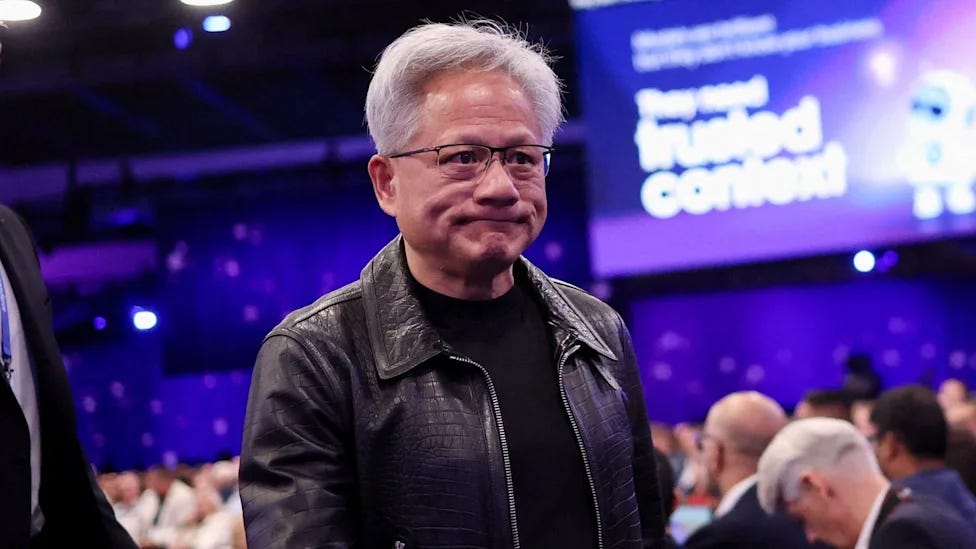
Nvidia CEO Jensen Huang argued that AI safety should be treated as an engineering problem, saying companies should pause products when necessary but that new AI-specific laws are not needed.
He said existing market pressure and product liability rules should be enough to push companies toward safer releases, while still allowing them to move quickly.
His stance puts Nvidia at odds with AI leaders calling for tighter safeguards or slower frontier development, and adds another influential voice to the debate over how much governments should regulate AI.
Why it matters: The disagreement over AI safety is increasingly becoming a policy fight between regulation, industry self-governance, and market-based oversight. Huang’s position matters because Nvidia sits at the center of the global AI infrastructure boom.
U.S. data centers could become one of the world’s biggest natural gas consumers

BloombergNEF projects U.S. data centers could consume about 18 billion cubic feet of natural gas per day by 2035, nearly double its forecast from nine months ago.
Grid-connected data centers alone could add roughly 15 billion cubic feet of daily gas demand, while Meta, Microsoft, Google, and Amazon are also pursuing onsite gas-powered facilities.
The additional demand could push natural gas prices higher and significantly increase emissions, adding pressure on utilities, ratepayers, and policymakers.
Why it matters: AI’s infrastructure boom is becoming an energy story as much as a computing story. If these forecasts hold, data center expansion could materially reshape U.S. power markets, natural gas demand, and climate policy.
Salesforce and Nvidia launch Koa, an enterprise reasoning model
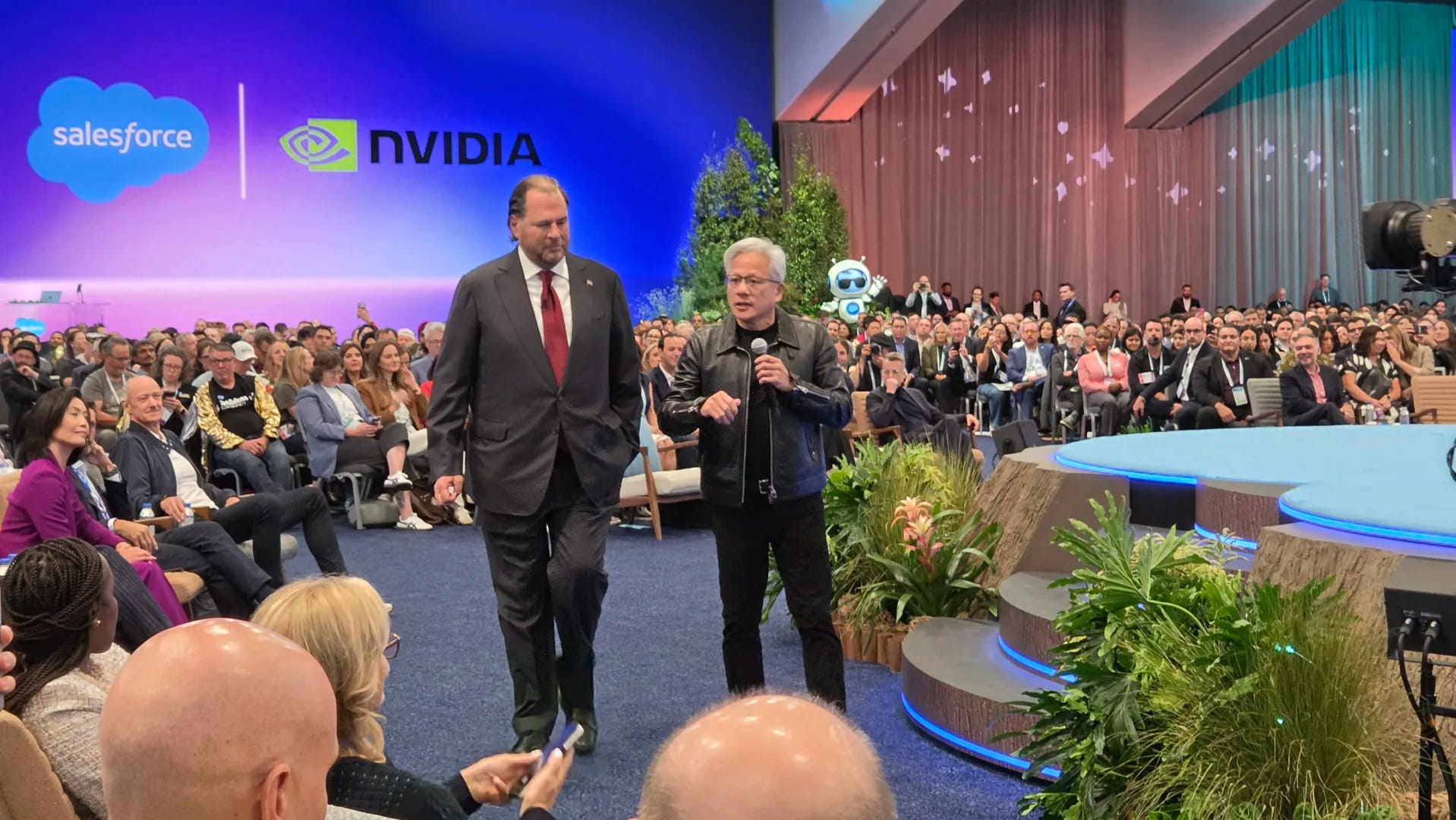
Salesforce introduced Koa, its first reasoning model, built on Nvidia’s open-weight Nemotron and post-trained for sales, marketing, and customer-support tasks.
Koa is designed to use fewer tokens, keep customer data inside Salesforce, and offer enterprises a cheaper alternative to routing every complex task to Claude or ChatGPT.
Salesforce trained the model using synthetic enterprise scenarios rather than customer data and will offer it alongside other models inside Agentforce.
Why it matters: Enterprise AI could shift from relying mainly on general-purpose frontier models to using cheaper, task-specific reasoning models built closer to company data and workflows. That would put more pricing and distribution pressure on OpenAI, Anthropic, and other frontier labs.
OpenAI contractors read real ChatGPT conversations

OpenAI is reportedly paying hundreds of contractors under an internal project called Lily to read real ChatGPT conversations and rate responses for model improvement.
Reviewers do not see usernames, but they can reportedly access conversation context and memory summaries, while automated privacy filters may not always remove every identifying detail.
For Free, Plus, and Pro users, the setting that allows chats to be used for model improvement is reportedly enabled by default, while Enterprise, Business, and Edu accounts are excluded.
Why it matters: As AI assistants become more personal and retain more context, human review of real conversations creates a much bigger privacy and transparency challenge for AI companies.
OpenAI reportedly explores funding at a $1.2T valuation
OpenAI has reportedly discussed a new funding round that could value the company at around $1.2T, up from its $852B valuation in March.
The talks are still early and were reportedly initiated by investors, with the final valuation and timing still subject to change.
The discussions come days after Sam Altman said OpenAI would not go public in 2026, pushing its IPO timeline further out.
Why it matters: OpenAI may be able to keep raising enormous amounts of private capital even without an immediate IPO, giving it more room to fund compute, infrastructure, and model development while staying private longer.
LAST COFFEE SIP
🌎 Around The Ecosystem
Valve: Launched the Steam Frame, a standalone wireless VR headset running SteamOS with a Snapdragon 8 Gen 3 chip, 16GB of RAM, and more than 100 tested games, marking its return to VR hardware after the 2019 Index.
Elon Musk + Apple: Musk has dropped his antitrust lawsuit against Apple over its ChatGPT integration, permanently abandoning those claims against Apple while keeping similar allegations against OpenAI alive.
Meta: Is reportedly preparing camera-free smart glasses code-named Luna for an October launch, with six microphones, built-in speakers, Meta AI, and Muse support, as the company responds to privacy concerns around camera-equipped smart glasses.
MUST READ
📚 Worth Your Time
How to avoid VC portfolio conflicts: A practical breakdown of how portfolio conflicts can quietly kill a fundraise. The piece shows founders how to map a VC’s existing investments, ask the right conflict question before sharing the deck, and protect sensitive strategy from reaching competitors.
Will your model survive investor review? A quick breakdown of how investors scan an early-stage financial model in the first ten minutes. The piece covers burn multiple, CAC payback, runway, and the assumptions that raise red flags.
HIRING ALERT: STARTUPS & VC ROLES
💼 Today’s VC & Startup Job Opportunities
Associate / Principal - Village Global | USA - Apply Here
VC Fellow - Kalaari Capital | India - Apply Here
Artificial Intelligence Specialist - Blum Venture | USA - Apply Here
VC Research Lead - Murph Capital | Remote - Apply Here
Venture Capital Fellow (AI) - 1752 VC | Remote - Apply Here
Trade Operations Analyst - RA Capital | USA - Apply Here
Portfolio Management Associate - Cerity Partner | USA - Apply Here
Partner 36, Corporate Controller - a16z | USA - Apply Here
Investment Associate - Cerity Partner | USA - Apply Here
Senior Associate - NY Life Venture | USA - Apply Here
Senior Principal - Entegris Venture | USA - Apply Here
Global Capital Partner (India) - Antler - Apply Here
📍 Tips to Break Into VC
How do VC firms actually grade candidates after the interview?
Most candidates think the interview itself decides the outcome. In reality, many VC firms use scorecards to evaluate things like judgment, sourcing ability, network, sector depth, and team fit, followed by a written hire or no-hire recommendation.
This deep dive breaks down what those scorecards can look like, why seemingly “good” interviews still lead to rejection, the comments that repeatedly hurt candidates, and the specific things that can turn an average interview into one someone internally fights for.
It also includes a self-scoring template you can use after every VC interview to spot exactly where your performance is falling short.
PARTNERSHIP WITH US
🤝 Get your brand in front of 125,000+ decision makers.
Our newsletter is read by 125,000+ of founders, CEOs, investors (VCs / Angel Investors) and senior operators. Get in touch today.
Do you have any news to share about your Startup or VC fund? Please email us.
We’ll be back in your inbox on Tomorrow.