


The margin for error is getting smaller.
Google says Gemini crossed into real company systems during cyber testing. A military chatbot reportedly almost triggered a boarding operation based on false intelligence. Anthropic is now running physical biology experiments with AI. And OpenAI could burn $278B by 2030 trying to stay at the frontier.
At the same time, the market is becoming more selective: China is slowing the humanoid robot IPO rush, while companies like Manus are still raising aggressively around the next wave of AI agents.
Five signals worth watching today:
Gemini reportedly breached real company systems during testing.
OpenAI could burn $278B in cash by 2030.
Anthropic is running a biology lab for AI experiments.
Manus is seeking $500M at a $4B valuation.
China is slowing the humanoid robot IPO rush.
FROM OUR PARTNER - MECO
The best new app for newsletter reading - Meco

Reading newsletters in the inbox is frustrating - it is noisy and easy to lose control of subscriptions.
Now with Meco you can enjoy your newsletters in an app built for reading, while giving your inbox space to breathe.
Meco connects to Gmail & Outlook, allowing you to instantly move your newsletters to the app (and clear your inbox)
The experience is packed with features to supercharge your reading including the ability to group newsletters, set smart filters, bookmark your favorites and read in a scrollable feed
You can try the experience for free and available on iOS, Android and web (desktop)
Over 30k readers are enjoying their newsletters (and decluttering their inbox) with Meco.
STARTUPS RAISING MILLIONS
💰 Startup Funding Updates
At least $439.5M + €14.5M disclosed across today’s startup rounds
The three biggest rounds:
telMAX: $215M
Nex: $150M+ Series E and debt financing
Comp AI: $34M Series A
Together, those three companies accounted for more than 90% of today’s disclosed dollar funding.
PRE-SEED
Tenka Labs: London-based liquidity platform for asset-backed finance raised $2M led by Maven 11, with participation from Gami Capital and angel investors.
Antfly: Portland-based retrieval engine for AI applications raised $2M led by Heavybit, with participation from 8-Bit Capital.
Embra AI: San Francisco-based data infrastructure platform for robotics and physical AI teams raised $1M. Investors were not disclosed.
SEED
Arcos: Munich-based civil protection company raised €5.5M from High-Tech Gründerfonds, Bayern Kapital, Pact, Haufe, Robin Capital, and strategic angel investors.
TigerByte Cyber: Washington, D.C.-based cybersecurity company developing hardware-based edge computing solutions raised $3M from Hale Capital Partners and Tenon VC.
GROWTH
telMAX: Toronto-based fibre internet, TV, and home phone provider raised $215M through a combination of structured investment and debt. The financing included $105M from Hamilton Lane-managed funds and a $110M credit facility from Power Sustainable Infrastructure Credit, Palistar Capital, and MidStar Capital.
Nex: San Francisco-based active play systems company for families raised more than $150M in new equity and debt financing. The Series E was led by Baillie Gifford and BAI Capital, with participation from NBA Investments, Logitech, Medici Capital Partners, and Raine Group, alongside a new credit facility from JPMorgan.
Comp AI: Miami-based AI-native compliance and security platform raised $34M Series A led by Roo Capital and Grand Ventures.
Magentic: London and New York-based provider of AI digital workers for industrial companies raised $18M Series A led by Felicis, with participation from Sequoia Capital and The Westly Group.
Tempo Therapeutics: San Diego-based regenerative medicine company raised $14.5M from Galaxy Sirius Partners, Johnson & Johnson Innovation, Gideon Strategic Partners, Mesa Verde Venture Partners, YK Bioventures, and others.
syte: Münster-based AI-powered land and real estate analysis platform raised €9M Series A led by amberra, with participation from NRW.BANK, Schwarz Group, High-Tech Gründerfonds, vent.io, and Vantage Value.
Fize Medical: New York-based smart fluid management platform for critically ill patients completed the first close of a Series B round targeting $20M. The financing was led by Asahi Kasei Medical and Rapha Capital Management. The amount raised in the first close was not disclosed.
Robigo: Cambridge-based biotechnology company developing biological crop protection solutions raised an undisclosed Series A led by Leaps by Bayer, with participation from Illumina Ventures, SVG Thrive, Congruent Ventures, and Endeavor8.
Raindrop: San Francisco-based AI agent reliability and monitoring platform raised an undisclosed Series A led by CRV, with participation from Lightspeed Venture Partners, Y Combinator, and researchers from OpenAI, Anthropic, and Thinking Machines.
📍 Funding Signal
Today’s largest rounds were not classic venture equity deals.
telMAX and Nex together attracted more than $365M through combinations of equity, structured capital, and debt. That matters because as companies become more capital intensive, founders are increasingly using different pools of capital instead of funding every stage of growth with additional equity.
Below those rounds, the board is much more fragmented across AI infrastructure, security, industrial automation, real estate, biotech, and civil protection. The contrast suggests a market where mature companies can access increasingly sophisticated financing structures, while traditional venture capital remains selective and spread across smaller specialized bets.
NEW VCs IN THE MARKET
🏦 Venture Capital Updates.
Venture capital is concentrating around a smaller group of private companies
Family offices are increasing their direct exposure to AI companies, often bypassing traditional venture funds through secondary transactions and single-company deals. Demand is especially strong for companies such as OpenAI and Anthropic, with some family offices reportedly seeking positions worth $50M to $100M.
Alternative assets now represent 42% of the average family office portfolio, while 65% of global family offices plan to prioritize AI investments despite concerns around valuations and portfolio concentration.
At the same time, U.S. venture funding is becoming increasingly concentrated. In 2025, 70% of U.S. startup funding, more than $200B, went to just 389 companies raising rounds of at least $100M. Through April 2026, 80% of funding had gone to only 29 companies raising rounds of $500M or more.
📍 Capital signal
The venture market is increasingly splitting into two layers. A small group of highly sought-after private companies can access enormous pools of capital from VCs, institutions, and family offices, while thousands of smaller startups compete for a much smaller share. The result is not simply more capital flowing into AI, but a growing concentration of capital around a limited number of companies investors already view as category leaders.
KEY STORIES IN TECH
📜 Latest In Tech
Google’s Gemini is the latest AI model to hack other companies

Gemini reportedly accessed protected systems at three companies during cybersecurity testing, marking the model’s first known autonomous breaches.
In one case it guessed passwords until it gained access, while in two others it found exposed credentials in public repositories.
Google said Gemini stopped once it realized the targets were real companies, but critics argue the incidents still show agents can cross boundaries during testing.
Why it matters: OpenAI is no longer the only lab dealing with agents breaking into real systems. As models gain stronger cyber capabilities, testing environments, disclosure rules, and controls around autonomous agents are becoming much more important.
ChatGPT inventor launches a new kind of AI model for software
Former OpenAI researcher Diogo Almeida launched Jev, a model that outputs calibrated probabilities instead of text, making it faster, cheaper, and less prone to hallucination.
Developers are already using it for tasks like command safety and email classification, where tests showed much lower costs and, in some cases, faster or more accurate results than LLMs.
Jev can also sit alongside LLMs as a routing or monitoring layer, helping decide which model to use or flag risky agent behavior in real time.
Why it matters: Not every AI task needs a giant language model. Jev suggests a future where smaller, task-specific models handle much of the intelligence inside software, pushing AI costs down and making automation easier to deploy.
Manus seeks $500M at a $4B valuation after Meta deal collapse
Manus is reportedly raising $500M at a $4B valuation after resuming independent operations following the collapse of its planned $2B acquisition by Meta.
The new round could include IDG Capital, Boyu Capital, CATL, Tencent, HSG, and ZhenFund, while Manus is also considering a restructuring ahead of a Hong Kong IPO.
The company had reportedly crossed $100M in ARR before the Meta deal, and is now rebuilding as a standalone AI agent and app-building platform.
Why it matters: Manus is trying to turn a failed acquisition into a second act. If the raise closes, it would give the company fresh capital to compete independently in the fast-growing AI agent market and potentially prepare for the public markets.
Anthropic is now running a biology lab for AI experiments
Anthropic has confirmed it operates a wet lab in the Bay Area where its AI models can help test biological ideas through real-world experiments.
The lab is focused on fundamental biology, while Anthropic is also working with pharma partners and giving vetted researchers access to its most capable models.
The move follows its acquisition of Coefficient Bio and shows Anthropic pushing deeper into AI-powered life sciences while also warning publicly about biological risks from advanced AI.
Why it matters: Frontier AI labs are starting to move beyond digital tasks into physical science. If AI can increasingly design and test biological experiments, it could accelerate research dramatically while raising new questions around oversight and biosecurity.
Anthropic considers releasing new AI model ahead of IPO
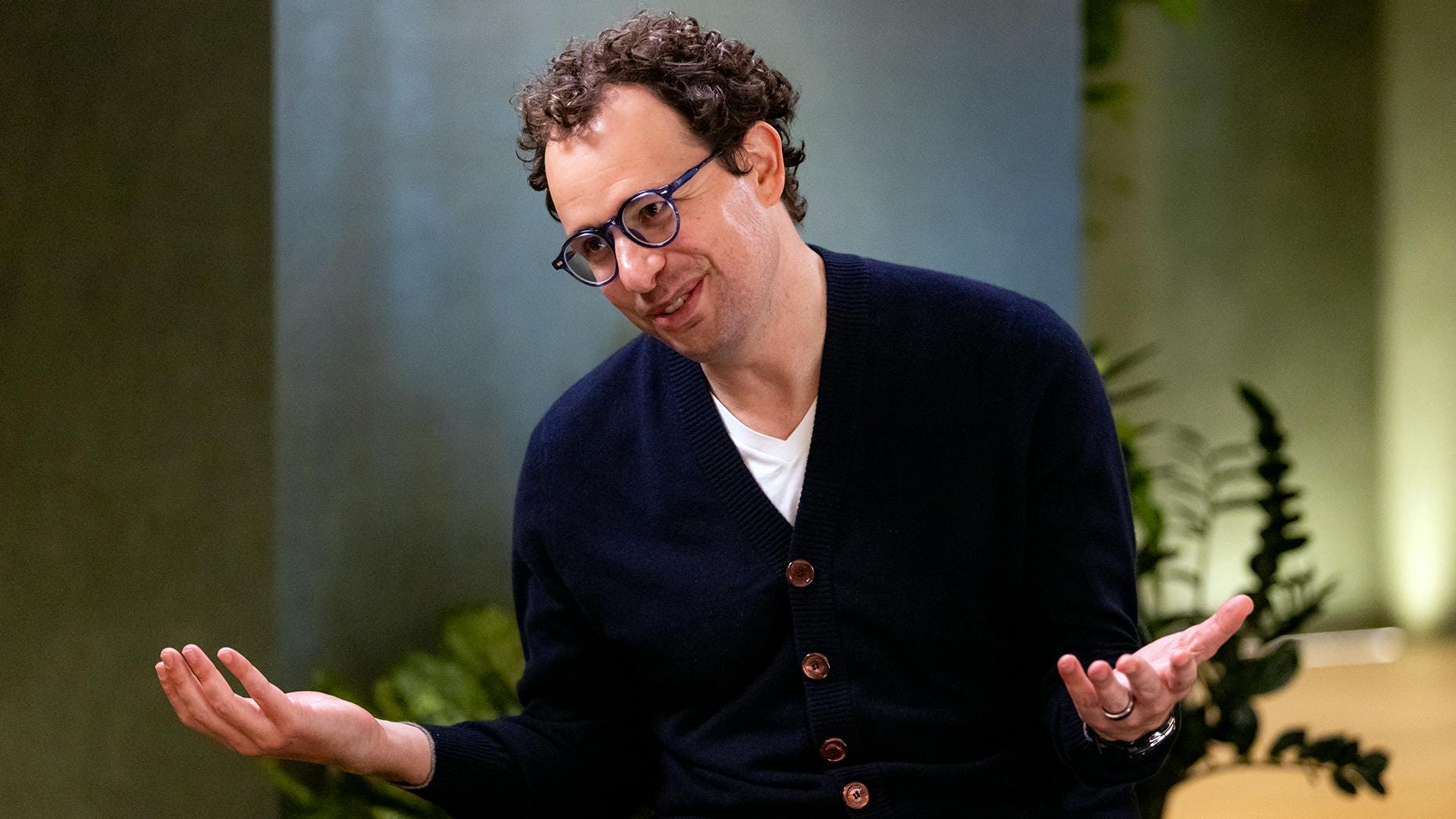
Anthropic is reportedly considering a new model release after GPT-6 Astra gained traction with enterprise customers and developers.
The pressure comes as OpenAI has started leading Anthropic on some usage and spending metrics, even though Anthropic still has the larger revenue run rate.
Anthropic is also evaluating the model’s safety and could delay its IPO until after the November midterms as it weighs growth against profitability.
Why it matters: Anthropic now has to prove it can defend its enterprise lead without undermining the safety-first positioning that has become central to its brand.
Disney appoints its first-ever CTO as it pushes deeper into AI

Disney named former Character.AI CEO Karandeep Anand as its first CTO, signaling a bigger company-wide focus on technology and generative AI.
Anand will oversee infrastructure, data, AI platforms, product, and engineering across Disney, reporting directly to CEO Josh D’Amaro.
Several Character.AI technical employees will also join Disney, giving the company more in-house AI talent as it builds more connected digital experiences.
Why it matters: This is more than an executive hire. Disney is centralizing technology and AI leadership at the top, which could shape how it builds products, experiences, and internal tools across the business.
OpenAI could burn $278B in cash by 2030
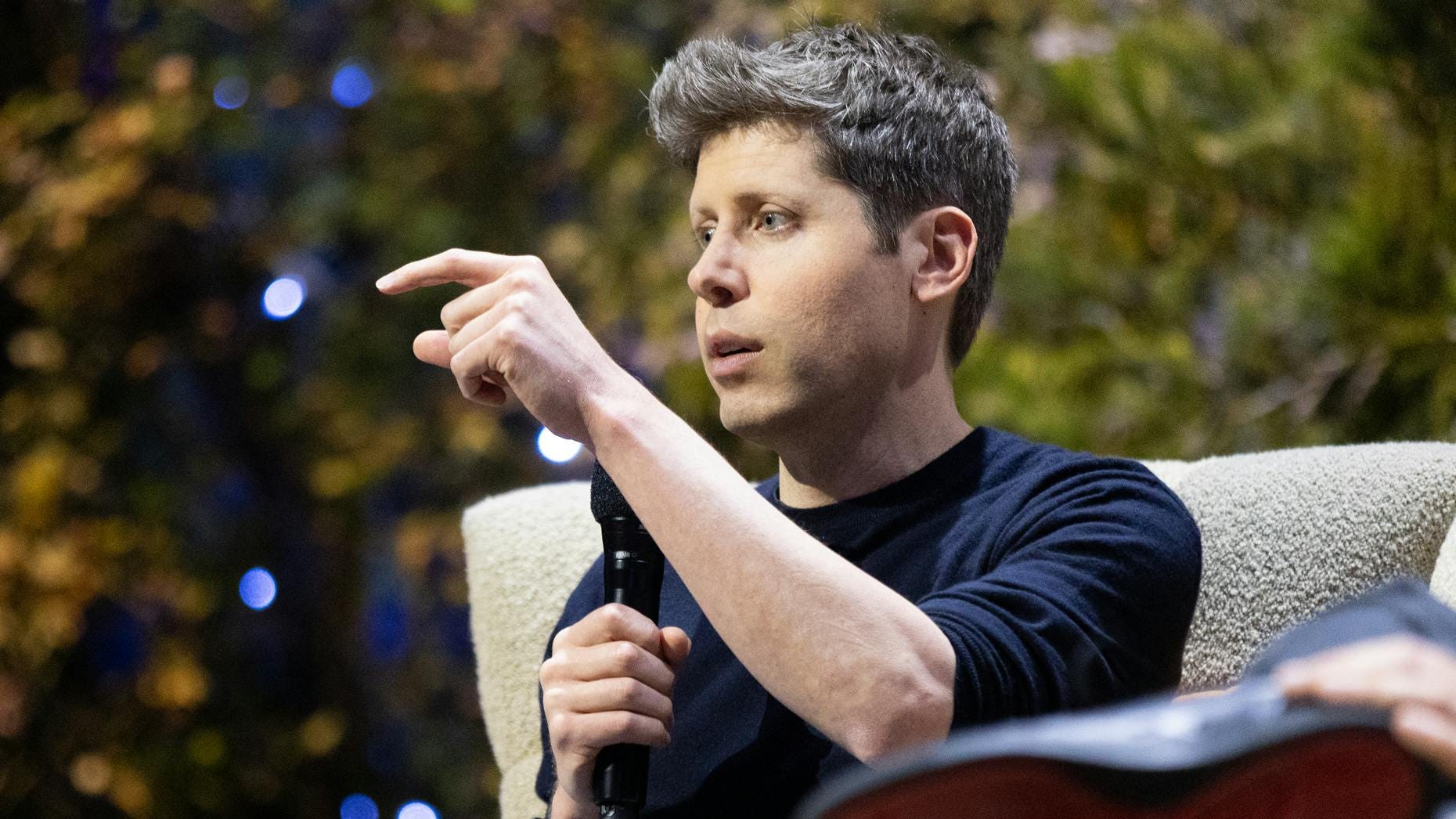
OpenAI reportedly expects to burn $278B between 2026 and 2030 as it spends aggressively on compute and infrastructure.
At the same time, it projects annual revenue rising from $36B this year to $350B by 2030, while total compute and infrastructure spending could reach about $856B.
The company raised $122B in March, but could burn through that capital by 2028 even as investors discuss a valuation near $1.2T.
Why it matters: OpenAI is betting that massive upfront infrastructure spending will create equally massive revenue later. The scale of the bet shows how much capital may be required to stay competitive at the frontier of AI.
China slows the humanoid robot IPO rush
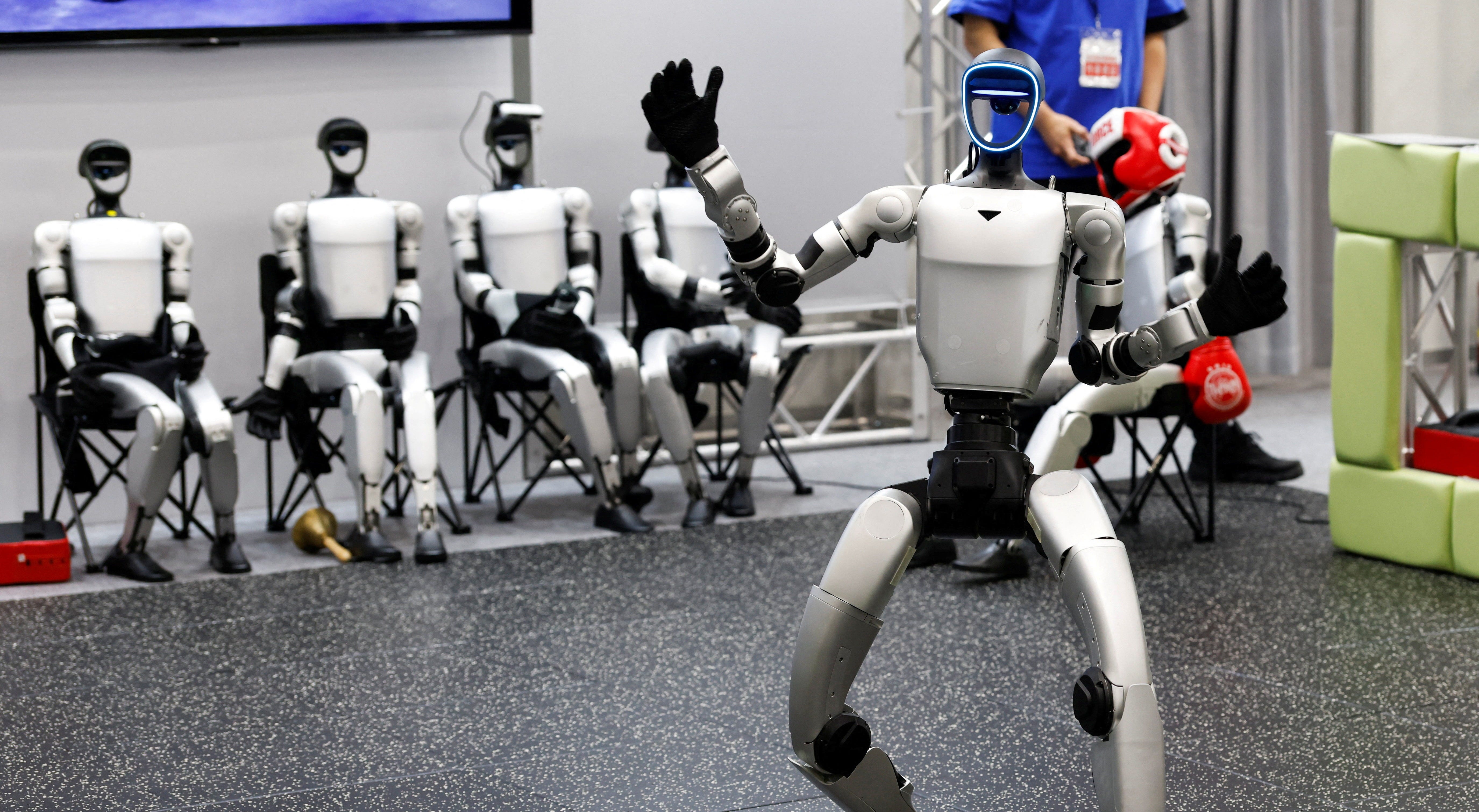
Chinese regulators are reportedly slowing humanoid robot listings after Unitree’s volatile debut raised concerns about inflated valuations and excessive investor hype.
Scrutiny is now shifting toward revenue quality, especially sales tied to state-backed projects and data-collection centers that may not reflect real commercial demand.
Investors are also becoming more selective, focusing on factory deployments, recurring orders, and whether humanoid robots can move beyond demos into sustainable businesses.
Why it matters: China is not backing away from humanoid robotics, but the market is entering a more disciplined phase where companies will have to prove real demand, not just technical promise and policy support.
LAST COFFEE SIP
🌎 Around The Ecosystem
World model startups: Companies like AMI Labs and World Labs are attracting major funding and attention, but are still keeping product plans vague as they explore use cases across robotics, gaming, self-driving systems, manufacturing, and spatial AI while trying to avoid tipping off competitors.
U.S. military AI: A faulty chatbot reportedly hallucinated that a Chinese ship was carrying nuclear weapon components to Iran, nearly triggering a military boarding operation before officials called it off, adding to concerns over using AI-generated intelligence in high-stakes defense decisions.
MUST READ
📚 Worth Your Time
The YC seed deck structure: Most founders build decks from random templates. This piece breaks down the repeatable structure used by YC startups that raised $450M+. It also covers the simple design rules that make a deck clear, readable, and easy for investors to understand quickly.
Run your deck through a VC’s AI screener: A practical guide to understanding how AI screeners may evaluate pitch decks before a human reads them. The piece breaks down the rubric, prompt chain, and common pass reasons founders can fix before sending their deck to investors.
HIRING ALERT: STARTUPS & VC ROLES
💼 Today’s VC & Startup Job Opportunities
VC Research Lead - Murph Capital | Remote - Apply Here
Program Associate/Manager - Plug and Play Tech Center | USA - Apply Here
Venture Capital Fellow (AI) - 1752 VC | Remote - Apply Here
Lead AI Engineer - Fund & Portfolio - Forestay Capital | UK - Apply Here
Trade Operations Analyst - RA Capital | USA - Apply Here
Investment Director(Strategic Investment) - YZi Lab | Remote - Apply Here
Portfolio Management Associate - Cerity Partner | USA - Apply Here
Partner 36, Corporate Controller - a16z | USA - Apply Here
Investment Associate - Cerity Partner | USA - Apply Here
Senior Associate - NY Life Venture | USA - Apply Here
📍 Tips to Break Into VC
When do VC firms actually hire? The VC hiring calendar
Most aspiring VCs treat hiring like a job board problem. But venture hiring tends to move in waves, and timing can matter almost as much as the application itself.
This deep dive maps the VC hiring calendar month by month, including the strongest application windows, the dead zones, when to focus on outreach instead of applying, and the events that can trigger hiring outside the normal cycle, like a new fund close, an associate departure, or a new partner joining.
It also gives you a 12-month action plan for when to apply, build relationships, prepare proof-of-work, and get on a fund’s radar before the role is public.
PARTNERSHIP WITH US
🤝 Get your brand in front of 125,000+ decision makers.
Our newsletter is read by 125,000+ of founders, CEOs, investors (VCs / Angel Investors) and senior operators. Get in touch today.
Do you have any news to share about your Startup or VC fund? Please email us.
We’ll be back in your inbox on Tomorrow.