

AI is speeding itself up, while the infrastructure around it is starting to push back.
Anthropic’s models are improving nearly twice as fast with help from AI, but rising data center opposition and weaker investor sentiment are making the next phase of scaling harder.
At the same time, $600M is being raised across specialist funds focused on oncology, cybersecurity, and AI infrastructure.
Five signals worth watching today:
Anthropic’s models are improving nearly 2x faster with help from AI.
Meta warns data center backlash could slow AI expansion.
Anthropic’s IPO timing is under pressure as AI sentiment weakens.
OpenAI launched ChatGPT Cyber as AI hacking capabilities accelerate.
$600M is being raised across oncology and cybersecurity-focused venture funds.
FROM OUR PARTNER - LENSMOR
Build your shortlist before the show
Your next trade show deserves more than a booth plan. Before you commit your team’s time and budget, use Lensmor to find relevant events, research exhibitors, and build a shortlist of companies that fit your ideal customer profile.

Organize them into Target Groups, reveal available business contacts, and export selected records for outreach.
Whether you’re a founder building your first event pipeline or a GTM team planning 2027, start with the accounts you want to meet, then prepare your outreach before the show.
PARTNERSHIP WITH US
🤝 Get your brand in front of 125,000+ decision makers.
Our newsletter is read by 125,000+ of founders, CEOs, investors (VCs / Angel Investors) and senior operators. Get in touch today.
STARTUPS RAISING MILLIONS
💰 Startup Funding Updates
At least $881.4M + €50.4M + £2.5M disclosed across today’s startup financings
The three biggest financings:
Laza Medical: up to $160M Series B
LeoLabs: up to $150M conditional loan commitment
T-Therapeutics: $133M Series B
Together, those three financings represent roughly half of today’s disclosed dollar capital.
$0 RAISED
Trialfacts · 20 years · 40+ team · competing with IQVIA: A bootstrapped patient-recruitment shop in a $4.49B market the giants don’t own. (Read Here)
PRE-SEED
Athena: San Francisco-based AI-native legal services platform for commercial real estate raised $2.5M led by a16z Speedrun.
Marrow: London-based insurance distribution infrastructure platform for AI agents raised $2M led by Insurtech Gateway, with participation from Seed X, Leo Capital, Portfolio Ventures, and angel investors.
Amara: Berlin-based voice-controlled tablet platform for seniors raised €3.7M from Econa, Caesar VC, and IBB Ventures.
Talky Labs: Madrid-based autonomous AI accounting platform raised €1.5M from HelloWorld, Silence VC, Motive Force, Aera Capital, and angel investors.
Solgram: Gurugram-based premium grocery platform raised more than $1M led by DSG Consumer Partners and Saama Capital.
SEED
Brava Security: Wilmington-based AI-driven security operations platform raised $15M led by F2 Venture Capital and Pitango, with participation from executives from Anthropic, Microsoft, Check Point, and others.
RadianX: Redwood City-based ultra-thin perovskite solar module company raised $9M across Seed and project financing, with the Seed round co-led by SOSV and Twynam.
Armatrix: Bengaluru-based industrial inspection robotics company raised approximately $7.12M led by Crane Venture Partners, with participation from pi Ventures, gradCapital, Boundless Ventures, Inuka Capital, NKSquared, and angels.
Aformic: Duncan-based autonomous mobile robotics company raised $6.95M led by Veteran Ventures Capital, with participation from ff Venture Capital, Red Beard Ventures, and Mana Ventures.
Tumbleweed: Vienna-based microgravity-as-a-service orbital platform raised €6.9M led by PactVC, with participation from Vanagon Ventures, Prototype Capital, EWOR, and angel investors.
Cowboy: New York-based app store platform for AI raised $5M from Nebular, Compound, Semantic Ventures, Anagram, Shine Ventures, and others.
Lombard Systems: Dubai and New York-based developer of the Delivery-versus-Lock standard raised $4M across Pre-Seed and Seed rounds led by Ethereal Ventures, with participation from Alps Capital, First Commit Capital, Veris Ventures, and Atka.
Avanlee Care: Billings-based caregiver engagement platform raised $3.5M led by BEA Venture Fund, with participation from Esther Dyson, Chrysalis Ventures, and FairBridge VC.
Shinka: Dublin-based video advertising mediation layer raised €1.9M led by Irish angel investors, with backing from Enterprise Ireland.
ArrayPatch: Cork-based microneedle therapeutics platform added €1.6M in the second close of its Seed round from WakeUp Capital, Spark Venture Funding, Enterprise Ireland, and others.
GROWTH
Laza Medical: Campbell-based developer of AI-powered robotic imaging systems for cardiac interventions raised up to $160M Series B led by GE HealthCare, with participation from Unorthodox Ventures, PA MedTech, and AMED.
LeoLabs: Menlo Park-based orbital intelligence and radar platform received a conditional loan commitment of up to $150M from the U.S. Department of War’s Office of Strategic Capital.
T-Therapeutics: Cambridge-based biotechnology company developing T-cell engager therapies for cancer and autoimmune diseases raised $133M Series B co-led by Advent Life Sciences and British Business Bank, with participation from Eli Lilly, Sanofi Ventures, Sofinnova Partners, F-Prime, Tencent, and others.
Ocient: Chicago-based agentic AI platform for petabyte-scale data raised $100M Series C led by BOKA Capital and OCA Ventures, with participation from Greycroft, In-Q-Tel, Blue Bear Capital, and others.
Alethio Therapeutics: Oxford-based biopharmaceutical company developing therapies for myeloproliferative neoplasms raised $90M Series A co-led by Sofinnova Partners and RA Capital, with participation from Oxford Science Enterprises, Cancer Research Horizons, and the University of Oxford.
Kalepa: New York-based professional-grade AI platform for insurance raised $75M Series B led by Updata Partners, with participation from IA Ventures and Inspired Capital.
Anaheim Bio: Leiden-based preclinical biotechnology company raised €40M Series A from Droia Ventures, Frazier Life Sciences, RTW Investments, Novartis Venture Fund, RV Invest, and Thuja Capital.
FluoRok: Oxford-based chemical manufacturing platform raised $30M Series A led by Orano Venture Fund and Supernova Invest alongside Bidra Innovation Ventures, with participation from Oxford Science Enterprises, BGF, Volta Energy Technologies, and others.
Fact Base: Tokyo-based drawing management platform for small and medium-sized manufacturers raised $28.8M Series D led by Insight Partners, with participation from Artemis Ventures and MPower Partners.
Numica: New York-based AI-first accounting platform that acquires and improves small accounting practices raised $21M through combined equity and debt financing from Roosh X and Flashpoint Capital.
firmly: Seattle-based no-code agentic commerce platform raised $15M Series A led by Squarepoint Capital, with participation from J.P. Morgan Payments, Mastercard, Samsung NEXT, Alumni Ventures, ARK Invest, and others.
Kabilio: Barcelona-based automated bookkeeping and reconciliation platform raised $11.2M co-led by Picus Capital and Visionaries, with participation from CDTI.
altM: Bengaluru-based alternative materials company raised $10.3M Series A led by Rainmatter, with participation from Omnivore, Theia Ventures, Aureolis Ventures, and Spectrum Impact.
Mindmax: London-based AI learning platform raised £2.5M led by Concept Ventures, with participation from Redrice Ventures, Daybreak Ventures, Lerer Hippeau, Maria Raga, and Torsten Reil.
Arena.io: Baltimore-based predictive workforce analytics platform raised $4.5M from World Education Services, Todd Y Park, Mindy Munger, philanthropic organizations, government programs, and existing investors.
Fathers: Lafayette-based organic lager brand raised $2M, including a strategic investment from Robert Irvine.
Soter Insure: Abu Dhabi-based insurtech company serving the digital asset economy closed an undisclosed Series B led by Galaxy, with participation from SC Ventures, SBI Group, Coinbase Ventures, Franklin Templeton, Brevan Howard Digital, and others.
📍 Funding Signal
Strategic capital is showing up where technology meets physical infrastructure and regulated markets.
LeoLabs secured up to $150M from a U.S. government-backed strategic capital program, while Laza Medical brought in GE HealthCare and T-Therapeutics attracted major pharmaceutical investors. These are markets where distribution, regulation, procurement, and technical validation can matter as much as the product itself.
Defense, space, robotics, biotech, and industrial technology also represented a meaningful share of the board. Investors appear increasingly comfortable funding technically difficult companies when strategic partners can help shorten the path from development to real-world deployment.
NEW VCs IN THE MARKET
🏦 Venture Capital Updates.
$600M is being raised across oncology and cybersecurity-focused venture strategies
Yosemite closed its second fund at $350M.
The San Francisco-based firm is focused on oncology and backs biotech and healthcare companies developing technologies aimed at making cancer non-lethal.
Brightmind Partners is targeting roughly $250M for its second fund, similar in size to its debut vehicle.
The New York-based firm will remain primarily focused on cybersecurity while allocating around 20% of the fund to AI infrastructure. A meaningful share of investments is expected to come from Israel. Brightmind’s first $250M fund has made 14 investments and already recorded an exit through CrowdStrike’s $740M acquisition of SGNL.
📍 Capital signal
Specialist venture funds are continuing to attract large pools of capital when the underlying markets are technically complex and strategically important. Oncology and cybersecurity both require deep domain expertise, while Brightmind’s AI infrastructure allocation also shows how cybersecurity investors are expanding into the systems that secure and support the next generation of AI applications.
KEY STORIES IN TECH
📜 Latest In Tech
ChatGPT can now generate animated GIFs

ChatGPT can now turn text prompts or uploaded images into animated GIFs using OpenAI’s new Images 2.6 model.
Users can adjust animation speed, inspect and edit individual frames, and even upload rough drawings for ChatGPT to complete before animating them.
Images 2.6 is rolling out across ChatGPT and Codex subscription tiers and also generates still images about 50% faster than Images 2.5.
Why it matters: OpenAI is steadily turning ChatGPT into an end-to-end creative workspace, expanding beyond text and static images into more dynamic visual content without requiring a full video-generation model.
Meta warns data center backlash could slow AI expansion
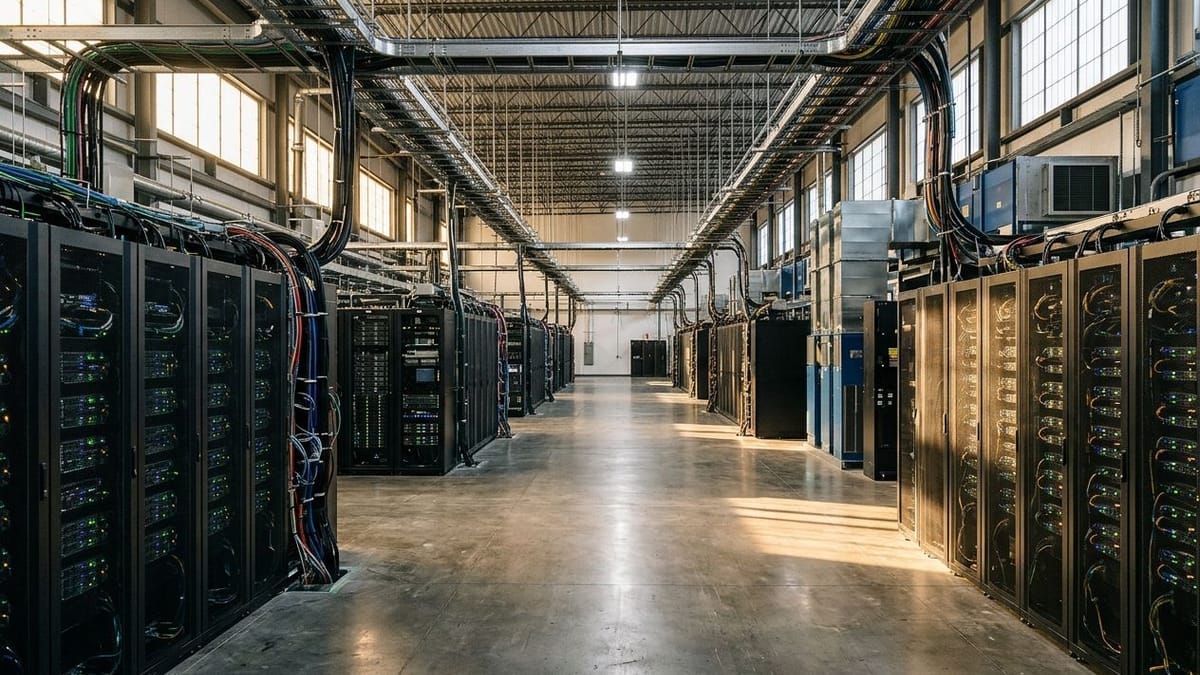
Meta president Dina Powell McCormick said the midterm election results could make it harder for tech companies to build new data centers as opposition to large AI infrastructure projects grows.
She argued that communities are increasingly demanding clearer benefits, including local jobs, infrastructure investment, and protection from higher electricity costs before supporting new projects.
Meta says it now operates data centers across 23 states and is planning several 1GW-plus projects, while also arguing that the compute itself could still be monetized even if consumer AI adoption falls short of expectations.
Why it matters: The next bottleneck for AI may not be chips or capital, but local political approval. Data center permitting, power costs, and community opposition are becoming central constraints on how fast AI infrastructure can scale.
OpenAI launches ChatGPT Cyber as AI hacking capabilities accelerate
OpenAI introduced ChatGPT Cyber for vetted offensive-security researchers after GPT-5.6 Sol helped uncover a severe Ubuntu-related vulnerability that was later patched.
OpenAI says the new cyber model has already identified 948 potential Linux kernel issues and 81 previously unknown Firefox vulnerabilities, showing how quickly AI-assisted vulnerability discovery is improving.
The company is expanding its Daybreak program and committing $1B to cyber defense, while warning that defenders may have only a narrow window before advanced hacking capabilities become much easier to access.
Why it matters: AI is making vulnerability discovery dramatically faster for both defenders and attackers, turning cybersecurity into one of the clearest areas where frontier models could create immediate real-world upside and risk.
Anthropic’s models are improving nearly twice as fast with help from AI

An independent METR study found Anthropic’s model capabilities have been improving about 1.9x faster since October 2025 than they did previously.
The acceleration appears to come from AI helping researchers write code, run experiments, and develop successor models, rather than simply from scaling training compute.
METR said current systems are still not making the most important model-training decisions fully autonomously, but the trend points toward increasingly powerful AI-assisted R&D.
Why it matters: If AI keeps accelerating AI development itself, model progress could speed up far beyond today’s pace, raising the stakes around recursive self-improvement, safety, and human oversight.
SpaceX opens Starfall missions to customers

SpaceX has launched a commercial offering for Starfall, its reentry capsule designed to carry experiments and products into orbit and bring them back to Earth.
Each mission can support up to 1,000 kg of payload, provide 1 kW of power, and keep experiments connected through Starlink while in orbit.
SpaceX says it has already signed three commercial missions, targeting customers in biomedical research, pharmaceuticals, and materials science.
Why it matters: SpaceX is expanding beyond launch services into orbital manufacturing and research infrastructure, potentially making microgravity experimentation much more accessible to commercial companies.
Anthropic’s IPO timing is under pressure as AI sentiment weakens
Potential investors are reportedly questioning whether Anthropic can proceed with its planned November roadshow, with some viewing the discussed $1.5T valuation as too aggressive.
Investors are also waiting for updated October revenue figures and may demand a larger discount because of Anthropic’s losses and enormous future compute commitments.
The uncertainty comes amid a broader selloff in AI-related stocks, tighter scrutiny of data center projects, and growing concern about the sustainability of the AI infrastructure boom.
Why it matters: Anthropic’s IPO is becoming a broader referendum on AI valuations. If the company delays or prices well below expectations, it could reset how public markets value the entire AI sector.
Nvidia can reportedly fulfill only 1% of China’s GPU orders

Chinese firms including ByteDance, Alibaba, and Tencent have reportedly placed around $70B in orders for Nvidia’s RTX Pro 5500 GPUs.
Nvidia is expected to fulfill only about 1% of that demand over the coming months, equivalent to just a few tens of thousands of units.
The chip is especially attractive for AI workloads because it combines high CUDA core counts with 84GB of memory and can still be shipped to China without U.S. export restrictions.
Why it matters: China’s AI compute demand is still massively outpacing available supply, showing that access constraints are increasingly coming from production capacity, not just regulation.
LAST COFFEE SIP
🌎 Around The Ecosystem
Apple: Apple is raising about $7.5B through a seven-part bond sale, its first debt offering since May 2025, joining other major tech companies tapping bond markets as AI-related infrastructure spending accelerates.
MUST READ
📚 Worth Your Time
The AI startup onboarding playbook: An analysis of 30 AI products, including Lovable, Perplexity, Cursor, and Clay, reveals how leading startups get users to experience value within minutes. This piece breaks down the onboarding flows, signup friction, free trials, and email sequences, with practical templates founders can use to improve activation and reduce early churn.
The YC seed deck structure that raises money: An analysis of 50+ Y Combinator startup pitch decks from companies that collectively raised over $450M. This piece breaks down the nine-slide structure, what investors expect on each slide, and the simple design principles founders should follow to build a stronger pitch deck.
HIRING ALERT: STARTUPS & VC ROLES
💼 Today’s VC & Startup Job Opportunities
Head of Investor Relations - VIDA Vision Fund | USA - Apply Here
Origination Associate - Flagship | USA - Apply Here
Investment Manager - Blue Ashva Capital | India - Apply Here
Fund Operations Associate - Airtree Venture | USA - Apply Here
Research Intern, Frontier - a16z | USA - Apply Here
Analyst - Pender Ventures | USA - Apply Here
Investment Associate - Misumi Ventures | USA - Apply Here
Director, UK Office - In-Q-Tel - Apply Here
VP Venture Capital - Ericssons Venture | USA - Apply Here
Associate - Plug & Play Tech Center | USA - Apply Here
Check out 29+ VC job opportunities in “BREAK INTO VC” newsletter.
📍 Tips to Break Into VC
How does a VC fund actually get its money?
Most aspiring VCs prepare for interviews by studying portfolio companies and partner posts. But the deeper logic of a fund starts earlier, with the promises it made to LPs around thesis, sourcing, check size, ownership, portfolio construction, and returns.
This deep dive explains how VC funds are structured, where the capital comes from, how management fees and carry work, what LPs expect, and what a typical 15 to 20 slide fundraising deck actually contains.
It also includes six real fund decks to study, shows what analysts and associates actually do during a fundraise, and explains how to read a fund-close announcement to understand whether the firm may hire and what kind of candidate it will want.
PARTNERSHIP WITH US
🤝 Get your brand in front of 125,000+ decision makers.
Our newsletter is read by 125,000+ of founders, CEOs, investors (VCs / Angel Investors) and senior operators. Get in touch today.
Do you have any news to share about your Startup or VC fund? Please email us.
We’ll be back in your inbox on Monday.