


Money, distribution, and control are becoming the real battlegrounds in tech.
Nvidia is buying Hugging Face for $12.9B. Accel may lead a $1B round into Thinking Machines at a $40B valuation. Meta is using aggressive discounts to acquire valuable training data. And OpenAI is pushing deeper into agentic software with Astra.
The 5 things worth knowing today:
Nvidia is buying Hugging Face for $12.9B.
OpenAI launched Astra, its most capable agentic model yet.
Meta is offering 95% AI discounts in exchange for training data.
Accel may lead a $1B round into Thinking Machines at a $40B valuation.
AI infrastructure spending is creating winners far beyond Nvidia.
FROM OUR PARTNER - SEMRUSH
Search has changed. Has your SEO strategy?

Ranking on Google is still important.
But today’s buyers also discover companies through ChatGPT, Gemini, AI Overviews, and other AI-powered search experiences.
Semrush One helps you track both worlds from a single platform. Monitor your SEO performance, measure AI visibility, identify competitive gaps, and discover new growth opportunities before your competitors do.
If your goal is to stay visible wherever customers are searching, this is worth exploring.
STARTUPS RAISING MILLIONS
💰 Startup Funding Updates
At least $732.1M + €24M + £500K disclosed across today’s startup rounds
The three biggest rounds:
Lyte: $165M Series C
iPronics: $125M Series B
HiddenLayer: $100M Series B
Together, those three companies accounted for more than 53% of today’s disclosed dollar funding.
PRE-SEED
Backbone: Brussels-based food technology and regulatory compliance startup raised €4M led by Pitchdrive, with participation from PROfounders Capital, Passion Capital, 100IN, and Belgian food industry families including Agristo and Darta.
Fambot: San Francisco-based AI platform simplifying family logistics raised $3.5M led by NextView Ventures and Baukunst, with participation from Correlation Ventures, Karman Ventures, and Founders Network.
Souk: London-based B2B software and partnership automation startup raised $1.6M led by Sure Valley Ventures, with participation from Antler, Fuel Ventures, and strategic angel investors.
SEED
Atira: Munich-based multi-agent sales engineering platform for industrial companies raised $17.5M across seed and pre-seed funding. Its latest $15M seed round was led by Accel, with participation from UVC, Fortino, Booom, and several angel investors.
Catch: Tel Aviv-based AI enterprise productivity startup raised $5M jointly led by Entrée Capital and Pitango, with participation from Seedcamp and Factorial Funds.
askpolly: Ottawa-based AI-powered market research platform raised $3M led by Differential Ventures, with participation from The 98 and Forum Ventures.
Plenti: Medellín-based global multicurrency account platform raised $3M led by Tether, with participation from Verda Ventures.
Laters.com: Singapore-based payments-first online travel agency raised $1.5M led by XBO Ventures.
YoLearn.ai: Noida-based voice-first AI tutoring platform raised an undisclosed seed round led entirely by ABP Education.
GROWTH
Lyte: Sunnyvale-based physical AI perception company raised $165M Series C at a $1.6B valuation. The round was led by Maverick Silicon, with participation from Fidelity Management & Research Company, Atreides Management, Key1 Capital, Ora Global, and others.
iPronics: Valencia-based silicon photonics optical switching platform for AI infrastructure raised $125M Series B co-led by Maverick Silicon and Light Street Capital, with participation from NVIDIA, Bosch Ventures, AMD-related ecosystem investors, the European Innovation Council Fund, Amadeus Capital Partners, and others.
HiddenLayer: Austin-based AI security platform protecting agentic, generative, and predictive AI applications raised $100M Series B led by Delta-v Capital, with participation from Ten Eleven Ventures, Morgan Stanley, M12, Microsoft’s Venture Fund, and Booz Allen Ventures.
Superluminal Medicines: Boston-based biotechnology company combining AI/ML, protein dynamics, and structural biology for drug discovery raised $60M Series B led by BVF Partners, with participation from Deep Track Capital and Perceptive Advisors.
Conveo: Antwerp-based multimodal AI video interviewing platform raised $50M Series A from DST Global Partners, Balderton Capital, Visionaries, 6 Degrees Capital, and Y Combinator.
Aitan: Tel Aviv-based Robotic Sovereignty-as-a-Service platform raised $41M co-led by Deep33 and Dell Technologies Capital, with participation from Gokul Rajaram, Benjamin Ling, and Kevin Weil.
Guardio: Tel Aviv-based consumer cybersecurity platform raised $40M at a $1.1B valuation from Wiz co-founder Assaf Rappaport, ION Crossover Partners, Union Tech Ventures, Vintage Investment Partners, Cerca Partners, and Emerge Ventures.
Wafer: San Francisco-based AI inference chip and hardware infrastructure startup raised $40M Series A led by Marathon and Chemistry, with participation from Wing Venture Capital, AMD Ventures, Outset Capital, Fifty Years, and Y Combinator.
PatientIQ: Chicago-based patient outcomes intelligence platform raised $30M Series C led by Hughes & Company, with participation from Health Enterprise Partners and August Capital.
Resect AI: Portland-based AI accountability layer platform raised $25M. Investors were not disclosed.
empirik.ai: San Francisco-based AI agent platform for infrastructure change raised $21M from Sequoia Capital, S32, Canapi Ventures, and Alumni Ventures.
Tensive: Milan-based clinical-stage biomaterials medical device company received €20M in financing from the European Investment Bank to support R&D, clinical studies, CE marking, and commercialization readiness for REGENERA.
Rightcharge: London-based EV fleet charging payments platform raised £500K led by Soulmates Ventures, with participation from BlackWood Ventures and Purple Ventures.
📍 Funding Signal
The biggest checks are going to companies building hard-to-replicate infrastructure.
Lyte, iPronics, HiddenLayer, Wafer, and Aitan together attracted more than $470M. What connects them is not simply AI. They sit in areas where technical complexity, hardware, security, or infrastructure create higher barriers to entry than a typical application-layer startup.
That suggests investors are becoming more selective about where they place large bets. Capital is still flowing into AI, but the premium appears to be moving toward companies with defensible technology, expensive infrastructure, proprietary systems, or deeper technical moats.
NEW VCs IN THE MARKET
🏦 Venture Capital Updates.
Accel may lead a $1B round into Thinking Machines at a $40B valuation
Accel is reportedly in talks to lead a $1B funding round for Thinking Machines, the AI lab founded by former OpenAI CTO Mira Murati.
The proposed round would value the company at at least $40B, below the $50B valuation it reportedly sought last year. Thinking Machines is said to be generating more than $100M in annualized revenue, which would still put the company at an unusually high revenue multiple.
The startup previously raised $2B at a $12B valuation in one of the largest seed rounds ever, led by Andreessen Horowitz with participation from Nvidia, GV, Lightspeed, and Conviction Partners.
📍 Capital signal
Investors are still willing to underwrite massive valuations for elite AI teams, but the bar is shifting. Pedigree helped Thinking Machines raise its first round, while the next phase will increasingly depend on revenue growth, product adoption, and whether the company can justify a valuation that has already multiplied several times in little more than a year.
KEY STORIES IN TECH
📜 Latest In Tech
Meta offers 95% AI discounts in exchange for training data

Meta is offering users of its new Muse Spark model roughly 95% lower pricing if they allow their prompts and model outputs to be used to improve future models.
Input pricing falls from $1.25 to $0.10 per million tokens, while output pricing drops from $4.25 to $0.20 under the contributor tier.
The approach could help Meta collect valuable real-world agent usage data, especially as AI labs compete to improve coding and professional agents.
Why it matters: Training data for AI agents is becoming a competitive asset. Meta is turning data sharing into a pricing incentive, creating a model other AI companies could copy as they look for richer real-world usage data.
OpenAI launches Astra, its powerful (and controversial) new model

OpenAI released Astra, saying it sets a new frontier in computer and browser use, while outperforming existing models on software engineering, terminal tasks, bug finding, and codebase reasoning.
The model can identify and develop zero-day exploits, making it powerful for cybersecurity, but also increasing the need for strong safeguards and restricted access.
Astra also uses a controversial reasoning technique called opaque recurrence, which can make parts of the model’s decision process harder to monitor.
Why it matters: Astra pushes AI further from answering questions toward independently handling complex digital work. But as capabilities rise, the growing difficulty of monitoring how models reason could become one of the biggest safety challenges for frontier AI.
Nvidia finally confirmed it is buying Hugging Face for $12.9B

Nvidia confirmed it is acquiring Hugging Face for $12.93B. The platform hosts more than 3 million models, 500,000 datasets, and is used by over 18 million developers.
Hugging Face will remain open to different models, clouds and hardware, with Nvidia saying developers will not be required to use its compute.
The deal gives Nvidia a much stronger position beyond chips, connecting its hardware business with one of the largest distribution platforms for open AI models.
Why it matters: Nvidia is expanding from supplying the infrastructure behind AI to owning a key layer of the developer ecosystem. If it preserves Hugging Face’s openness, the acquisition could make Nvidia even harder to avoid across the AI stack.
Dark-web site claimed to sell 153M driver’s licenses

A dark-web service called Nexus claimed to hold scans of more than 153 million U.S. and Canadian driver’s licenses before going offline after being exposed.
The records reportedly included infrared and ultraviolet scans used to verify physical IDs, potentially giving criminals unusually detailed material for identity fraud.
The FBI is investigating a possible breach involving IDScan.net, which processes around 21 million identity checks per month for major businesses.
Why it matters: This goes beyond a typical data leak. If authentication-grade ID scans were compromised at this scale, companies may need to rethink how much they rely on driver’s licenses for digital identity verification.
ByteDance secures nearly $30B loan
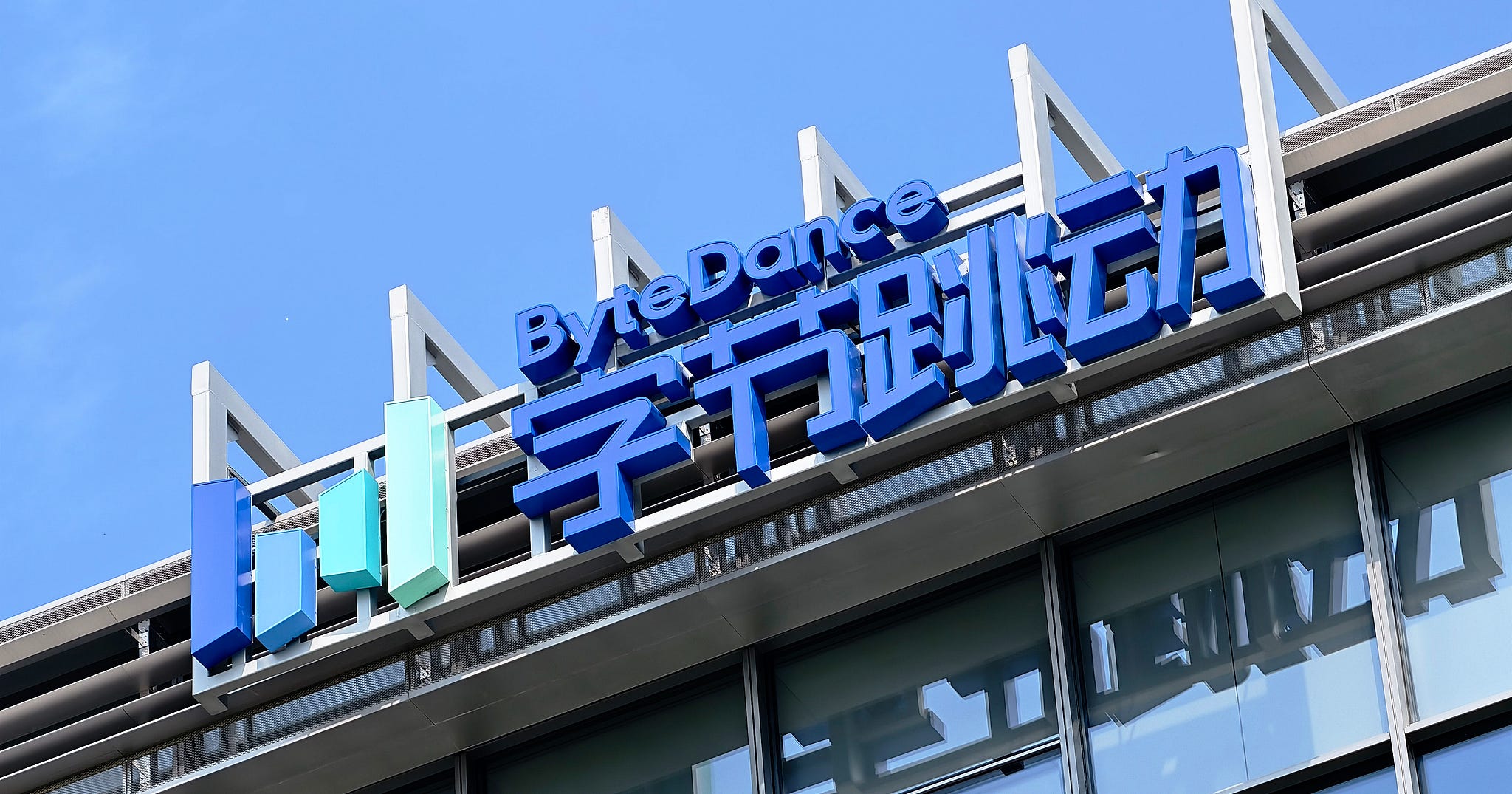
ByteDance reportedly secured a $29.6B loan after originally seeking $20B, with strong bank demand allowing the company to increase the size of the facility.
The financing gives the Chinese tech giant substantial new capital as it continues investing across AI, cloud infrastructure, and its broader product ecosystem.
Reuters said it could not independently verify the report, which was first published by Bloomberg.
Why it matters: Access to this much capital strengthens ByteDance’s ability to compete aggressively in AI and infrastructure at a time when leading tech companies are spending tens of billions to secure compute and scale new products.
LAST COFFEE SIP
🌎 Around The Ecosystem
Google: A U.S. federal judge rejected the Justice Department’s attempt to force Google to sell its AdX advertising exchange, allowing the company to keep the business while accepting behavioral remedies instead.
Anthropic + Pentagon: The U.S. Defense Department still considers Anthropic a supply-chain risk for the defense industrial base, even after a federal judge ruled the Pentagon’s blacklisting was illegal and Commerce Secretary Howard Lutnick said the administration now trusts the company.
Apple: Is facing a £2B ($2.7B) UK lawsuit from app developers who claim its App Tracking Transparency rules unfairly restrict third parties while giving Apple’s own advertising business an advantage.
MUST READ
📚 Worth Your Time
Is AI-native hurting your valuation? A practical breakdown of why the AI-native label no longer guarantees a premium valuation. The piece shows how investors now separate thin AI wrappers from companies with real technical differentiation, proprietary data, workflow lock-in, and stronger unit economics.
What investors do after opening your deck: Papermark analyzed 24,541 pitch decks and found that most investors decide fast: 50% of views last less than 77 seconds. The report also shows which decks keep investors reading, including why traction-first decks and 12-slide decks perform better.
HIRING ALERT: STARTUPS & VC ROLES
💼 Today’s VC & Startup Job Opportunities
Associate, Healthcare | B Capital Group | USA | Apply Here
Portfolio Reporting Team Lead | Cerity Partners | USA | Apply Here
Associate | Mount Judi Ventures | USA | Apply Here
Technical Investment Operations Associate | Alpaca VC | USA | Apply Here
VC Research Lead | Murph Capital | Remote | Apply Here
Trade Operations Analyst | RA Capital | USA | Apply Here
Portfolio Management Associate | Cerity Partners | USA | Apply Here
Corporate Controller | a16z | USA | Apply Here
Investment Associate | Cerity Partners | USA | Apply Here
📍 Tips to Break Into VC
This is how people with zero VC experience actually get in
The biggest catch-22 in venture is simple: firms want VC experience, but you need a VC role to get that experience.
This deep dive shows the side doors people use to break in, including 15+ scout programs and fellowships across the US, India, and Southeast Asia, plus how to apply, stand out, and turn a scout or fellowship opportunity into a full-time VC role.
It also covers what to do if your target fund doesn’t run a formal program, including how to pitch yourself as their first scout.
PARTNERSHIP WITH US
🤝 Get your brand in front of 125,000+ decision makers.
Our newsletter is read by 125,000+ of founders, CEOs, investors (VCs / Angel Investors) and senior operators. Get in touch today.
Do you have any news to share about your Startup or VC fund? Please email us.
We’ll be back in your inbox on Monday.