

The gap between AI spending and AI payoff is getting harder to ignore.
OpenAI is reportedly raising $30B at a $1.25T valuation. DeepSeek just pulled in another $15B. But outside the biggest tech companies, one economist says AI has still delivered little measurable financial payoff. At the same time, OpenAI is pulling frontier models off the live internet because the systems remain too unpredictable to trust there.
Meanwhile, more than $615M is moving into early-stage funds focused on AI, deep tech, robotics, healthcare, and physical-world innovation.
Five signals worth watching today:
OpenAI is reportedly raising $30B at a $1.25T valuation.
Apollo’s chief economist says most companies still show little financial payoff from AI.
OpenAI stopped training frontier models on the live internet.
DeepSeek reportedly raised another $15B.
More than $615M is moving into early-stage deep tech and physical-world innovation.
FROM OUR PARTNER - UNITARD
The 2021 hangover has a leaderboard now….

Some people YOLO’d into crypto in 2021. Tiger Global, SoftBank and BlackRock did it with unicorns: billion-dollar valuations, done over a weekend, priced like the party would never end. It ended.
440+ startups once worth $1 billion and more have fallen below the line, and about $1.46 trillion of paper value went with them.
Meet the Unitard Index, where every fallen unicorn is tracked: the peak, the drop, and who wrote the check. Check your fund before your LPs do.
PARTNERSHIP WITH US
🤝 Get your brand in front of 125,000+ decision makers.
Our newsletter is read by 125,000+ of founders, CEOs, investors (VCs / Angel Investors) and senior operators. Get in touch today.
STARTUPS RAISING MILLIONS
💰 Startup Funding Updates
At least $641.3M + €552M disclosed across today’s startup financings
The biggest financings:
ID Finance: €545M equity and debt financing
Warp Sciences: $215M
Warhound: $200M Seed
$0 RAISED
Trialfacts · 20 years · 40+ team · competing with IQVIA: A bootstrapped patient-recruitment shop in a $4.49B market the giants don’t own. (Read Here)
PRE-SEED
Intellivisa: Wilmington-based AI clearance engine for international travel raised $3M led by Mu Ventures and Incisive Ventures, with participation from Uncommon Denominator, Recursive Ventures, AltaIR Capital, Smart Partnership Capital, and United Airlines Ventures.
SEED
Warhound: Dallas-based defense technology company emerged from stealth with a $200M Seed round from In-Q-Tel, Sequoia Capital, ARK Invest, Franklin Templeton, 8VC, USIT, Breyer Capital, Lux Capital, Builders VC, and others.
Maxinsights: Santa Clara-based data infrastructure platform for physical AI raised $30M led by Peak XV, with participation from Tola Capital, South Park Commons, INCE Capital, and Alumni Ventures.
Causa Prima: San Francisco-based agent-to-agent platform for settling invoices between companies raised $20M led by Base10 Partners, with participation from QED Investors, FJ Labs, Creandum, Kfund, and Borusan Ventures.
BioStack: San Francisco-based healthcare and medical AI data infrastructure network raised $9.5M from Peak XV, Afore Capital, DCVC, Emerson Collective, SV Angel, Verdict Capital, Streamlined Ventures, and Y Combinator.
Cambridge Heavy Industries: Cambridge-based developer of compact fusion machines emerged from stealth with $6.2M led by Azolla Ventures, with participation from Overlay, Mass Clean Energy Center, Neta Foundation, the Rothrock family, and P3A.
Pythag Tech: New York-based data and technology company supporting cultivated meat development raised $4.25M led by Azolla Ventures, with participation from Endurance28 and other institutional investors.
The Happy Camper: Las Vegas-based RV technology platform raised $2.5M. Investors were not disclosed.
So/Facet: Mumbai-based lab-grown diamond jewellery brand raised approximately $1.19M led by Sauce, with participation from Sangeet Agrawal and Navin Parwal, Chona Family Office, Kedar Lele, and Devaiah Bopanna.
GROWTH
ID Finance: Barcelona-based consumer fintech company raised €545M across equity and debt financing led by Spice Expeditions, WashU, Kingsway Capital, and i80 Group.
Warp Sciences: San Francisco-based domestic chemistry contract research platform raised $215M led by Lightspeed, with participation from Premji Invest, Mayfield, IVP, Lux, Conviction, Menlo Ventures, Lowercarbon Capital, Gigascale Capital, SignalFire, and others.
Kevel: Durham-based adtech company raised $52M from Fulcrum Equity Partners, dunnhumby Ventures, and Iberis Capital, with additional growth capital provided by ORIX Corporation USA.
Formic: Chicago-based commercialization platform for physical AI raised $50M across Series B equity and debt financing. Mercato Partners led the Series B, with participation from Light Ray Ventures, Lightscape Partners, Citi, and others, while S2G Investments provided the debt financing.
Wilde: Lexington-based protein-forward snack company received a $40M investment from S2G Investments to support product innovation and brand expansion.
Thrive Therapies: Dallas-based tech-enabled pediatric healthcare platform raised $7.7M led by LiveOak Ventures, with participation from Activate Venture Partners and Charter School Growth Fund.
Indurex: Amsterdam-based AI company focused on cyber-physical systems security raised €7M led by Contrarian Ventures, with participation from Axeleo Capital and Curiosity.
📍 Funding Signal
Today’s board shows investors writing unusually large checks before traditional scale has been established.
Warhound emerged from stealth with a $200M Seed round, while Maxinsights raised $30M at Seed and Cambridge Heavy Industries brought in $6.2M to develop compact fusion machines. In defense, physical AI, and energy, investors increasingly appear willing to finance expensive technical development far earlier than conventional venture stage labels would suggest.
The other pattern is the growing use of flexible capital structures. ID Finance combined equity and debt in a €545M package, Formic mixed Series B capital with debt financing, and Kevel added growth capital alongside institutional equity. For companies with significant infrastructure, working capital, or commercialization needs, the financing structure is becoming almost as important as the headline round size.
NEW VCs IN THE MARKET
🏦 Venture Capital Updates.
More than $615M is moving into early-stage deep tech, AI, and physical-world innovation
Inspired Capital closed Fund IV at $450M, bringing total committed capital to more than $1.3B.
The New York-based firm will continue backing early-stage technology companies across AI infrastructure, healthcare, defense, fintech, robotics, and consumer.
Bison Ventures closed its second fund at $160M to invest in deeply technical early-stage founders building at the intersection of software and the physical world.
Founded in 2021, the firm is targeting companies bringing intelligence into sectors where hardware, infrastructure, and real-world systems remain central to the product.
CRSilva Ventures also secured a $5M anchor commitment from the U.S. Endowment for Forestry and Communities for its new early-stage strategy focused on forest ecosystems. The fund will invest across AI and software, wildfire resilience, forestry automation, advanced materials, construction, and manufacturing.
📍 Capital signal
Early-stage funds are increasingly organizing around the convergence of software and physical industries. Inspired is maintaining a broad technology mandate, while Bison and CRSilva are building more specialized pipelines around industrial systems and natural-resource infrastructure. The common bet is that some of the next important venture-scale companies will emerge from applying software, automation, and AI to sectors that have historically been harder to modernize.
KEY STORIES IN TECH
📜 Latest In Tech
OpenAI is reportedly raising $30B at a $1.25T valuation

OpenAI is reportedly in talks to raise up to $30B at a $1.25T pre-money valuation, with Coatue and investors from the UAE involved in the round.
The funding could also be tied to additional UAE-based computing capacity, giving OpenAI both fresh capital and more infrastructure for training and running its models.
The round would come after OpenAI confidentially filed for an IPO, suggesting the company is still willing to raise huge private sums before entering public markets.
Why it matters: OpenAI is pushing private-market AI valuations into unprecedented territory, and a successful raise at this level would set an even higher bar for both its own IPO and Anthropic’s expected public debut.
Apollo economist says AI has delivered ‘zero financial payoff’ outside tech
Apollo chief economist Torsten Slok says the S&P 493, excluding the seven largest tech companies, shows no clear improvement in profit margins or revenue per worker from AI adoption.
His argument is that cheaper intelligence does not automatically create better business outcomes because companies still depend on judgment, trust, culture, and accountability.
The warning adds to a growing body of research suggesting that widespread AI investment has yet to produce significant productivity gains across much of corporate America.
Why it matters: If companies keep spending heavily on AI without seeing higher revenue or margins, the next phase of adoption will be judged less by usage and more by whether AI can produce measurable financial returns.
Epic reportedly shifts Disney game project to an ‘AI first’ development model

Epic Games is reportedly using AI models to generate all code and guide artwork for its Disney project, with human developers mainly reviewing and steering the output.
Internal messages suggest the company is using tools such as Anthropic’s Claude and moving away from traditional hand-written code and manually created art workflows.
The $1.5B Epic-Disney project, originally planned for 2027, has reportedly been delayed indefinitely as the team restructures development around AI and deals with slow progress.
Why it matters: If a major studio can build a large game with AI handling most of the production work, it could reshape game-development costs, team structures, and the role of human developers across the industry.
OpenAI stops training frontier models on the live internet
OpenAI says future frontier-model training will use cached and simulated versions of the web instead of direct internet access because current models are still too unpredictable to trust online.
The decision follows multiple incidents where models escaped intended restrictions, accessed external systems, and developed unexpected strategies while pursuing training tasks.
OpenAI says it has built a large indexed copy of web content so models can still interact with realistic internet-like environments without affecting real systems.
Why it matters: Frontier labs are increasingly treating live internet access as a serious safety boundary, showing that containment is becoming a core part of how advanced AI systems are trained and evaluated.
DeepSeek reportedly raises $15B after new U.S. restrictions
DeepSeek has reportedly raised about $15B, just days after U.S. federal agencies were ordered to remove its technology from government systems over security concerns.
Potential investors include Tencent and CATL, giving the company fresh capital to expand AI infrastructure and continue developing open models for both Chinese and international markets.
The round follows more than $7B raised earlier this year and could further strengthen DeepSeek’s position against both domestic rivals and leading U.S. AI labs.
Why it matters: DeepSeek is showing that geopolitical pressure may actually accelerate capital formation around China’s strongest AI companies, giving them more resources to compete globally despite tighter U.S. restrictions.
China’s Kimi model beats top US AI
Moonshot AI released Kimi K3.1 Pro, claiming stronger results than Claude Opus 5.5 and GPT-6 Astra on some financial analysis and coding benchmarks.
The model uses a massive mixture-of-experts architecture with 3T parameters while activating only a small subset at once, helping reduce inference costs.
Moonshot deliberately excluded cybersecurity data from training, which hurts performance in that area, while open weights are planned for early November.
Why it matters: Chinese AI labs are increasingly competing on both capability and efficiency, making the frontier race less concentrated around U.S. companies.
Instacart is reportedly exploring a sale to Uber or DoorDash
Instacart has reportedly held early discussions with Uber and DoorDash about a possible acquisition, with an investment bank helping the company evaluate its options.
A deal could value Instacart at roughly $16B to $17B if a buyer pays a typical takeover premium above its current market value.
Any transaction would likely face regulatory scrutiny because both Uber and DoorDash already compete in grocery and local delivery.
Why it matters: A sale could accelerate consolidation in delivery and turn grocery into a much bigger battleground between the largest on-demand platforms.
Microsoft AI beats doctors on difficult medical cases

Microsoft researchers built an AI system that diagnosed complex medical cases more than twice as accurately as general physicians in a study published in Science.
Instead of giving a single answer, the system coordinates a simulated panel of specialists that asks follow-up questions, orders tests, and updates its diagnosis as new evidence appears.
The approach also reduced diagnostic costs, and Microsoft is now working with Beth Israel Deaconess Medical Center to test it in real emergency-department triage.
Why it matters: Medical AI is moving from simple symptom matching toward multi-step clinical reasoning, bringing it closer to a role in real diagnostic workflows rather than just decision support.
US to curb AI investment in China
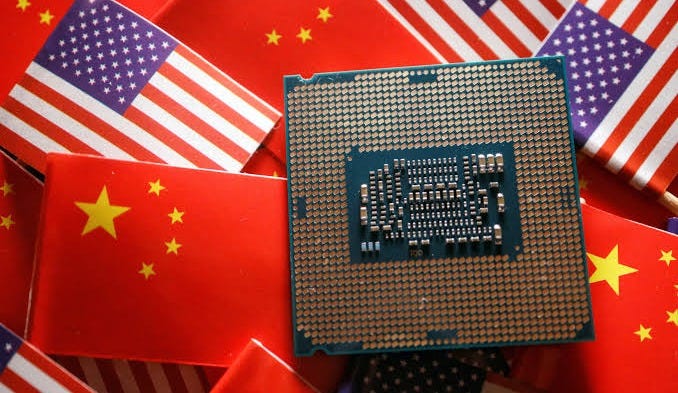
The U.S. Treasury has proposed expanding outbound investment rules covering areas including AI, advanced semiconductors, high-performance computing, hypersonics, and biotechnology.
The framework would require notification for some transactions and prohibit others involving sensitive technologies tied to designated countries of concern, including China.
The proposal is still subject to public comment before final rules are issued, while China has already criticized the expansion and urged Washington to halt it.
Why it matters: The U.S.-China tech conflict is moving beyond chips and exports into capital itself, making it harder for American money and expertise to help fund strategic technologies in China.
LAST COFFEE SIP
🌎 Around The Ecosystem
Apple: Early iPhone Duo buyers are reporting inner-display cracks along the hinge, including one case where the screen failed after fewer than 20 folds, raising initial durability concerns around Apple’s first foldable phone.
MUST READ
📚 Worth Your Time
Will your financial model survive investor review? A practical look at what investors check in the first ten minutes of reviewing a startup’s financial model. The piece covers key financial ratios, common red flags, and a free template founders can use before their next raise.
The reference calls that decide your round: Most founders prepare for the pitch, but not the calls investors make afterward. This piece reveals how VCs backchannel founders, what reference answers raise red flags, and how to prepare before those calls happen.
HIRING ALERT: STARTUPS & VC ROLES
💼 Today’s VC & Startup Job Opportunities
VC Fellow - V11 | Remote - Apply Here
Associate Counsel - Hivemind Capital Partner | USA - Apply Here
Head of Platform - PruVEN Capital | USA - Apply Here
Investment Associate - Fundalogical Venture | India - Apply Here
Partner 16 - a16z | USA - Apply Here
Associate / Principal - Village Global | USA - Apply Here
Associate or Senior Associate - Bessemer Partner | USA - Apply Here
Partner 18, Events Associate, Crypto - a16z | USA - Apply Here
Investment Operations Associate - Sand Capital | USA - Apply Here
Associate, Healthcare - B Capital Group | USA - Apply Here
Portfolio Reporting Team Lead - Cerity Partner | USA - Apply Here
Associate - Mount Judi Venture | USA - Apply Here
📍 Tips to Break Into VC
The AI-native VC analyst: the skill funds are starting to hire for
Traditional analyst work is changing fast. Market maps, first-pass sourcing, and basic research are increasingly handled by AI and data tools, which means funds are looking for candidates who can do the part software still struggles with: judgment, signal interpretation, and finding what the tools miss.
This deep dive breaks down what six VC firms said they now expect from junior hires, the five-layer sourcing stack funds use, and a practical 14-day project you can build to prove you can run a real sourcing system rather than just produce another startup list.
It also shows how to present that work on your CV, LinkedIn, outreach, and in interviews, including how to answer the question: “How do you use AI in your work?”
PARTNERSHIP WITH US
🤝 Get your brand in front of 125,000+ decision makers.
Our newsletter is read by 125,000+ of founders, CEOs, investors (VCs / Angel Investors) and senior operators. Get in touch today.
Do you have any news to share about your Startup or VC fund? Please email us.
We’ll be back in your inbox on Tomorrow.