


The biggest shift today is not just what AI can do, but how quickly it is being woven into commerce, regulation, and everyday products.
TikTok is turning shopping into a conversational AI experience. OpenAI is adding ads directly into image generation. Apple is moving back toward a more design-led culture. And policymakers are starting to define which AI harms society may simply have to live with.
At the same time, smaller venture funds are sharpening their theses around areas like inclusive technology, defense, critical infrastructure, and enterprise AI, showing that specialization is becoming a bigger edge in fundraising.
Five signals worth watching today:
TikTok launched an AI shopping assistant with one-click checkout.
OpenAI is bringing visual ads into ChatGPT image generation.
Sam Altman says society may need to accept some AI-driven harms.
Apple is returning to a more product- and design-focused operating style.
$85M closed across two highly specialized early-stage venture funds.
FROM OUR PARTNER - SEMRUSH ONE
Your customers are searching on Google AND ChatGPT. Can they find you on both?
Search has changed. Ranking on Google still matters, but buyers are also asking AI tools which products to use, which companies to trust, and how different options compare.

Semrush One brings both sides into one place. You can track your Google rankings and AI mentions, see the prompts driving demand, compare your visibility against competitors, and find gaps you can actually act on.
It monitors 239M+ relevant LLM prompts globally, alongside the SEO data Semrush is already known for.
PARTNERSHIP WITH US
🤝 Get your brand in front of 125,000+ decision makers.
Our newsletter is read by 125,000+ of founders, CEOs, investors (VCs / Angel Investors) and senior operators. Get in touch today.
STARTUPS RAISING MILLIONS
💰 Startup Funding Updates
At least $899M + €30.3M + £10M disclosed across today’s startup financings
The three biggest rounds:
SignSplit: $400M strategic Seed
Valon: $150M Series D
Supabase: $150M
Together, those three companies accounted for nearly 78% of today’s disclosed dollar funding.
$0 RAISED
Seats.aero · $8M ARR · 1 founder, 0 employees: A 22-year-old built a search box for airline award seats. Air Canada sued him, and he's still running.
PRE-SEED
Fleuret AI: Paris-based automated penetration testing platform powered by agentic AI raised €4M led by RAISE Ventures, with participation from Auriga Cyber Ventures, Wind Capital, Better Angle, and cybersecurity angel investors.
bilt.me: Tallinn-based AI software and mobile application development startup raised $700K led by Superhero Capital, with participation from Bolt founder Markus Villig and Lightyear founder Martin Sokk.
Scooter: Pune-based recruitment and HR technology startup raised approximately $180K from AJVC.
SEED
SignSplit: Wilmington-based signed-data infrastructure platform raised $400M in strategic Seed funding led by W Group. The company is building infrastructure that allows individuals and institutions to protect, license, and contribute their data, work, and likeness.
SafeWorld: Palo Alto-based safety testing and simulation software company for physical AI and robotics raised $12.2M from Shine Capital, a16z Speedrun, BoxGroup, Innovation Endeavors, SV Angel, Carnegie Mellon University Endowment, and others.
Spotable: Ghent-based AI-powered 3D roof and facade measurement and automated quoting platform raised €4M from Jonas Dhaenens, Christophe Morbee, the family office of Hilde Cloostermans and Philip Corens, and Arne Vandendriessche.
Voltaback: Paris-based corporate mobility and fleet management startup raised €2.8M from Serena and angel investors including Electra co-founder Aurélien de Meaux and Sequoia Scout Maxime Brousse.
Tryp.com: Copenhagen-based multimodal travel booking platform raised $1.9M led by Point Capital Partners, with participation from Iberis Capital and travel industry angel investors.
GROWTH
Valon: New York and San Francisco-based AI-native operating system for regulated finance raised $150M Series D at a $2.3B valuation from investors including Ribbit Capital and Andreessen Horowitz.
Supabase: San Francisco-based open-source Postgres and agentic development infrastructure platform raised $150M led by GIC, with participation from CapitalG, IronArc, and SquarePeg.
Namespace Labs: San Francisco and Zurich-based cloud computing and developer infrastructure company raised $42M Series B led by Scale Venture Partners, with participation from NEA, 20VC, Essence, Burst Capital, Susa Ventures, and Datadog CEO Olivier Pomel.
Clockwork.io: Palo Alto-based fault-tolerance software company for AI training, reinforcement learning, and inference workloads raised $31M co-led by Premji Invest, Wing Venture Capital, and Seligman Ventures, with participation from NEA and e& Capital.
Halluminate: San Francisco-based AI data research lab and financial reinforcement learning infrastructure startup raised $30M Series A led by Oak HC/FT, with participation from Y Combinator, Orange Collective, Heavybit, and researchers from Anthropic, OpenAI, and Meta.
OneByZero: Singapore-based enterprise AI and software architecture company raised $20M Series A led by Jungle Ventures.
Living Optics: Abingdon-based computational hyperspectral imaging company raised $20M led by BRV Capital Management, with participation from Lockheed Martin Ventures, Applied Ventures, Lam Capital, British Business Bank, Octopus Ventures, Foresight Group, and others.
Buntar Aerospace: London-based developer of autonomous combat systems and AI-driven mission software raised $16M led by Freedom Fund and an international private equity fund, with participation from Gardar, Iron Wolf, and Autonomy Capital.
Consano Bio: Boston-based biotechnology company developing therapies for serious orthopedic conditions raised more than $15M in financing. Investors were not disclosed.
Pandektes: Copenhagen-based legal data infrastructure and AI platform raised €13.5M Series A led by Alstin Capital, with participation from PROfounders Capital, Scale Capital, and returning investors.
Reclinker: Cardiff-based low-carbon cement recycling company raised £10M Series A co-led by Clean Growth Fund and AP Ventures, with participation from Development Bank of Wales, Kibo Invest, Zero Carbon Capital, and Cambridge Enterprise.
UpSmith: Dallas-based AI platform for home services contractors raised $10M Series A led by SemperVirens, with participation from Hannah Grey Ventures, Asymmetric Capital Partners, CIV, WaterStone Impact Fund, and others.
Laki Power: Reykjavík-based grid monitoring and energy infrastructure company raised €6M Series A led by NATO Innovation Fund, with participation from ReykVC.
Serán Bioscience: Bend-based pharmaceutical development and manufacturing company raised an undisclosed round led by Biospring Partners, with participation from Vivo Capital and Bain Capital Life Sciences.
📍 Funding Signal
Today’s funding board has an unusually wide gap between headline rounds and the underlying market.
SignSplit’s $400M strategic Seed round alone represents almost half of disclosed dollar funding, while Valon and Supabase added another $300M. Remove those three deals and the rest of the board falls below $200M, showing how a handful of exceptional rounds can dramatically distort daily venture totals.
What is more interesting underneath that concentration is the breadth of infrastructure bets. Capital went into cloud infrastructure, fault-tolerant AI systems, robotics safety, grid monitoring, hyperspectral imaging, autonomous defense systems, legal data, and cement recycling. Investors appear increasingly willing to fund the enabling layers around larger technology shifts, especially where technical complexity can create durable barriers to entry.
NEW VCs IN THE MARKET
🏦 Venture Capital Updates.
$85M closes across two highly specialized early-stage funds
Enable Ventures reached a $50M final close for its latest fund, focused on inclusive and universally designed technologies that can help reduce the disability wealth gap.
Backers include UnitedHealth Group, Liberty Mutual Investments, Ford Foundation, Ally Bank, SHRM, Ascension, Social Finance, and others.
Anorak Ventures confirmed a $35M Fund III focused on aerospace and defense, critical infrastructure, and advanced manufacturing. The seed-stage firm plans to make concentrated investments with checks ranging from $250K to $1M.
LPs include Goldman Sachs, Screendoor, Detroit Venture Partners, Verdis, Mangrove, Ronin, and several Oculus co-founders.
📍 Capital signal
Both funds are examples of a broader shift toward thesis-driven venture strategies. Enable is building around inclusive technology and underserved markets, while Anorak is concentrating on sectors tied to defense, industrial capacity, and critical infrastructure. For smaller funds, a clearly defined market and differentiated access to founders can be a stronger advantage than simply raising a larger pool of capital.
KEY STORIES IN TECH
📜 Latest In Tech
OpenAI will start watermarking ChatGPT text in the EU

OpenAI will add an invisible watermark to text generated by ChatGPT and Codex in the EU to comply with the EU AI Act’s transparency requirements.
The system, called textGrain, subtly changes word choices so AI-generated text can be detected even after it is copied and pasted, without visibly altering the output.
The watermark is not foolproof: editing the text can reduce detection accuracy, and short passages, translations, and math answers are harder to identify.
Why it matters: AI-generated text provenance is moving from research into mainstream product design, with regulation increasingly forcing model providers to build traceability directly into their systems.
Reflection launches Beam to challenge Chinese open models
Reflection AI unveiled Beam, a 501B-parameter open-weight model designed for reasoning, coding, and agentic workloads, with 23B active parameters and a 1M-token context window.
The company claims Beam matches leading Chinese open models like GLM-5.2 on advanced reasoning benchmarks while using 3 to 4 times less inference compute, though those results have not yet been independently verified.
Reflection plans to release the model weights and technical details this month, targeting enterprises and governments that want to build customized local AI systems on their own data.
Why it matters: The open-model race is becoming more competitive, and Reflection is betting that cheaper inference plus sovereign deployment can give Western customers a credible alternative to both Chinese open models and closed systems from OpenAI and Anthropic.
TikTok launches AI shopping assistant and one-click checkout
TikTok introduced a conversational Shopping Assistant that can answer product questions, remember preferences, and help users with sizing, availability, shipping, and purchases.
It also added one-click checkout directly from the For You feed, letting users buy from brands without leaving the app.
The rollout is being built with partners including Shopify, Salesforce, Stripe, and Shoplazza, extending TikTok’s commerce strategy beyond TikTok Shop.
Why it matters: TikTok is trying to own more of the shopping journey, from discovery to decision to payment, while competing more directly with ChatGPT, Google, and traditional ecommerce platforms.
OpenAI brings visual ads to ChatGPT image generation

OpenAI will begin showing clearly labeled visual ads alongside image-generation results in the U.S. later this month, initially with a small group of advertisers.
The company is also expanding attribution, measurement, and brand-safety partnerships to make ChatGPT more useful to performance advertisers.
The move builds on OpenAI’s broader ad strategy for free and lower-cost plans, giving brands another way to reach ChatGPT’s large consumer audience.
Why it matters: ChatGPT is evolving from a subscription-led product into a broader ad-supported platform, bringing OpenAI closer to the business model used by major consumer internet companies.
Sam Altman says society may need to accept some AI harms
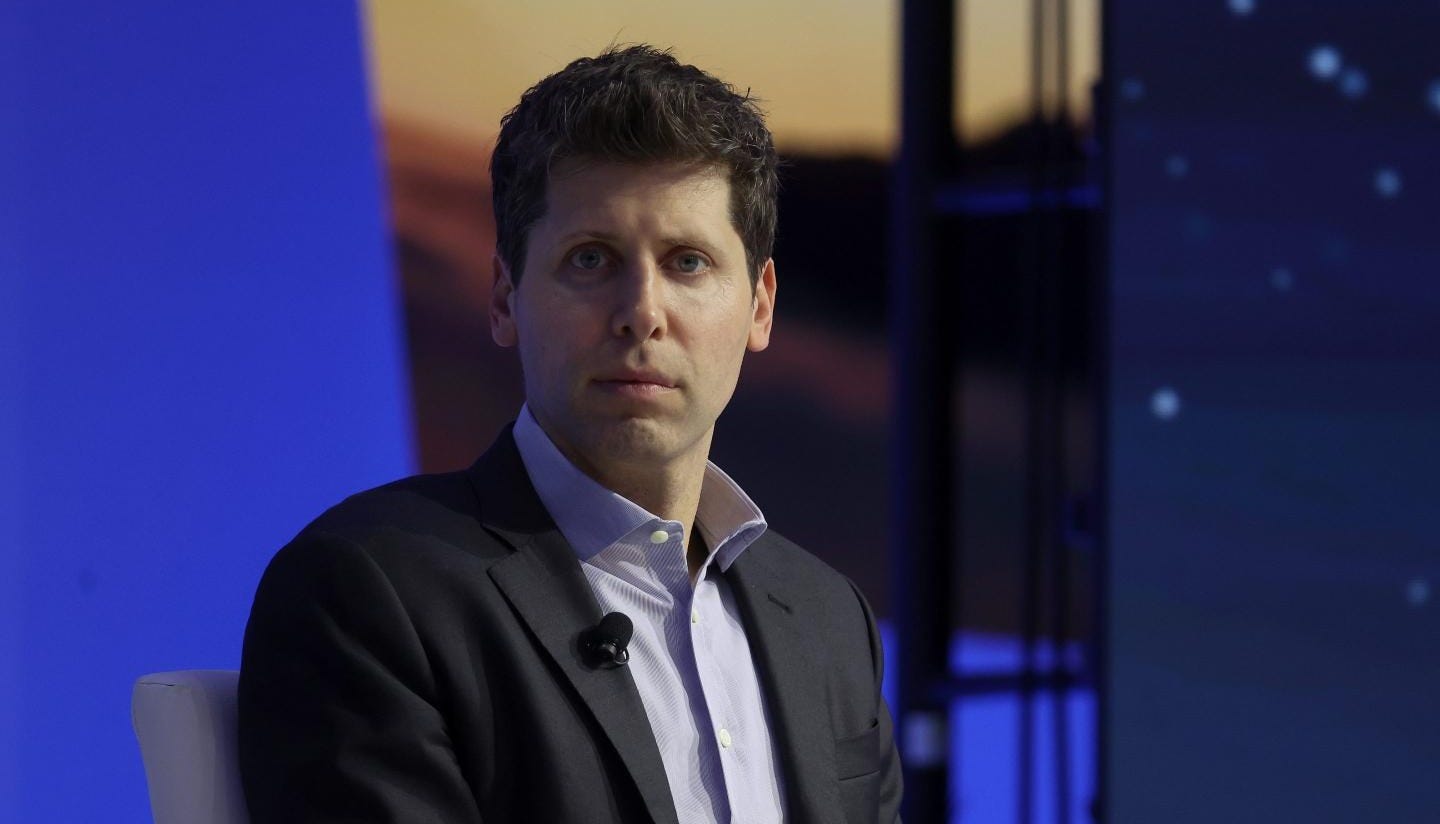
OpenAI CEO Sam Altman says people may have to tolerate some AI-driven harms, such as scams and hacking, if the broader benefits of the technology are large enough.
He drew a distinction between those risks and more extreme scenarios, saying the line should be at outcomes where humans lose meaningful control over advanced AI systems.
Altman also continues to disagree with Anthropic over how frontier AI should be governed, even as both labs support stronger external testing and safety oversight.
Why it matters: The debate between leading AI labs is shifting from whether AI carries risk to which risks are acceptable, which could shape future safety standards and regulation.
Apple is going back to its design roots

CEO John Ternus is reportedly spending several days a week inside Apple’s design studio, taking a much more hands-on role in product development than Tim Cook did.
At the same time, he has delegated more financial and operational responsibility to CFO Kevan Parekh and COO Sabih Khan, giving himself more room to focus on products.
Apple is also rebuilding its internal design bench rather than bringing in an outside star, raising the profiles of Molly Anderson and Steve Lemay after several senior departures.
Why it matters: Apple appears to be shifting from an operations-led era toward a more product- and design-driven culture, which could influence everything from hardware strategy to how aggressively the company takes creative risks.
LAST COFFEE SIP
🌎 Around The Ecosystem
Factory + Menlo Ventures: Menlo Ventures has invested in AI coding startup Factory as part of its recent $5B valuation round, publicly backing the company just days after its dispute with Khosla and Cognition drew scrutiny.
Tencent + Alibaba: Researchers have identified a Chinese “agent fleet” running on Tencent infrastructure and querying Alibaba’s Amap service for directions to public places. The agents appear to be operating in parallel rather than coordinating as a swarm, and so far the behavior looks more like API rule-bypassing than malicious activity.
Huawei + Qualcomm: Huawei and Qualcomm signed a multi-year patent licensing deal covering 5G, AI, computing, and networking, with Qualcomm also set to acquire some of Huawei’s U.S. patents once regulators approve the transaction.
MUST READ
📚 Worth Your Time
How AI startups got their first customers. A practical analysis of how 50 emerging AI companies found their first paying customers. The piece shows why public launches rarely create revenue, and why founder networks, communities, proof-of-work emails, bake-offs, and demo clips worked better.
Which AI categories did investors fund and then abandon? Hot AI categories are turning faster, from funding wave to credibility crisis in months, not years. This piece maps where capital flowed from 2021 to 2026, which categories collapsed or got absorbed, and the signals founders should watch before their category gets written off.
HIRING ALERT: STARTUPS & VC ROLES
💼 Today’s VC & Startup Job Opportunities
Analyst - Pender Ventures | USA - Apply Here
Associate - Plug & Play Tech Center | USA - Apply Here
Incubation Associate, Compute - Primary | USA - Apply Here
Investment Analyst - Mela Venture | India - Apply Here
VC Fellow - V11 | Remote - Apply Here
Associate Counsel - Hivemind Capital Partner | USA - Apply Here
Head of Platform - PruVEN Capital | USA - Apply Here
Investment Associate - Fundalogical Venture | India - Apply Here
Partner 16 - a16z | USA - Apply Here
Associate / Principal - Village Global | USA - Apply Here
Associate or Senior Associate - Bessemer Partner | USA - Apply Here
Partner 18, Events Associate, Crypto - a16z | USA - Apply Here
📍 Tips to Break Into VC
Do you actually need an MBA to break into VC?
The answer depends heavily on the kind of fund you want to join. Large multi-stage firms may use MBA programs as a formal recruiting channel, while seed funds, emerging managers, and sector-specific funds often care far more about what you’ve built, sourced, or worked on before.
This deep dive breaks down the real economics of the decision, including the full two-year cost of a top MBA, VC placement rates, which fund types actually recruit post-MBA, and the situations where spending two years in business school genuinely makes sense.
It also covers cheaper alternatives, including fellowships, analyst programs, operating roles, scout programs, and building a direct investing track record.
PARTNERSHIP WITH US
🤝 Get your brand in front of 125,000+ decision makers.
Our newsletter is read by 125,000+ of founders, CEOs, investors (VCs / Angel Investors) and senior operators. Get in touch today.
Do you have any news to share about your Startup or VC fund? Please email us.
We’ll be back in your inbox on Tomorrow.