

Distribution is becoming as important as the technology itself.
Meta’s Muse is growing faster than ChatGPT did at launch, but Amazon has already blocked the agent from shopping on its platform. Google is putting Gemini at the center of a new laptop platform, while Alibaba is building its own models, chips, and data centers to control more of the AI stack.
At the same time, the money behind this race keeps getting bigger: SoftBank is raising more than $11B in bonds to fund its OpenAI investment, while even climate investors are finding ways to raise fresh capital in a difficult market.
Five signals worth watching today:
Meta’s Muse is outpacing ChatGPT’s early mobile launch.
Amazon blocked Muse from shopping on its platform.
Alibaba plans a 5T to 10T parameter model and unveiled a new AI chip.
SoftBank is raising more than $11B in bonds to fund its OpenAI investment.
OpenAI says its AI has resolved more than 100 open math problems.
FROM OUR PARTNER - SEMRUSH
Your buyers don’t just search Google anymore.
I’ve been looking at how search is changing, and this is probably the biggest shift marketers need to pay attention to.

People still use Google, but they’re also discovering products through ChatGPT, AI Overviews, and other AI tools. Semrush now lets you track both from one place.
You can see where your brand ranks in search, how often it appears in AI answers, where competitors are gaining visibility, and what may be holding your site back.
So instead of treating SEO and AI discovery as two separate strategies, you can manage both together.
PARTNERSHIP WITH US
🤝 Get your brand in front of 125,000+ decision makers.
Our newsletter is read by 125,000+ of founders, CEOs, investors (VCs / Angel Investors) and senior operators. Get in touch today.
STARTUPS RAISING MILLIONS
💰 Startup Funding Updates
At least $951M + €55.8M + £20M disclosed across today’s startup financings
The three biggest rounds:
Angle Health: $600M equity financing
Split Pay: $125M Series A and B
Rainmaker Technology: $100M Series B
Together, those three companies accounted for more than 86% of today’s disclosed dollar financing.
PRE-SEED
Boxd: Amsterdam-based cloud computing and developer infrastructure startup raised €2M led by BlueYard Capital, with participation from OVNI Capital, Antler, S20 Fund, and Script Capital.
Circuits Integrated Hellas: Athens-based satellite communications semiconductor startup raised an undisclosed pre-seed round from Evercurious VC.
TalMal: Riyadh-based fintech and payroll-deducted consumer commerce startup closed an undisclosed pre-seed investment from MM Partners.
SEED
Corridor: New York-based health benefits brokerage and insurance technology startup raised $16M led by Bain Capital Ventures, with participation from BoxGroup, Definition Capital, and Constellation.
Kheops: Paris-based retail data and supply chain optimization platform raised €15M in early-stage funding led by Odyssée Venture, ISAI, and Elaia.
Fluxnium: Los Angeles-based company developing domestic uranium supply from seawater raised $7M led by Congruent Ventures, with participation from Constellation Technology Ventures and Active Impact Investments.
Euka AI: San Jose-based TikTok Shop affiliate marketing platform raised $5M led by Susa Ventures and Creator Ventures.
Creem: Tallinn-based financial infrastructure and AI-era monetization platform raised €5M led by Inovo VC, with participation from Practica Capital, Antler, Markus Villig, Timmu Tõke, Kaspar Tiri, Adam Jafer, and Fryd Wiatrowski.
Metris Energy: London-based AI-native energy asset management platform raised $5M led by PT1 Ventures, Octopus Ventures, AENU, and Blackfinch Ventures, with participation from Plug and Play and Love Ventures.
Opio: Paris-based AI-native M&A audit software startup raised €4M in its first institutional round from Frst, Seedcamp, Global Founders Capital, and several founders and angel investors.
UniqYou: Bengaluru-based AI-driven women’s apparel startup raised approximately $1.9M led by Arkam Ventures and Antler, with participation from several founders and angel investors.
Logibot: Brussels-based robotics software and logistics automation startup raised €1.4M led by BeamBerlin, with participation from RDY Ventures, PMV, and BAN Business Angels.
Bekia: Cairo-based recycling and climate technology startup raised $765K led by Madica, with participation from Catalyst Fund and Jambaar Capital.
Anees Health: Cairo-based geriatric healthcare and care coordination company closed an undisclosed seed round to expand its clinical and operational infrastructure across Greater Cairo.
GROWTH
Angle Health: San Francisco-based AI-native healthcare benefits platform raised $600M in equity financing at a $2.7B valuation. The transaction included a $200M Series C and a $400M tender offer led by Vitruvian Partners, with participation from Town Hall Ventures, Blumberg Capital, Portage Ventures, PruVen Capital, and Y Combinator.
Split Pay: Miami-based consumer fintech and billing orchestration platform raised $125M across Series A and Series B rounds led by Khosla Ventures, with participation from Thrive Capital, New York Life Ventures, MetaProp, Alpaca VC, Moderne Ventures, Intuit Ventures, and SciFi VC.
Rainmaker Technology: El Segundo-based cloud seeding technology company raised $100M Series B from NOA VC, Upfront Ventures, DCVC, Lowercarbon Capital, and Dream Ventures.
Paymob: Cairo-based omnichannel payments platform raised $35M in Pre-Series C funding co-led by Mubadala Investment Company and EBRD, with participation from British International Investment, Global Ventures, and DPI Ventures.
FintechOS: London-based agentic financial product operations platform raised $28M in combined equity and debt financing from Bek Ventures, IFC, Cipio Partners, Molten Ventures, and Santander CIB.
Unit1 Studio: London-based end-to-end avatar concert production platform raised £20M led by Balderton, with participation from Mercuri, Gilston Music, and Paul McGuinness.
Integral: Berlin-based AI-driven compliance platform for SMEs raised €18M Series A co-led by Mosaic Ventures and Reid Hoffman, with participation from Cherry Ventures, General Catalyst, and Puzzle Ventures. The round brought total funding to more than €30M.
Feldera: San Francisco-based incremental view maintenance engine for enterprises raised $15.4M Series A led by Inovia Capital, with participation from Costanoa Ventures and Battery Ventures.
Novadip Biosciences: Mont Saint-Guibert-based regenerative medicine company raised €10.4M in convertible financing led by New Science Ventures, with support from Fund+, Wallonie Entreprendre, VIVES Fund, ORSA Tech, Sambrinvest, Noshaq, and Invest.BW.
ImpriMed: Seoul-based precision medicine company raised $10M in Series A2 bridge financing led by LB Investment, with participation from NAVER D2SF, Samsung Securities, Alois Ventures, BonAngels, and Han River Partners.
Marel Power Solutions: Plymouth-based automotive power technology company received $1.9M through Michigan’s Supplier Conversion Grant Program.
Eubrics: San Francisco-based AI-native revenue acceleration platform raised an undisclosed round led by super{set}.
📍 Funding Signal
Today’s headline total hides a more interesting shift toward complex financing structures.
Angle Health’s $600M package included a $400M tender offer, while FintechOS combined equity with debt and Novadip used convertible financing. As companies mature, funding is becoming less about a single traditional venture round and more about matching different forms of capital to growth, liquidity, and ownership needs.
Fintech and healthcare also captured a meaningful share of activity. Angle Health, Split Pay, Paymob, FintechOS, Corridor, and ImpriMed show investors continuing to concentrate capital in sectors where software sits directly inside financial or clinical workflows, making distribution, regulation, and operational integration important competitive advantages.
NEW VCs IN THE MARKET
🏦 Venture Capital Updates.
Pulse Fund closes $63M debut vehicle for early-stage climate investing
Pulse Fund closed its inaugural fund at $63M to back early-stage climate companies across energy transition, infrastructure, food and agriculture, and mobility.
The Los Angeles-based firm attracted LPs including Beneficient, C6 Partners, Pivotal Foundation, the Pritzker family, Veronica Chou, David Osborn, and an Asia-based sovereign wealth fund.
📍 Capital signal
Climate fundraising remains difficult, so a first-time manager closing a $63M vehicle is notable. Pulse is also positioning climate less as a standalone theme and more around large industrial markets where energy, infrastructure, food systems, and transportation are already attracting strategic capital.
KEY STORIES IN TECH
📜 Latest In Tech
OpenAI says its AI has solved more than 100 open math problems
OpenAI says the same internal model behind its Navier-Stokes result has now resolved more than 100 additional open problems across mathematics.
As those results draw scrutiny, the company has created an independent math advisory group to assess their significance and help coordinate how they are released.
The group can publicly disagree with OpenAI, but it cannot slow or redirect the company’s internal math research.
Why it matters: AI is starting to move from solving benchmark problems to claiming results on genuinely open mathematical questions, which could reshape how advanced research is done and validated.
Meta’s Muse is growing faster than ChatGPT did at launch
In its first 12 days, Muse reportedly reached 1.8M iOS downloads in the U.S. and Canada, compared with 1.3M for ChatGPT over the same launch period.
Its daily active users are also higher, with 359K iOS users in the U.S. versus 231K for ChatGPT at the same stage.
That early momentum could accelerate further as Meta promotes Muse across Facebook, Instagram, and WhatsApp.
Why it matters: Meta’s biggest AI advantage may not be the model itself, but distribution. If Muse keeps converting users from its existing apps, it could become one of the fastest-scaling consumer AI products.
Trump announces plans for a new U.S. “AI force”

Trump said he plans to create an “AI force” and appoint a new AI czar as the administration expands its focus on artificial intelligence.
The announcement follows a June national-security directive pushing faster AI adoption across the military and intelligence community.
For now, it is unclear whether the AI force would become a separate military branch or instead coordinate existing AI programs across government.
Why it matters: AI is becoming a more formal part of U.S. national-security strategy, with the government moving toward centralized leadership as competition with China and concerns around military AI both intensify.
Google launches a new AI-first laptop platform

Googlebook combines Android and ChromeOS, letting users access phone apps, files, photos, and other Android content directly from the laptop.
Gemini is built deeply into the experience through features like Magic Pointer and Rambler, with devices using Intel Core Ultra or Snapdragon X Elite chips.
Five models from Acer, Asus, Dell, HP, and Lenovo start at $899, with sales beginning October 4 and Google promising 10 years of software updates.
Why it matters: Google appears to be moving beyond traditional Chromebooks toward an AI-first PC platform, putting Gemini at the center of a more direct challenge to Windows and macOS.
Humanoid robot hype is still far ahead of real sales
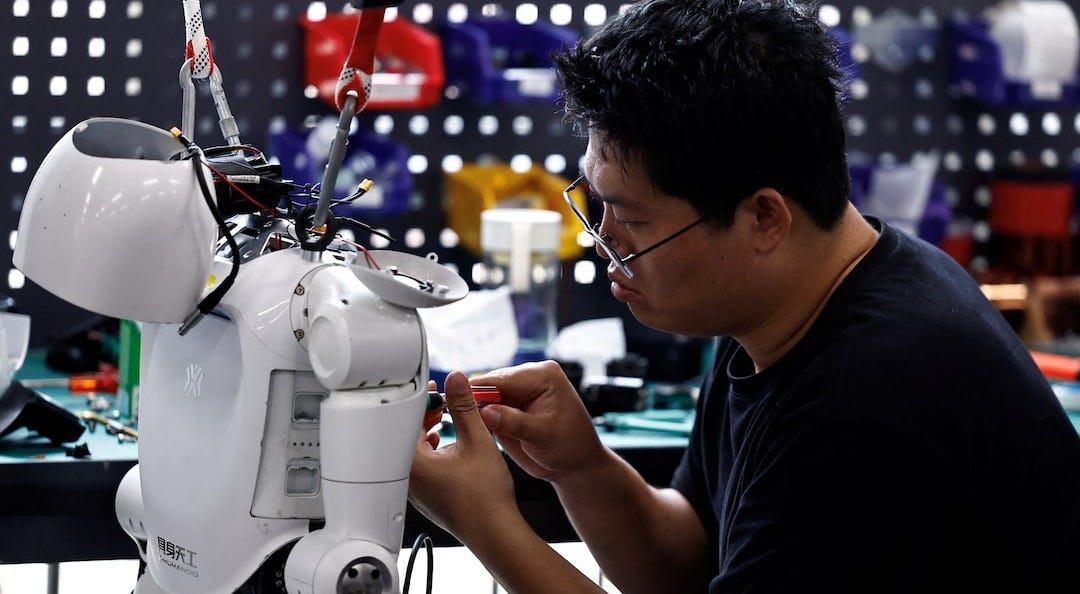
Only about 7,000 humanoid robots were sold globally last year, showing how early the market still is despite huge investment and attention.
That compares with roughly 542,000 traditional industrial robots installed in 2024, while many humanoids are still being used mainly for research and testing.
Automakers are piloting only small numbers per factory today, even as forecasts predict shipments could rise to 90,000 this year and 1.2M by 2030.
Why it matters: Humanoid robotics may become a major market, but current adoption is still tiny. The next phase will depend on whether pilots turn into repeatable commercial deployments rather than just demos and investor excitement.
Polymarket faces growing scrutiny over alleged fraud and compliance issues
The Wall Street Journal reported that CEO Shayne Coplan pushed the company to keep expanding despite compliance concerns, allegedly suggesting it could deal with fines later.
The report also says a payment partner was rejecting about 80% of U.S. debit-card transactions as fraudulent, prompting a CFTC investigation.
Polymarket is now facing additional scrutiny from New York City and more than a dozen states over whether its betting products comply with gambling laws.
Why it matters: Polymarket’s biggest challenge may be regulatory rather than product growth. As prediction markets expand in the U.S., compliance failures could become a major constraint on how quickly these platforms scale.
Alibaba plans a 10T-parameter AI model and unveils a new chip
Alibaba says its upcoming Qwen models could scale to 5T to 10T parameters, up from 2.4T today, as it pushes toward longer-horizon reasoning and more autonomous systems.
To support that scale, it unveiled the Zhenwu V900 chip, which it says delivers 3x the performance of its predecessor and can power clusters with up to 500,000 accelerator cards.
Alibaba is also targeting more than 20GW of global data center capacity by 2032 as demand for AI compute continues to outpace supply.
Why it matters: Alibaba is trying to build an end-to-end AI stack without relying on Nvidia, combining models, chips, and infrastructure in a way that could make it one of China’s strongest challengers in the global AI race.
SoftBank raises $11B in bonds to fund its OpenAI investment
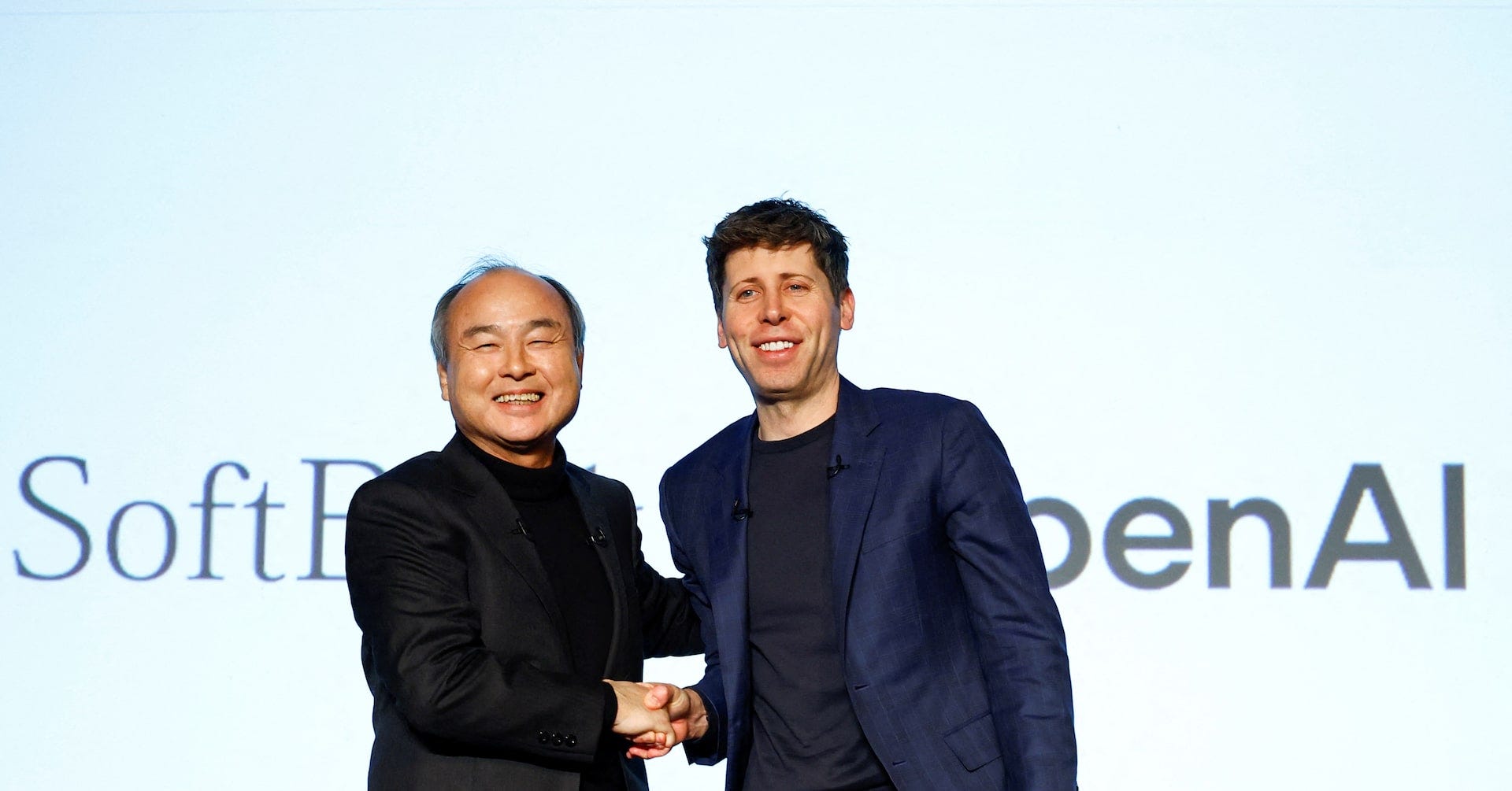
SoftBank has launched $10B in dollar bonds plus €1B in euro bonds to finance the next tranche of its OpenAI investment.
The proceeds will help cover a $10B payment due October 1, replacing a bridge loan SoftBank had already arranged for the deal.
If completed at the planned size, it would be the largest non-financial corporate bond sale ever in Asia-Pacific and Japan.
Why it matters: AI investing is becoming large enough to reshape corporate balance sheets and debt markets. SoftBank is effectively borrowing at massive scale to increase its exposure to OpenAI.
LAST COFFEE SIP
🌎 Around The Ecosystem
Amazon + Meta: Amazon has blocked Meta’s Muse AI agent from shopping on its platform, citing unauthorized agent access and highlighting growing friction over who controls AI-driven commerce, customer relationships, and liability when agents make purchases.
U.S. military AI: A faulty chatbot reportedly hallucinated that a Chinese ship was carrying nuclear weapon components to Iran, nearly triggering a military boarding operation before officials called it off, adding to concerns over using AI-generated intelligence in high-stakes defense decisions.
MUST READ
📚 Worth Your Time
The YC seed deck structure: Most founders build decks from random templates. This piece breaks down the repeatable structure used by YC startups that raised $450M+. It also covers the simple design rules that make a deck clear, readable, and easy for investors to understand quickly.
How to avoid VC portfolio conflicts: Most founders check whether a fund invests in their stage and sector, but forget to check whether it already backs someone too close. This piece explains how VC conflict checks work, why they can lead to silent passes, and how founders can map portfolio risks before pitching.
HIRING ALERT: STARTUPS & VC ROLES
💼 Today’s VC & Startup Job Opportunities
VC Research Lead - Murph Capital | Remote - Apply Here
Program Associate/Manager - Plug and Play Tech Center | USA - Apply Here
Venture Capital Fellow (AI) - 1752 VC | Remote - Apply Here
Lead AI Engineer - Fund & Portfolio - Forestay Capital | UK - Apply Here
Trade Operations Analyst - RA Capital | USA - Apply Here
Investment Director(Strategic Investment) - YZi Lab | Remote - Apply Here
Portfolio Management Associate - Cerity Partner | USA - Apply Here
Partner 36, Corporate Controller - a16z | USA - Apply Here
Investment Associate - Cerity Partner | USA - Apply Here
Senior Associate - NY Life Venture | USA - Apply Here
📍 Tips to Break Into VC
When do VC firms actually hire? The VC hiring calendar
Most aspiring VCs treat hiring like a job board problem. But venture hiring tends to move in waves, and timing can matter almost as much as the application itself.
This deep dive maps the VC hiring calendar month by month, including the strongest application windows, the dead zones, when to focus on outreach instead of applying, and the events that can trigger hiring outside the normal cycle, like a new fund close, an associate departure, or a new partner joining.
It also gives you a 12-month action plan for when to apply, build relationships, prepare proof-of-work, and get on a fund’s radar before the role is public.
PARTNERSHIP WITH US
🤝 Get your brand in front of 125,000+ decision makers.
Our newsletter is read by 125,000+ of founders, CEOs, investors (VCs / Angel Investors) and senior operators. Get in touch today.
Do you have any news to share about your Startup or VC fund? Please email us.
We’ll be back in your inbox on Tomorrow.